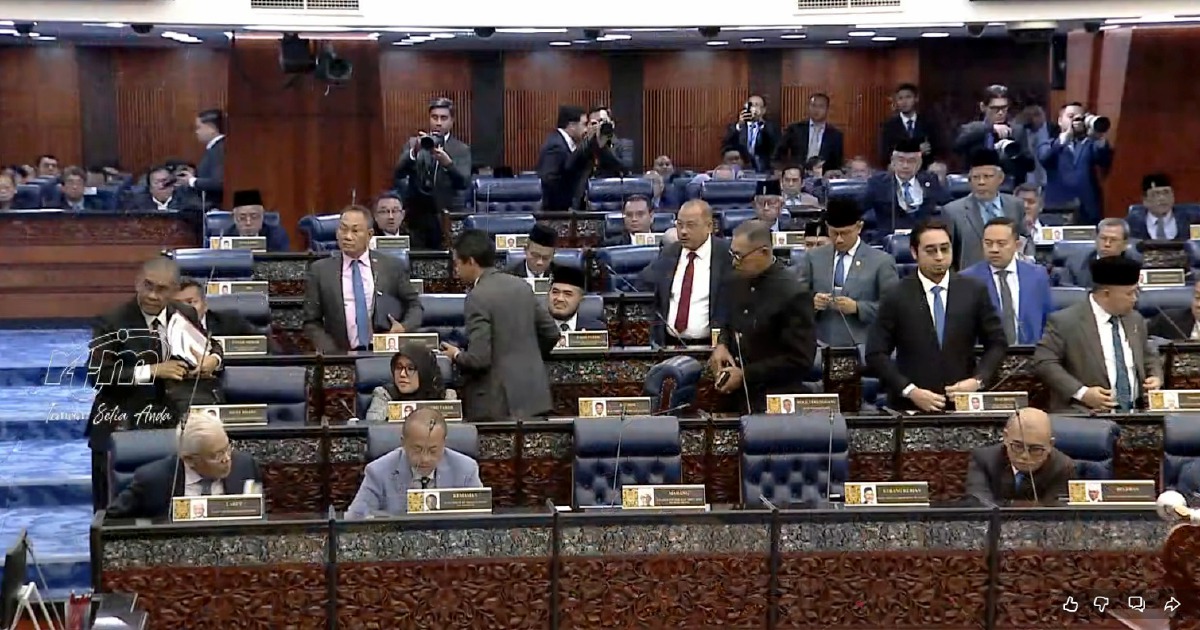
Opposition lawmakers orchestrated a coordinated walkout from the Dewan Rakyat, signalling mounting frustration over parliamentary procedure and the handling of a politically sensitive inquiry into the troubled pilgrimage fund. The dramatic exit occurred after the Speaker declined their formal request to delay the special sitting examining the Royal Commission of Inquiry findings on Tabung Haji, insisting instead that proceedings continue as scheduled even with Prime Minister Datuk Seri Anwar Ibrahim absent from the chamber.
The confrontation reflects deepening tensions between the ruling coalition and opposition benches over how Parliament should address the RCI report, which examines governance failures and financial irregularities at the controversial Islamic pilgrimage fund. By demanding the Prime Minister's presence before debate commenced, opposition MPs signalled their intention to scrutinise the government's response to findings that have already provoked considerable public and political commentary regarding accountability and institutional reform.
Tabung Haji's difficulties have become emblematic of broader governance challenges that resonate across Malaysia's political landscape. The fund, which manages savings and investments for Malaysians performing the Islamic pilgrimage, has faced mounting criticism over its handling of member deposits and investment decisions. Previous parliamentary inquiries and media investigations have documented how the institution's management faced questions about transparency and stewardship of pilgrim funds, making the RCI report a document of considerable significance for understanding systemic weaknesses in how Malaysia's public institutions operate.
The opposition's position carries strategic weight beyond procedural objections. By withholding participation in the debate until the Prime Minister could address Parliament directly, opposition members sought to ensure that government accountability for Tabung Haji's problems would be handled at the highest institutional level rather than delegated to junior ministers. This tactic reflects a broader parliamentary strategy where opposition parties leverage procedural mechanisms to elevate scrutiny of government actions and demonstrate inadequate responses to public concerns.
The Speaker's decision to proceed without the Prime Minister's presence creates practical complications for the parliamentary process. A substantive debate on such a consequential report ideally requires senior government officials capable of committing to policy responses and institutional reforms. Without the Prime Minister available to answer directly, opposition lawmakers feared that the debate would devolve into lower-level government statements lacking authority to make binding commitments about remedial action.
This episode illustrates persistent challenges in Malaysian parliamentary convention regarding the separation between executive and legislative branches. While the Speaker possesses authority to manage parliamentary proceedings, the decision to override opposition requests for timing adjustments highlights different perspectives on what constitutes effective parliamentary governance. Opposition MPs argue that meaningful accountability requires senior executive engagement, while the government position emphasises proceeding according to schedule regardless of ministerial attendance.
For Malaysian and Southeast Asian observers, the incident underscores how institutional crises within state-affiliated entities inevitably become vectors for broader political contestation. Tabung Haji's governance troubles cannot be disentangled from partisan concerns about how Parliament functions, who exercises power over parliamentary scheduling, and whether debate mechanisms genuinely serve accountability purposes or instead become mere procedural exercises disconnected from meaningful institutional change.
The walkout also reveals friction within Malaysia's coalition politics, suggesting that ruling government MPs and opposition lawmakers possess fundamentally different views about parliamentary decorum and procedures. When the Speaker sided with the government position to maintain the debate schedule, opposition members concluded that normal parliamentary channels would not yield the accountability mechanisms they considered necessary, prompting their exit as a protest against what they characterised as procedural unfairness.
Tabung Haji's challenges extend beyond parliamentary theatrics into lived experiences of ordinary Malaysians whose savings remain invested through the fund. The RCI report's findings potentially carry implications for how these funds are managed going forward and what safeguards might be implemented to prevent recurrence of problems that triggered the inquiry. Opposition demands for the Prime Minister's direct engagement reflected legitimate concerns that comprehensive accountability requires acknowledgement from the highest levels of government.
Looking forward, this parliamentary confrontation suggests that Tabung Haji reform will remain contested political territory where procedural disputes mask deeper disagreements about institutional responsibility and governmental accountability. The opposition walkout signals that parliament's ability to thoroughly investigate state institution failures may be constrained by scheduling conventions and political standoffs that prevent optimal conditions for meaningful debate and scrutiny.
The incident also raises questions about how Malaysia's parliamentary system handles accountability when senior government figures are temporarily absent. Standard procedures appear insufficient when public concern regarding institutional failures demands direct engagement from decision-making executives, yet procedural rigidity prevents accommodation of such engagement. Resolving this tension will likely require parliamentary leadership from both government and opposition to establish clearer conventions regarding how truly significant institutional inquiries receive appropriate high-level governmental attention.

