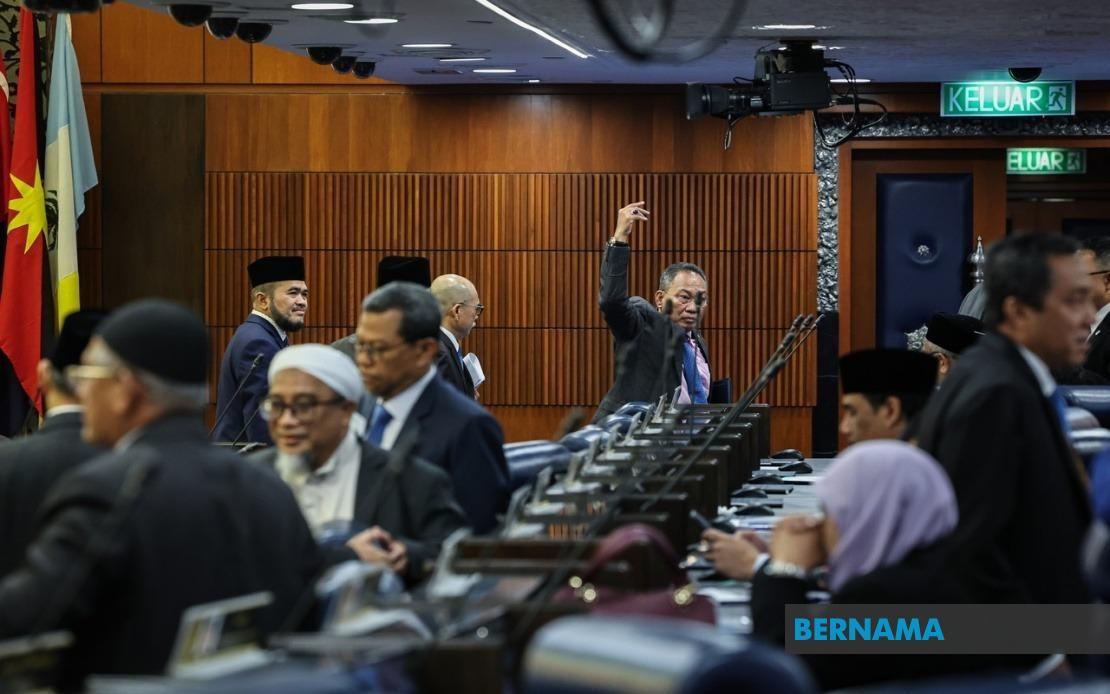
The Perikatan Nasional opposition bloc's decision to abandon the Dewan Rakyat during yesterday's special sitting on the Tabung Haji (TH) Royal Commission of Inquiry findings has drawn sharp criticism from political scholars, who argue the walkout represents a fundamental abdication of legislative responsibility. Led by Opposition Leader Datuk Seri Hamzah Zainuddin and supported by prominent figures including PN Chief Whip Datuk Seri Takiyuddin Hassan, the boycott of the ministerial briefing by the Minister in the Prime Minister's Department (Religious Affairs) Dr Zulkifli Hasan signals a troubling retreat from Parliament's constitutional role as guardian of public accountability. With Tabung Haji serving approximately 10 million Malaysian depositors, the stakes of this parliamentary lapse extend far beyond partisan politics into the financial security of millions of ordinary Malaysians.
The opposition's stated grievance centred on the absence of Prime Minister Datuk Seri Anwar Ibrahim and Deputy Prime Minister Datuk Seri Fadillah Yusof, both receiving medical treatment at the time. PN Chief Whip Takiyuddin formally moved to postpone the sitting, characterising the attendance of a religious affairs minister as insufficient for a matter of such magnitude. However, academics argue this position conflates parliamentary procedure with political theatre, placing symbolic presence above substantive legislative inquiry. The special sitting had been convened precisely to allow members to hear Dr Zulkifli's briefing on the RCI's findings regarding management and operational weaknesses spanning 2014 to 2020, and to debate measures designed to restore the institution's financial standing.
Associate Professor Dr Mazlan Ali of Universiti Teknologi Malaysia contends that the opposition surrendered a critical opportunity to advance depositors' interests through proper institutional channels. By remaining in the chamber, opposition MPs could have subjected the RCI report to rigorous public scrutiny, posed detailed questions to the government, and placed their concerns permanently on the parliamentary record. The substance of any inquiry depends not on which ministerial rank presents findings, but on the quality and rigour of questioning that follows. Dr Mazlan emphasises that Parliament functions as Malaysia's preeminent venue for transparent governance, where concealment of material facts contradicts the institution's very purpose. The opposition's departure therefore represents an implicit acceptance that political positioning outweighs the information rights of 10 million ordinary citizens.
Furthermore, Dr Mazlan notes that the Prime Minister's temporary absence from Parliament due to ongoing medical treatment should not trigger legislative paralysis. Senior government ministers retain full authority and responsibility to answer parliamentary questions within their portfolios. Suggesting that only the Prime Minister's personal presence justifies legislative proceedings sets a problematic precedent that concentrates power in the executive office and diminishes Parliament's institutional independence. Religious affairs minister Dr Zulkifli possessed sufficient knowledge and delegated authority to address questions concerning Tabung Haji's governance structure, financial position, and remedial measures, rendering the PM's physical presence immaterial to substantive debate.
Dr Nazreena Mohammed Yasin, a senior lecturer in social sciences at Universiti Tun Hussein Onn, reinforces this analytical perspective by emphasising Parliament's irreplaceable role as an institutional platform for check-and-balance functions. When MPs actively participate in debate rather than abstracting themselves from proceedings, they create permanent public records of government accountability. Through direct questioning and open discussion within Parliament, elected representatives strengthen the principle that government ministers must justify their policies and decisions to the people's representatives and, by extension, to the public itself. The Tabung Haji RCI report's findings directly implicate millions of Malaysians' savings and financial wellbeing, rendering this institutional scrutiny function particularly acute.
The broader implications of the boycott extend to governance standards across religious institutions serving Malaysia's Muslim majority. Tabung Haji's sustainability and effective management require sustained parliamentary attention and oversight, not intermittent political performativity. By absenting themselves, opposition MPs created an unfortunate perception that they prioritised tactical advantage over genuine commitment to safeguarding depositors' interests. This messaging carries long-term political consequences, as citizens increasingly recognise that parliamentary opposition performs a valuable democratic function only when exercised consistently and substantively, regardless of which ministers appear before Parliament.
Dr Nazreena underscores that accountability mechanisms function most effectively when all elected representatives—regardless of coalition affiliation—engage actively with government explanations and follow-up implementation. The opposition's participation in debate ensures that any policies, governance reforms, or financial measures implemented by the government subsequently receive open parliamentary scrutiny and documented public accountability. This systematic approach to follow-up action represents the difference between accountability that exists in theory and accountability that functions in practice. When opposition members absent themselves, they forfeit the ability to track whether government commitments translate into tangible action protecting depositors' interests.
For Malaysian citizens and Tabung Haji depositors specifically, the episode illustrates a troubling pattern where legislative procedure becomes subordinate to political calculation. The institution's historical weaknesses between 2014 and 2020 allegedly encompassed management failures of sufficient severity to warrant a formal royal commission inquiry. The credibility of any remedial measures depends substantially on whether Parliament—including a functioning, engaged opposition—publicly interrogates government claims regarding reform implementation. Without this scrutiny mechanism, government assurances lack the public verification mechanisms that democratic governance requires.
The walkout also carries implications for Malaysia's standing as a functioning parliamentary democracy within Southeast Asia. Regional observers assess democratic health partly through indicators like legislative opposition effectiveness and institutional independence from executive pressure. When opposition MPs strategically absent themselves from debate over matters affecting millions of citizens, they inadvertently signal that parliamentary institutions lack sufficient autonomy or authority to command their engagement. This perception, replicated across multiple institutions and issues, gradually erodes public confidence in Parliament's capacity to protect citizen interests against executive overreach.
Looking forward, the Tabung Haji episode presents a cautionary lesson about the difference between opposition politics and opposition governance. Effective opposition requires constructive engagement with legislative processes, pointed questioning of government officials, and sustained follow-up scrutiny regarding implementation. Symbolic gestures such as coordinated walkouts may generate short-term media attention but ultimately diminish the opposition's credibility as custodian of public interest. For a religious institution serving 10 million Muslim Malaysians, the political implications pale beside the fundamental question of whether parliamentary institutions will fulfill their democratic mandate to scrutinise and verify government action protecting citizen welfare.

