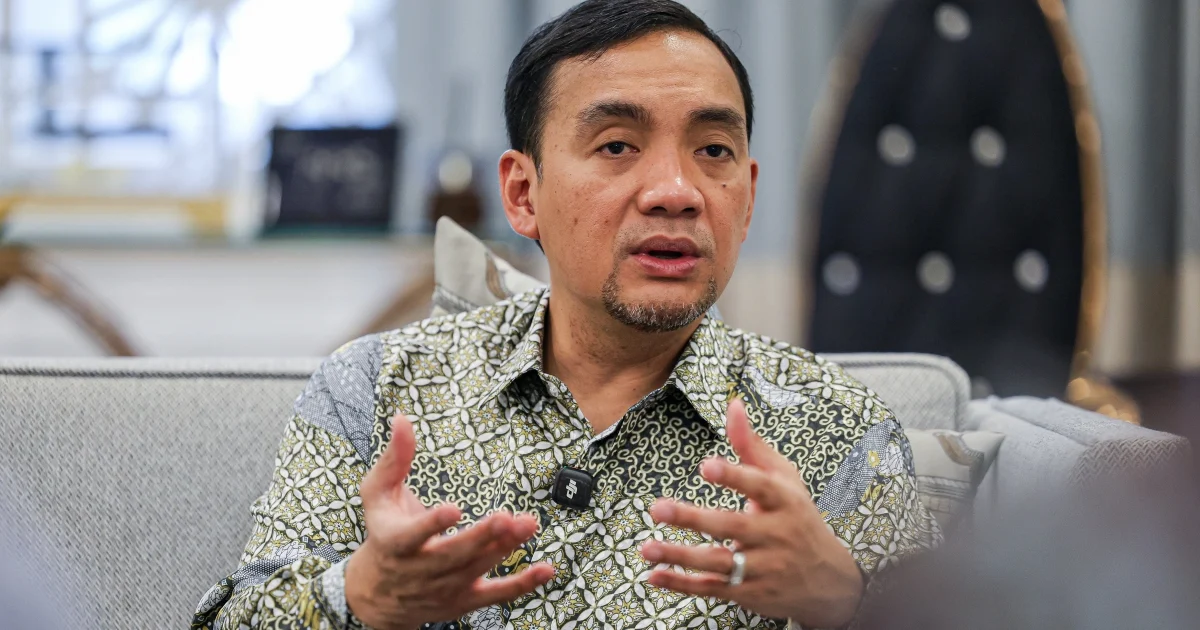
Johor's caretaker Menteri Besar Datuk Onn Hafiz Ghazi has pushed back against allegations suggesting he portrayed the state palace as having mandated the dissolution of the Johor state assembly. The denial came in response to remarks attributed to Datuk Dr Mohd Puad Zarkashi, who had previously claimed that Onn Hafiz had made such statements regarding palace involvement in the dissolution decision.
The dispute over the palace's precise role in triggering the legislative assembly's dissolution has become a point of public clarification for Onn Hafiz, as the matter touches on constitutional protocol and the separation of powers within Johor's governance structure. Dissolution of a state assembly typically occurs either through the deliberate request of the Menteri Besar or through statutory circumstances, and the distinction between these scenarios carries significant weight in understanding how political transitions unfold.
The backdrop to this exchange involves the broader political dynamics in Johor, Malaysia's southernmost peninsular state and home to a substantial portion of the nation's population and economic activity. Johor has historically been a politically significant state, often regarded as a bellwether for broader electoral trends across Malaysia. Recent years have witnessed considerable political realignment in the state, with various coalition arrangements and power-sharing negotiations shaping the landscape.
Onn Hafiz's position as caretaker Menteri Besar reflects an interim governance arrangement, typically implemented during transitional periods when elections are imminent or when coalition negotiations are underway. During such phases, the caretaker administration maintains essential government functions while remaining constrained in initiating major new policy initiatives. The caretaker's denial of palace involvement carries implications for how stakeholders and the public understand the legitimate source of authority for the assembly's dissolution.
The nature of claims about palace involvement in political decisions remains sensitive in Malaysian constitutional politics, where the roles of constitutional monarchies and elected bodies are carefully delineated. State palaces, while important ceremonial and constitutional institutions, operate within frameworks that theoretically insulate them from direct partisan political decision-making. Assertions that a palace has actively "ordered" a dissolution can therefore be interpreted as suggesting either an extraordinary exercise of discretionary power or, conversely, as a mischaracterization of events.
Onn Hafiz's rebuttal suggests he wants to establish clarity about who bears responsibility for the assembly dissolution—a matter with potential consequences for how voters and political observers evaluate the legitimacy and necessity of the action. By distancing himself from claims that the palace issued directives, he may be positioning himself as the deliberate agent making governance decisions, which carries different political implications than portraying himself as simply executing palace orders.
Datuk Dr Mohd Puad Zarkashi's initial claims had inserted the palace into the narrative surrounding the assembly's dissolution, raising questions about whether the decision emerged from democratic political processes or from institutional pressure. The specific context in which such statements were made remains relevant to evaluating their accuracy and intended meaning. Political figures sometimes cite institutional pressures or external constraints to explain difficult decisions, and the truth or falsity of such explanations can significantly influence public perception.
The dispute also reflects broader questions about transparency in state-level governance and the mechanisms through which consequential constitutional decisions are reached. Malaysian voters and civil society observers increasingly scrutinize the justifications offered for major political actions, particularly those affecting the timing and circumstances of elections. When ambiguity surrounds the true drivers of such decisions, it can undermine public confidence in institutional legitimacy.
For Malaysian observers monitoring Johor politics, this exchange highlights the persistence of contested narratives even within the same political ecosystem. Multiple political figures may offer divergent accounts of the same events, creating space for interpretation and debate. The caretaker Menteri Besar's explicit denial indicates he views the characterization as sufficiently significant to warrant public correction, suggesting the matter carries weight beyond mere semantics.
The distinction between the palace requesting, advising upon, or ordering an assembly dissolution carries constitutional and practical importance. Malaysian state constitutions typically grant the Menteri Besar considerable discretion in recommending dissolution to the Sultan, with the Sultan's approval being largely formal in normal circumstances. Conversely, situations where the palace takes the initiative to press for dissolution represent departures from typical practice and would constitute more significant assertions of palace authority.
As Johor moves toward elections following the caretaker period, the clarification of who decided the assembly's dissolution and through what processes remains historically relevant. Voters assessing the various political actors and their approaches to governance may factor in how decisions were made and how they are subsequently explained. Onn Hafiz's denial positions him as the decision-maker rather than as someone bound by palace instruction, a distinction that carries different implications for evaluating his leadership and political autonomy.
The ongoing clarifications and denials in Johor politics underscore how state-level political transitions generate scrutiny and interpretation. Whether future developments vindicate Onn Hafiz's characterization or sustain earlier claims about palace involvement, the episode demonstrates the continuing importance of understanding the actual mechanisms through which Malaysian state-level constitutional decisions materialize.

