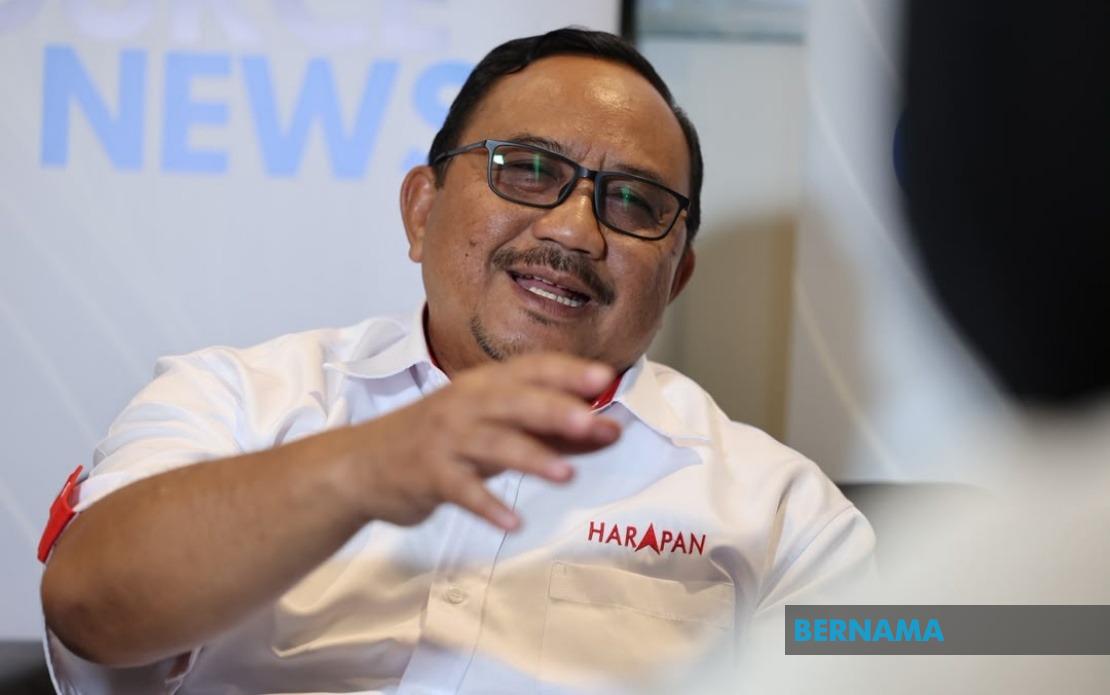
Batu Pahat MP Onn Abu Bakar has submitted a proposal for a Wireless Bridging System (WBS) infrastructure project to the Academy of Sciences Malaysia (ASM) as part of his campaign to address a significant digital connectivity crisis affecting rural communities in the Senggarang state constituency. The initiative, positioned under the Science, Technology and Innovation Ministry (MOSTI), seeks an initial allocation between RM100,000 and RM200,000 and will be executed in collaboration with Universiti Tun Hussein Onn Malaysia (UTHM). The move reflects growing concern across Malaysia's rural areas about persistent internet infrastructure gaps that continue to disadvantage communities despite the nation's overall advancement in telecommunications.
The problem Onn seeks to tackle is acute: residents across seven identified localities within Senggarang currently experience severely degraded mobile signals, typically registering only one to two bars on their devices—a situation that fundamentally constrains access to digital services, online education, and economic opportunities. The affected areas include Jalan Kampung Sungai Keluang Darat, Jalan Kampung Parit Kadir, Jalan Kampung Parit Seri Bahrom, Kampung Punggur Darat, Sri Merlong, Simpang 6, and the vicinity of Seri Bahrom Mosque. These communication "blind spots" represent a form of digital exclusion increasingly unacceptable in an era where internet connectivity has become essential infrastructure, akin to electricity or clean water.
Onn's articulation of the problem emphasizes equity and inclusion: ensuring that no resident is "left behind in the digital era" serves both humanitarian and economic imperatives. Through UTHM's technical expertise and research capabilities, the proposed WBS system would amplify and stabilize internet signals to these targeted locations, providing a technology-driven solution to geography-based disadvantages. The WBS approach represents a pragmatic middle path between expensive large-scale infrastructure deployment and acceptance of continued digital marginalization. For Malaysian policymakers and technology authorities, the proposal underscores how strategic partnerships between government agencies, academic institutions, and local representatives can generate practical solutions to persistent infrastructure challenges.
Onn's positioning of this initiative within his broader electoral platform is significant. He frames digital infrastructure development as one of his "Six Commitments" for comprehensive Senggarang development, indicating that connectivity improvement occupies central space in his vision for constituency progress. This integration reflects a broader Malaysian political reality: digital divide issues increasingly influence voter expectations, particularly in constituencies where rural communities comprise substantial portions of the electorate. By advancing a concrete, technically grounded proposal rather than rhetorical promises, Onn attempts to demonstrate substantive engagement with constituent concerns.
The parliamentary MP's advantage in raising such issues directly with regulatory bodies—the Malaysian Communications and Multimedia Commission (MCMC) and the Communications Ministry—provides institutional leverage that local leaders often lack. This reality highlights how Malaysia's federal structure sometimes requires elected representatives at multiple levels to effectively advocate for grassroots infrastructure needs. Onn's dual position as both a parliamentary MP and state election candidate theoretically positions him to navigate bureaucratic channels and secure necessary approvals more efficiently than non-incumbent candidates might achieve.
Professor Muhammad Ramlee Kamarudin from UTHM's Electrical and Electronic Engineering Faculty provided technical validation of the proposal's feasibility and timeliness. The WBS proposal was formally submitted to MOSTI in February and presented in March, indicating several months of groundwork before public announcement. The professor acknowledged that multiple villages throughout the Batu Pahat parliamentary area continue struggling with inadequate 4G and 5G network coverage, situating Senggarang's connectivity challenges within a broader regional problem affecting several constituencies across southern Johor.
Crucially, UTHM has demonstrated practical success with this exact technology in a different context. The university previously implemented WBS technology in Kampung Simbuan Tulid, Keningau, Sabah, where outcomes demonstrated strong potential for delivering stable and reliable internet access to dispersed rural populations. This precedent strengthens the Senggarang proposal's credibility, transforming it from theoretical concept to proven approach adapted for a new setting. Muhammad Ramlee's commitment to supervise the Sabah project continuously through 2027 suggests serious institutional dedication to long-term sustainability and effectiveness monitoring—standards that Senggarang residents would reasonably expect applied to any funded initiative in their constituency.
Senggarang comprises one of three state seats within the Batu Pahat parliamentary constituency, alongside Rengit and Penggaram, making it a significant component of broader political dynamics in the region. The state election contest is shaping as a three-way race involving Onn Abu Bakar representing Pakatan Harapan through PKR, Mohd Yusla Ismail representing the Barisan Nasional through UMNO, and Datuk Mohd Rashid Hasnon representing Perikatan Nasional through Bersatu. Each candidate presumably brings different resources, political networks, and visions for addressing constituent needs, with infrastructure development and digital inclusion emerging as meaningful points of differentiation.
The timing of the Senggarang election—with voting scheduled for July 11 and early voting on July 7—creates a compressed timeline in which such infrastructure proposals gain particular salience. Voters evaluating competing candidates naturally consider which aspirants demonstrate concrete understanding of local challenges and possess viable pathways to resource solutions. A proposal that combines identified community needs, academic institutional backing, and ministerial-level funding mechanisms presents more persuasive electoral messaging than unsubstantiated promises of future development.
For Malaysian telecommunications policy broadly, the Senggarang initiative reflects important broader patterns. Rural digital divide challenges persist despite Malaysia's status as a middle-income, relatively developed nation with sophisticated telecommunications infrastructure in urban areas. These gaps indicate that market forces alone have not adequately addressed connectivity in dispersed, lower-density communities where infrastructure costs per user remain prohibitively high. Hybrid models combining academic research institutions, government funding, and practical on-ground implementation may offer scalable templates applicable across other underserved constituencies nationwide.
The proposal also illustrates how innovation in technology alone remains insufficient without addressing political economy dimensions. Securing funding, managing technical implementation, ensuring long-term maintenance, and sustaining service quality all require institutional coordination that academic expertise, while necessary, cannot wholly provide. Onn's role in leveraging governmental relationships and securing budgetary allocations represents an equally critical component of project success as UTHM's technical prowess.

