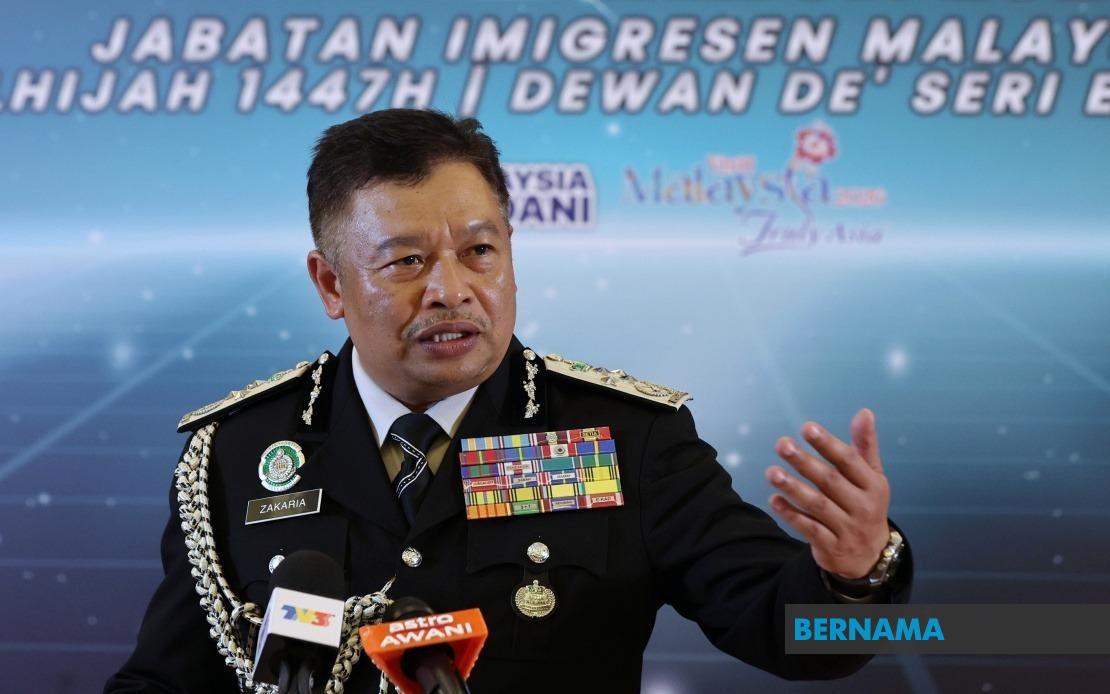
Malaysia's Immigration Department has moved to reassure passport holders that the recent suspension of extended passport validity is a limited technical matter affecting just two global carriers, not an indication of broader international concerns about Malaysian travel documents. Datuk Zakaria Shaaban, the Immigration Director-General, disclosed at a press conference in Putrajaya that feedback received by the department identified only two airlines experiencing system incompatibilities when handling Malaysian passports valid for longer than the standard decade. The clarification addresses public anxiety that emerged following the department's announcement that it was temporarily suspending the issuance of Malaysian International Passports with validity periods exceeding 10 years.
The core issue stems not from foreign governments or international bodies rejecting Malaysian passports, but rather from technical limitations embedded within the reservation and ticketing systems operated by these particular carriers. Zakaria emphasised that the airlines' systems are used globally by many operators, and the overwhelming majority of international carriers process Malaysian passports with extended validity without difficulty. The decision to suspend the additional validity period was therefore a precautionary measure targeting a narrow problem rather than a response to systemic distrust in Malaysian travel documentation. This distinction is crucial for Malaysian travellers and those holding passports that already received the extended validity, as it suggests the matter remains tractable rather than representing a fundamental challenge to the credibility of Malaysian identity documents.
Prior to the suspension, the Immigration Department had been granting Malaysian passport applicants an additional six months beyond the standard 10-year validity when they renewed their documents with substantial time remaining on their existing passports. This policy was designed to prevent Malaysians from experiencing an effective loss of validity when transitioning to new travel documents. Under that arrangement, an applicant with seven years remaining on their old passport would receive a new one valid for ten years plus six months, maximising the utility of the replacement process. The department characterised this extension as a customer-friendly measure rather than as an extraordinary privilege, reasoning that it compensated for the inconvenience of passport renewal without substantially increasing costs or security risks.
The suspension of this additional validity period was implemented with immediate effect following discussions with the International Civil Aviation Organization (ICAO), the United Nations specialised agency overseeing civil aviation standards and security protocols. The timing and coordination with ICAO suggests that the department identified the airline compatibility issues through reporting channels that feed into broader aviation safety and standardisation frameworks. By working through ICAO rather than attempting to resolve matters bilaterally with individual carriers, Malaysia is aligning its approach with international aviation governance structures, though this also implies that a resolution may require navigating complex global coordination mechanisms rather than simple bilateral negotiations.
To address the concerns of Malaysians already holding passports issued with the extended 10-year-and-six-months validity, the Immigration Department announced a free replacement programme. This gesture represents an acknowledgment that the policy change places an unexpected burden on citizens who obtained passports in good faith under the previous arrangement. The free replacement option allows affected passport holders to obtain new documents with standard 10-year validity without incurring the usual renewal fees, though the practical advantages of accepting this offer depend on when their current passports expire and whether they anticipate encountering the two problematic airlines during their remaining validity period.
For Malaysian travellers, the immediate practical implications of the suspension are modest, particularly given that the extended validity issue affects only two airlines. Malaysians holding passports with standard 10-year validity face no complications, as such documents have never been subject to system processing problems. Those holding recently issued passports with the extended validity can generally continue using them without disruption unless they specifically book with one of the two affected carriers, in which case they may encounter technical glitches during reservation processes or at check-in. The extension of Malaysian passport validity to more than a decade was never as widespread or routine as the standard issuance, so the suspension primarily affects a subset of relatively recent renewals.
The situation reflects a broader tension in modern aviation security and identity verification systems, where the technical infrastructure supporting international travel sometimes lags behind policy innovations introduced by individual nations. Malaysia's decision to extend passport validity for a subset of applicants was well-intentioned but did not account for the possibility that some airlines' legacy systems or data validation protocols might not accommodate validity periods exceeding a decade. This type of mismatch between national policy and international operational systems occurs periodically across various countries, though it typically receives limited public attention unless it affects large populations or creates widespread travel disruptions.
The Immigration Department's explicit statement that it is uncertain whether only two airlines face issues, acknowledging the possibility of unreported problems with other carriers, suggests a degree of transparency about the limits of current information. This caveat protects the department from the embarrassment of later discovering additional affected airlines while having assured the public that only two faced difficulties. It also implies that systematic monitoring of airline system compatibility may not be automatic, and that the department depends substantially on passenger complaints and feedback to identify emerging problems. This reactive rather than proactive approach to identifying system incompatibilities may explain why the issue remained undetected until recently, despite the extension policy having been in place for some time.
Regionally, Malaysia's experience serves as a cautionary example for other Southeast Asian nations considering similar passport validity extensions. While longer validity periods offer convenience to travellers and reduce administrative processing burdens, they require comprehensive coordination with international stakeholders, particularly the aviation industry, to ensure seamless implementation. The suspension of Malaysia's extended validity policy demonstrates that unilateral national decisions about travel document specifications can encounter unexpected friction within globalised transportation systems where interoperability remains imperfect. For Malaysian officials and those in neighbouring countries, this episode underscores the importance of consulting extensively with airlines and ICAO before introducing passport policy changes that diverge from established international norms.
Moving forward, the Immigration Department's priority will be resolving the airline system compatibility issues in collaboration with the affected carriers and ICAO. The timeline for reintroducing the extended validity option remains unclear, though the framing of the suspension as temporary rather than permanent suggests confidence that solutions exist. Whether those solutions involve upgrading the two airlines' systems to accommodate longer validity periods, or instead require accepting that extended validity will remain unavailable for passengers of those specific carriers, will likely become apparent only as technical discussions progress. In the interim, Malaysians can continue travelling internationally with their current passports, with the understanding that the extension policy represents a temporary pause rather than a permanent policy reversal.

