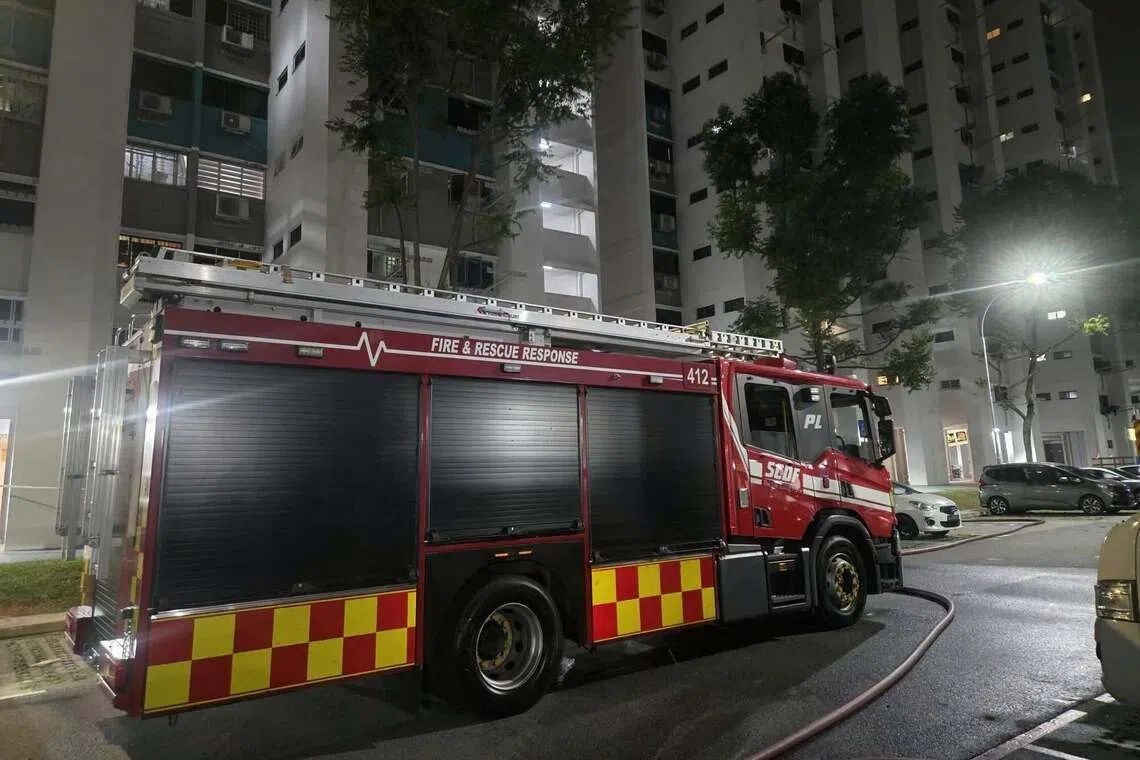
A residential fire in the Jurong East district of Singapore claimed one life in the early hours of Aug 16, while 50 residents were evacuated to safety. The Singapore Civil Defence Force was notified of the blaze at Block 339 Jurong East Avenue 1 at 3.55am, arriving to find thick black smoke billowing from a unit on the third level.
According to SCDF's account, the fire was confined to items within the affected unit's living room. Upon forcing entry into the premises, firefighters discovered an unresponsive individual in the living room area. Medical personnel subsequently declared the resident deceased at the scene. The identity of the victim and precise circumstances surrounding the fatality have not been disclosed pending further investigation.
Singapore's fire authorities have indicated that the cause of the fire remains under examination. No official statement has been released regarding the preliminary findings or whether suspicious circumstances are suspected. Police were also contacted for information, though details about their involvement have not yet been made public.
This incident marks a significant and troubling escalation in fatal residential fires within Singapore's public housing sector. Since the final week of July, at least three other fatal fires have occurred in HDB flats across different parts of the island, raising concerns about fire safety in high-density residential buildings that house hundreds of thousands of Singaporean families.
The sequence of incidents began on July 28 when a fire broke out at Block 39 Circuit Road, claiming the life of a 70-year-old male resident. Three days later, on July 31, another fire struck an eighth-floor unit at Block 309 Clementi Avenue 4, resulting in the death of a 65-year-old man. That incident also injured two firefighters who were responding to the blaze, underscoring the hazardous conditions these emergency responders face when tackling residential fires in confined spaces.
The pattern continued into the first week of August when Block 684 Race Course Road became the site of another major fire on Aug 3. The blaze affected a fifth-floor unit and necessitated the hospitalization of five individuals, ranging in age from 55 to 88 years old. An 88-year-old victim from this fire subsequently died on Aug 5, two days after the initial incident, extending the toll of this particular fire beyond the initial emergency response period.
For Malaysian readers and observers across Southeast Asia, these incidents carry relevance beyond Singapore's borders. Many Malaysians work in or visit Singapore regularly, and the cluster of fatal fires in public housing raises questions about residential fire safety standards that could prompt reflection on similar safety concerns in Malaysian residential high-rises, whether public or private. The frequency of these incidents also demonstrates that even in a developed city-state with advanced infrastructure and emergency services, fire hazards in multi-storey residential buildings remain a persistent threat.
The Jurong East fire occurs at a time when residents of public housing estates across Singapore may be questioning whether existing safety protocols, fire detection systems, and evacuation procedures are adequate. HDB flats house the majority of Singapore's population, making widespread fire safety concerns a matter affecting millions of residents. The convergence of four fatal incidents within approximately two weeks suggests either a coincidental clustering or the emergence of patterns that deserve urgent attention from fire safety authorities and housing authorities alike.
Investigations into each of these fires will likely focus on common factors such as electrical faults, cooking-related incidents, smoking materials, or other ignition sources commonly implicated in residential fires. The authorities will also examine whether occupants had adequate time to evacuate and whether smoke detection systems functioned properly. In the Clementi Avenue fire, injuries to firefighters raise additional questions about structural challenges that may complicate rescue operations in certain HDB blocks.
The repeated occurrence of these incidents underscores the critical importance of public education campaigns regarding fire prevention, the proper use and maintenance of smoke detectors, and evacuation procedures. While SCDF's rapid response in each case has been noted, prevention remains the most effective tool in reducing fatalities. Residents in high-density blocks face unique vulnerabilities due to the proximity of units, shared ventilation systems, and potential challenges in swift evacuation, particularly for elderly or mobility-impaired residents.
As investigations proceed into the Jurong East fire, attention will likely turn to whether any common elements link the four fatal incidents, and whether systemic safety improvements are warranted across Singapore's extensive HDB estate network. The loss of life in residential fires, while statistically uncommon in developed nations, remains a tragedy that impacts families and communities profoundly.

