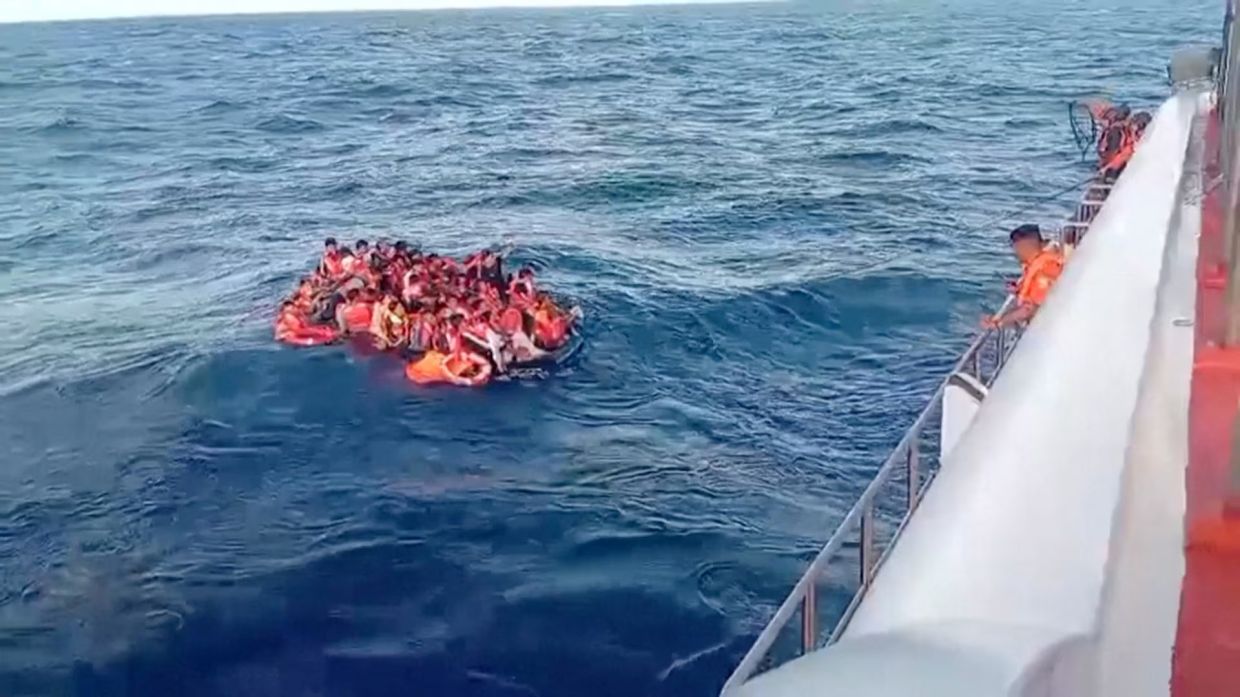
An Indonesian passenger ferry caught fire in the early hours of Wednesday morning while traversing waters between Bali and neighbouring Lombok, claiming the life of one woman and prompting a major rescue operation that successfully brought 211 people to safety. The incident, reported by local authorities on Thursday, highlights once again the maritime risks faced by communities across Indonesia's sprawling archipelago, where ferry travel remains an essential lifeline for millions.
The Putri Yasmin ignited around 4:15 a.m. local time on Wednesday as it made its scheduled crossing from the tourist destination of Bali toward Lombok. The rapid response of multiple agencies prevented what could have been a catastrophic loss of life. Personnel from the National Search and Rescue Agency, the Indonesian Navy, maritime police, and crews from civilian vessels in the vicinity coordinated an intensive evacuation effort that managed to transfer all survivors safely to ports serving both islands.
Authorities confirmed that a single Indonesian woman perished in the blaze, though the full circumstances surrounding her death remain under investigation. The majority of those aboard managed to escape the burning vessel and reach safety through the combined efforts of the rescue teams. Officials involved in the operation described the evacuation as having proceeded safely and in an orderly manner, a significant achievement given the potentially chaotic conditions that fires at sea can create.
However, the incident has already revealed administrative inconsistencies that raise questions about passenger manifesting practices. The ferry's official manifest recorded 131 individuals aboard, comprising 114 passengers and 17 crew members. Yet authorities later established that additional passengers without proper documentation were present on the vessel at the time of the emergency. This discrepancy suggests that the actual passenger load exceeded official figures, a common problem in maritime transport throughout the region that undermines safety oversight.
The appearance of unregistered passengers underscores broader challenges facing Indonesian maritime safety. Proper manifesting serves as a critical control mechanism, allowing authorities to verify that passenger numbers do not exceed vessel capacity and enabling rapid accounting during emergencies. When individuals travel without official registration, rescue operations face uncertainty about whether all persons have been accounted for, and compliance with international maritime safety conventions becomes questionable.
Investigations into the fire's origin have commenced under the direction of Indonesia's National Transportation Safety Committee, working alongside officials from the Lembar Port Authority in Lombok. Determining what sparked the blaze will be crucial to understanding whether the incident resulted from mechanical failure, improper maintenance, negligent operations, or some other cause. Authorities are also conducting ongoing assessments of the material damage inflicted by the fire, including the loss or damage to the vessel itself, vehicles and cargo carried aboard.
The Putri Yasmin incident arrives amid a persistent pattern of maritime accidents across Indonesia, a nation comprising more than 17,000 islands where ferry services form the backbone of inter-island connectivity. For millions of Indonesians and visitors to the region, ferries represent the primary—and often only—means of traveling between islands. This dependence on maritime transport, combined with Indonesia's challenging geographical and meteorological conditions, has created an environment where accidents remain distressingly common.
Experts and observers have long attributed Indonesia's maritime casualty rates to two interconnected factors: inconsistent enforcement of safety regulations and the unpredictable tropical weather patterns that characterize the region. Monsoon seasons bring challenging sea conditions that test even well-maintained vessels, while vessels operating with inadequate maintenance, insufficient safety equipment, or crews lacking proper training face substantially elevated risks during rough weather. The combination of these structural vulnerabilities has resulted in dozens of significant maritime disasters over the past two decades.
For Malaysian and Southeast Asian readers, the Putri Yasmin incident carries particular resonance. Malaysia similarly depends on ferry services to connect its peninsula and numerous islands, and shares many of the same maritime challenges as Indonesia. Regional cooperation on maritime safety standards, vessel inspection protocols, and crew training could help reduce the frequency and severity of such incidents across Southeast Asia. The incident also highlights how quickly coordination between multiple agencies and civilian responders can mitigate disaster when infrastructure and training are adequate.
The successful rescue of 211 people demonstrates that effective emergency response remains possible even when initial conditions appear dire. The presence of nearby civilian vessels willing to assist, combined with prompt engagement of professional rescue services, prevented a far larger tragedy. Yet preventing such fires from occurring in the first place requires sustained investment in vessel maintenance, regular safety inspections, proper crew training, and rigorous enforcement of maritime regulations.
As authorities continue investigating the Putri Yasmin fire and assessing damage to the vessel and cargo, questions will inevitably emerge about whether existing safety protocols were followed and whether this ferry had undergone required maintenance and inspection procedures. The incident will likely intensify pressure on Indonesian maritime authorities to strengthen oversight and enforcement mechanisms. For the traveling public across the archipelago, the event serves as an uncomfortable reminder of the risks inherent in ferry travel, even on routes served by established operators with regular service schedules.
The single confirmed death in this incident, while tragic for the deceased woman's family and community, represents a remarkably low fatality rate given the circumstances. This relative success should not diminish the urgency of preventing future maritime disasters. Rather, it underscores both the capacity of effective emergency response systems to save lives and the moral imperative to continue strengthening maritime safety across Indonesia and the broader Southeast Asian region.

