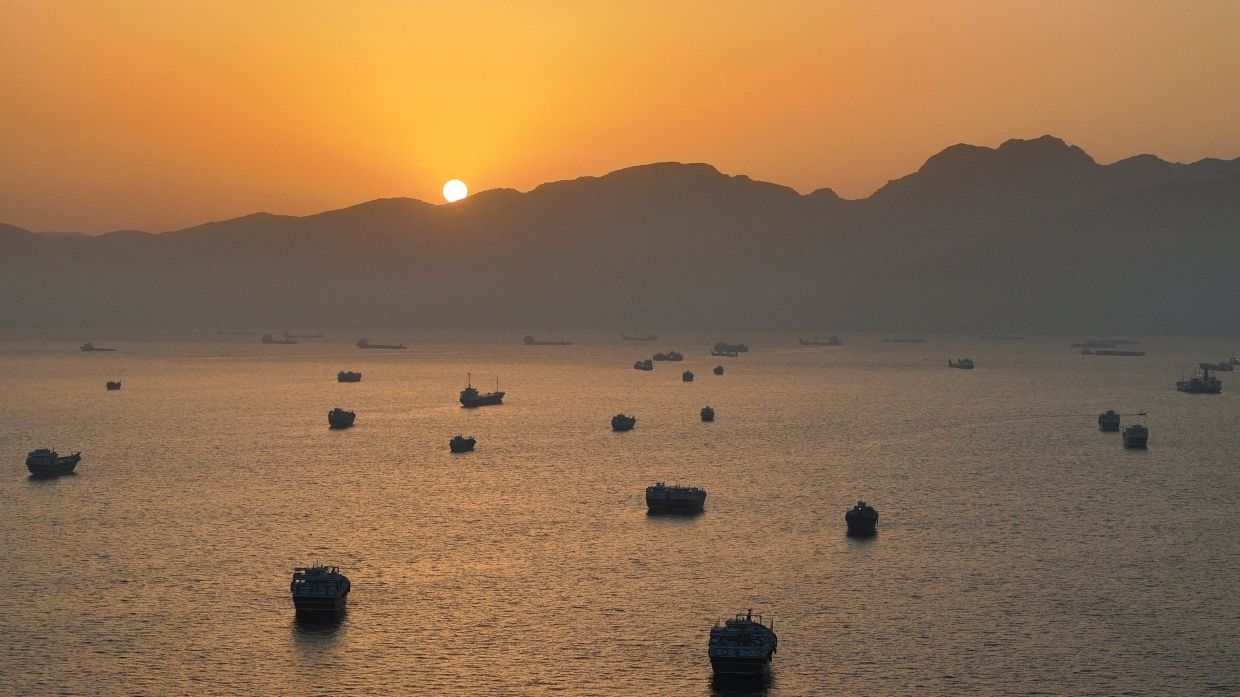
The Strait of Hormuz is seeing renewed movement of commercial shipping after weeks of disruption, with three major crude carriers successfully exiting the strategic waterway on Wednesday and steering toward their destinations across Asia. The breakthrough follows an interim agreement between Iran and the United States that has unlocked supplies previously stranded in the Persian Gulf region, offering potential relief to global energy markets that have faced supply uncertainties since the Middle East conflict intensified.
The South Korean-flagged supertanker VL Breeze led the exodus, carrying approximately 2 million barrels of condensate sourced from Qatar and crude from Abu Dhabi. The vessel, operated under a charter agreement with South Korean refinery Hyundai Oilbank, successfully transited the strait and is now charted toward the company's facilities in Daesan. Such movements reflect the growing confidence among major Asian refiners that the maritime corridor through Hormuz remains passable for commercial operations, despite months of geopolitical tension.
Two additional vessels followed in the same passage, each representing different regional supply chains within the Gulf. The Plata Carrier, sailing under Liberian registry and chartered by India's state-owned Oil Corporation, departed with 2 million barrels of Saudi Arabian crude destined for Indian refineries. Simultaneously, the Suezmax-class tanker Prudent Warrior, also flying the Liberian flag, left the strait carrying 1 million barrels of Iraqi Basrah crude bound for the port of Sohar in Oman. Together, these three vessels represent a coordinated effort to restore supply flows that have been severely disrupted since the beginning of regional hostilities.
The significance of this movement lies in addressing an enormous backlog that has accumulated over recent weeks. Shipping analysts from Kpler and Vortexa estimated last week that approximately 90 million barrels of crude remained trapped within the Persian Gulf, unable to navigate the Hormuz bottleneck due to safety concerns and operational uncertainties. The resumption of tanker transits signals confidence among shipping operators that conditions have stabilized sufficiently to justify commercial passage, though lingering risks remain evident in the diversity of routing options being employed.
South Korea has taken particular interest in monitoring these developments, with its maritime ministry confirming that four vessels operated by South Korean shipping companies have now successfully cleared the strait and are proceeding toward their designated ports. Of these vessels, one is returning directly to South Korea while the others are routing to intermediate destinations, demonstrating how the crisis has altered traditional supply chain logistics across the region. The broader picture, however, remains precarious: of the 26 vessels initially stranded since conflict erupted, eighteen remain within the Gulf waiting for safe passage conditions.
The establishment of temporary maritime corridors by Oman and the International Maritime Organization has provided a critical framework for these movements, though specific details about which vessels are utilizing these designated routes remain unclear. Oman's announcement that it would maintain the Strait of Hormuz as an open shipping lane without imposing transit tolls, while simultaneously creating two alternative routes positioned north and south of the conventional shipping lane, has demonstrated regional leadership in crisis management. These measures represent a pragmatic approach to maintaining commercial viability while acknowledging heightened security considerations.
Liquefied natural gas markets are also showing signs of recovery following similar pressures. Two empty LNG tankers, the Shandong Redwood and Milaha Qatar, were recently observed transiting westward through the strait to load cargoes from Qatari facilities. This movement represents the ninth empty LNG carrier to make this journey since the conflict began, marking the highest number observed during the entire crisis period. Such activity indicates that global energy markets are beginning to reposition themselves toward restoring pre-conflict supply patterns.
Qatar's energy position has been particularly critical to understanding regional dynamics. The nation's Prime Minister Sheikh Mohammed bin Abdulrahman al-Thani recently indicated to international media that Qatar expects to resume normal liquefied natural gas production capacity within several weeks. This timeline suggests confidence among Gulf energy producers that the current crisis phase is transitioning toward normalization, though full return to pre-conflict operational levels may require additional time for infrastructure stabilization and crew rotations.
For Malaysian and Southeast Asian energy consumers, these developments carry substantial implications. The region's refineries and power generation facilities have long depended on Middle Eastern crude and LNG supplies, and any extended disruption to Hormuz transit carries compounding effects through Asia's energy sector. The resumption of tanker transits through the strait helps stabilize pricing expectations and allows purchasing managers to finalize contracts with greater certainty. However, the persistence of eighteen stranded vessels in the Gulf underscores that normalization remains incomplete and fragile.
The interim Iran-US agreement appears to be functioning as a stabilizing mechanism that transcends the immediate diplomatic arrangement. By creating predictability around sanctions and commerce, the agreement has paradoxically reduced the commercial risk calculations that previously made Hormuz transit prohibitive for independent shipping operators. This psychological shift may prove as important as the specific commercial concessions themselves in restoring fluid movement through this critical chokepoint.
Looking forward, the trajectory of these tanker movements will serve as a bellwether for broader regional stability and energy market normalization. Continued success in moving stranded inventory and restoring regular supply flows could ease global crude pricing pressures that have affected manufacturing competitiveness across Southeast Asia. Conversely, any renewed disruptions to Hormuz operations would quickly reverse these gains and potentially trigger new supply-driven inflationary pressures. Asian energy-importing nations thus have strong interests in supporting the conditions that enabled this week's successful tanker transits.