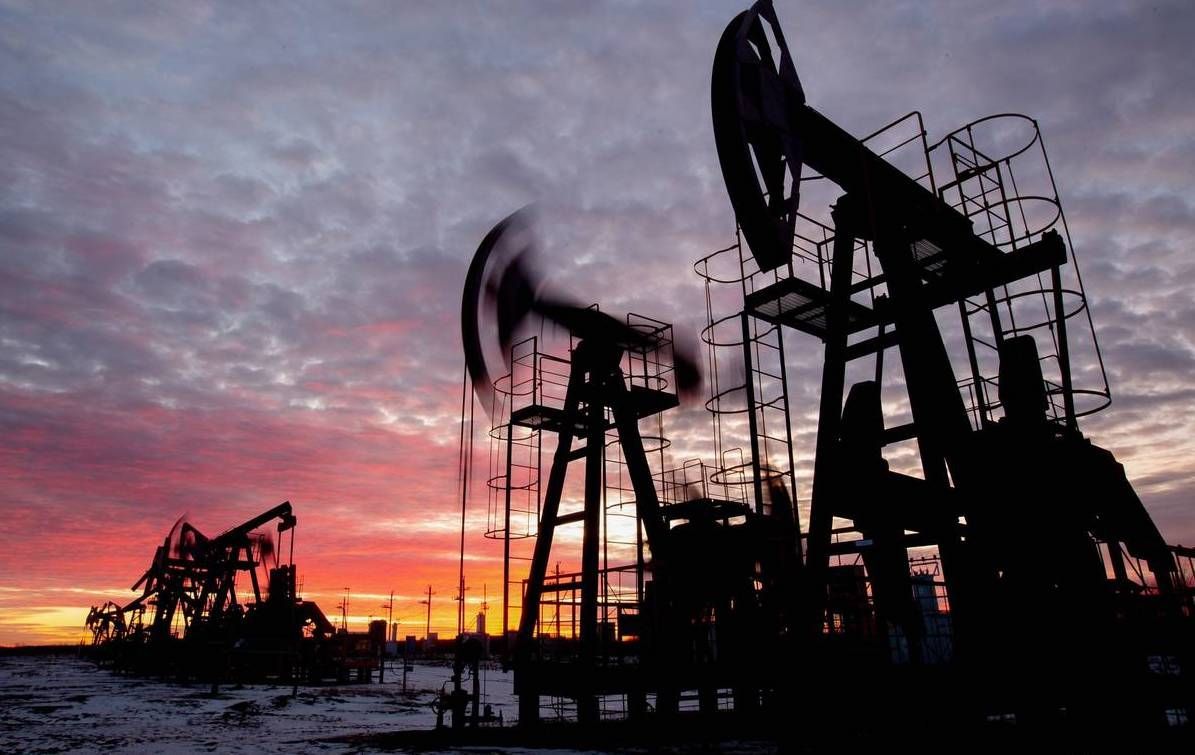
Crude oil markets responded positively on Thursday to renewed geopolitical uncertainty surrounding the Middle East, with Brent crude futures gaining US$1.86 to close at US$89.70 per barrel—a 2.1% advance that ended three consecutive sessions of losses. The surge came shortly after a Wall Street Journal report revealed that the Trump administration has repeatedly informed mediators of its unwillingness to resurrect a memorandum of understanding negotiated with Iran in June, effectively derailing a fresh wave of diplomatic overtures aimed at resuming high-level negotiations. Meanwhile, West Texas Intermediate crude added US$1.30 to settle at US$83.53, indicating broad-based strength across global oil benchmarks.
The rally reflected a recalibration of market expectations following confirmation that hopes for a near-term diplomatic resolution have substantially diminished. According to sources cited in the report, Trump administration officials have made their position unambiguous to intermediaries attempting to broker renewed talks between Washington and Tehran. This hardline stance contradicts ongoing efforts by third-party nations to re-engage the two adversaries, particularly as tensions persist across the region. When questioned by journalists on Thursday afternoon, Trump himself reinforced this position, stating flatly that the United States had no interest in dialogue with Iran and instead intended to pursue maximum economic pressure through intensified sanctions while penalising any nations choosing to maintain commercial relationships with the Islamic Republic.
The timing of this escalation proved significant, arriving just days after the Trump administration unveiled what it characterised as "the toughest sanctions in history" targeting Iran's economy on Monday. Treasury Secretary Scott Bessent framed these measures as a substitute for conventional military intervention, suggesting that sufficiently severe economic penalties could obviate the necessity for direct armed conflict. However, Iran's parliament security committee chair Ebrahim Azizi dismissed the sanctions as "inhumane and hostile," while paradoxically arguing that Washington's economic tools have become progressively less effective at achieving their stated objectives. This rhetorical positioning reflected Tehran's attempt to project resilience whilst acknowledging the genuine economic strain imposed by American restrictions.
Diplomatically, Qatar's prime minister embarked on a mission to Tehran on Thursday in a fresh attempt to broker talks aimed at concluding the broader US-Israeli conflict with Iran, which approaches its six-month milestone. Iran's most senior security official, Mohsen Rezaei, responded to these Qatari initiatives by issuing a stern warning that Tehran would target American military installations and economic infrastructure should Washington initiate any provocative actions during the mediation process. Such rhetoric underscores the delicate balance being attempted by regional intermediaries seeking to maintain channels of communication whilst both principal parties maintain maximalist public positions.
Underlying these immediate political developments lies a more enduring structural issue that analysts expect will frustrate diplomatic resolution efforts far into the future. Iran's nuclear programme remains the central point of contention, and expert consensus suggests that resolving this dispute will consume considerable time and political capital. Priyanka Sachdeva, head of market insights at Phillip Nova, noted that Iran's geography and control over the Strait of Hormuz represent potent leverage that Tehran will likely exploit throughout any negotiations, meaning prolonged uncertainty should be anticipated. Before the conflict began in late February, approximately one-fifth of global daily crude and liquefied natural gas supplies flowed through this critical waterway, making any disruption a matter of immediate consequence for energy markets worldwide.
Current transit data reflects this lingering concern. According to Kpler monitoring, only 10 commodity vessels passed through the Strait of Hormuz on Wednesday, representing a marginal improvement from previous lows but remaining substantially below the 10-day historical average of 15 transits daily. The vessels that did transit included a medium-range fuel tanker, a bitumen carrier, and a bulk vessel, indicating that even essential cargo movements continue at restricted volumes. This persistent caution underscores how geopolitical tensions continue to constrain normal shipping patterns despite the absence of dramatic new incidents.
Industrial operations further downstream continue recovering from the conflict's impacts. Kuwait's state-owned Integrated Petroleum Industries Company has progressively restarted all three crude-processing units at its Al-Zour refinery, which operates at 615,000 barrels daily capacity. As of August 19, these units were functioning at 60% capacity, according to industry consultancy IIR. This facility had suffered Iranian drone strikes in May, necessitating extended repairs. The gradual restoration of this Kuwaiti infrastructure demonstrates how supply-chain disruptions continue reverberating through regional energy systems months after direct military engagements.
Extending beyond the immediate Iran-US-Israel triangle, broader geopolitical competition continues destabilising the global security environment in ways that influence energy markets. Russia issued warnings that it could target British military installations both within and beyond Ukraine in retaliation for Kyiv's use of British-supplied long-range cruise missiles against Russian territory. Trump downplayed these escalating tensions, insisting that Russian President Vladimir Putin would refrain from attacking NATO members, and minimised recent statements from CIA director John Ratcliffe who reportedly cautioned Russian officials against precisely such aggression. Given Britain's founding NATO membership, any Russian military action against British targets would represent a dramatic escalation.
For Malaysian and Southeast Asian investors and energy consumers, these Middle Eastern dynamics carry substantial implications. As a region heavily dependent on energy imports and with significant shipping interests passing through contested waterways, any protracted geopolitical crisis could increase fuel costs and insurance premiums, ultimately raising the price Malaysian consumers pay for electricity, transport, and manufactured goods. The uncertainty surrounding both Iran sanctions and potential disruptions to Strait of Hormuz traffic means global energy markets will likely maintain upward pressure on prices through the remainder of 2024, benefiting energy exporters like Brunei while imposing costs on import-dependent economies throughout Southeast Asia.
The divergence between Trump's economic sanctions approach and traditional military responses represents a strategic gamble that will significantly influence regional stability. If economic pressure proves insufficient to modify Iranian behaviour or negotiating positions, escalation pressures will inevitably mount. Conversely, if sanctions achieve administration objectives without military escalation, the Trump administration will have demonstrated that extreme economic coercion can substitute for kinetic conflict. For now, markets are pricing in continued uncertainty, elevated risk premiums, and restricted energy flows from the world's most volatile region—a calculation that sustained oil price strength at current elevated levels.

