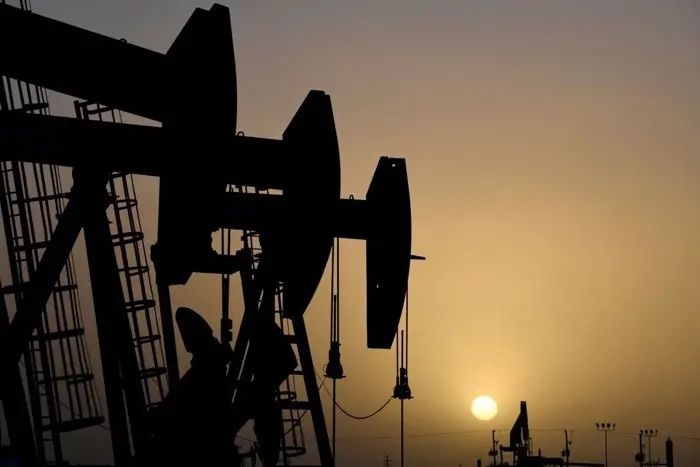
The oil market entered Friday morning on firm footing as tensions between Washington and Tehran reached new heights, pushing crude benchmarks higher and signalling investor concern about potential disruptions to one of the world's most vital energy corridors. Brent crude rose 70 cents to settle at $84.93 a barrel, while West Texas Intermediate gained 81 cents to $79.76, recovering ground lost in the previous session and underscoring renewed demand for energy contracts amid geopolitical uncertainty. The recovery caps a particularly volatile week, with both contracts posting double-digit percentage gains and positioning themselves for consecutive weekly advances that reflect deepening anxiety about regional stability.
The latest round of escalation began Wednesday when US forces launched two separate waves of airstrikes targeting Iranian military positions near the country's southern coast. The strikes represented a significant departure from the relative restraint that had prevailed since a memorandum of understanding was reached last month to pause active fighting. American operations continued throughout Thursday and into Friday, with US Central Command confirming that forces initiated a sixth consecutive night of strikes aimed at degrading Iranian military infrastructure. This sustained campaign signals Washington's determination to maintain pressure on Tehran despite the risks it poses to the broader regional balance.
Tehran has not remained passive in the face of American strikes. Instead, Iranian forces have responded with volleys of missiles and armed drones directed at US military installations throughout the Persian Gulf region and beyond, including attacks on a recently expanded American air base in Jordan. The back-and-forth pattern of escalation raises the prospect of unintended consequences and accidental triggers that could spiral beyond current containment. Qatar's defence ministry provided fresh evidence of these dangers Friday morning when it announced that its armed forces successfully intercepted an Iranian missile attack early in the day, though the interception operation itself caused shrapnel injuries to a child, illustrating how even defensive measures can produce collateral harm.
Beyond the direct military exchanges between the two powers lies a more ominous threat to global oil supplies: the potential weaponisation of the Red Sea. Intelligence sources and regional analysts have reported that Iran's leadership has instructed the Houthi movement, a powerful political and military organisation that controls significant territory in Yemen, to prepare contingency plans to blockade the Red Sea shipping route should the United States strike Iranian energy infrastructure. This conditional threat introduces a second-order risk into calculations about oil supply security, as it effectively ties the fate of one of the world's most important energy corridors to the escalation trajectory of the broader US-Iran confrontation.
The implications for global energy markets are substantial. The Strait of Hormuz, through which roughly one-third of globally traded seaborne oil passes, has long been considered the primary chokepoint in Middle Eastern geopolitics. The emergence of the Red Sea as a secondary potential disruption point multiplies the risks faced by energy traders and policymakers alike. Tim Waterer, chief market analyst at KCM Trade, characterised the situation as a "dual-risk scenario" in which investors must now price in the possibility of multiple simultaneous supply interruptions. This dual uncertainty has manifested as a persistent geopolitical premium embedded in both Brent and WTI pricing, lifting benchmarks well above what supply and demand fundamentals alone would justify.
For Southeast Asia and other energy-dependent regions, the ramifications are particularly acute. Many countries in the Association of Southeast Asian Nations import substantial quantities of crude oil and liquefied natural gas from the Middle East, with much of that cargo flowing through either the Strait of Hormuz or the Red Sea. A sustained disruption to either route would immediately increase energy costs across the region, feeding through to inflation in transportation, electricity generation, and manufacturing. Malaysia, as both an oil importer and a major regional energy hub, faces heightened exposure to supply shocks emanating from the Persian Gulf, particularly given the country's reliance on seaborne energy imports from the Middle East.
The international energy establishment has taken note of these dangers with evident concern. Fatih Birol, executive director of the International Energy Agency, conveyed explicit alarm about the trajectory of events at a forum hosted by the Council on Foreign Relations in Washington on Thursday. Birol stated that the IEA is genuinely worried about the regional situation and indicated that without measurable improvement over the coming weeks, the global oil market faces genuine supply security challenges. His comments carry weight given the IEA's role as the primary advisor to the developed world on energy policy and market stability.
The technical picture for oil prices reflects the underlying geopolitical tension. Analysts at IG Markets suggest that West Texas Intermediate could test the mid-$80s price range if it maintains support above the mid-$70s threshold, indicating that traders see potential for further modest upside. The weekly gains of approximately 12% across both benchmarks demonstrate how quickly market sentiment can shift when geopolitical risks intensify. The previous session's losses were entirely erased Friday, suggesting that the prevailing view among traders is that downside risks have been outweighed by supply disruption concerns.
While oil demand remains relatively muted by historical standards, and while global inventories retain substantial cushions against temporary supply disruptions, the cumulative effect of potentially losing access to both the Strait of Hormuz and the Red Sea simultaneously represents a scenario that financial markets are pricing in as non-trivial. The fact that Iranian leadership felt compelled to signal its capacity to disrupt the Red Sea through its Houthi partners suggests a degree of strategic calculation aimed at deterring further American military action. Whether this threat succeeds in constraining US operations or instead triggers further escalation remains uncertain, but the market is clearly treating the possibility of a major energy crisis as material enough to warrant a significant risk premium on crude prices moving forward.

