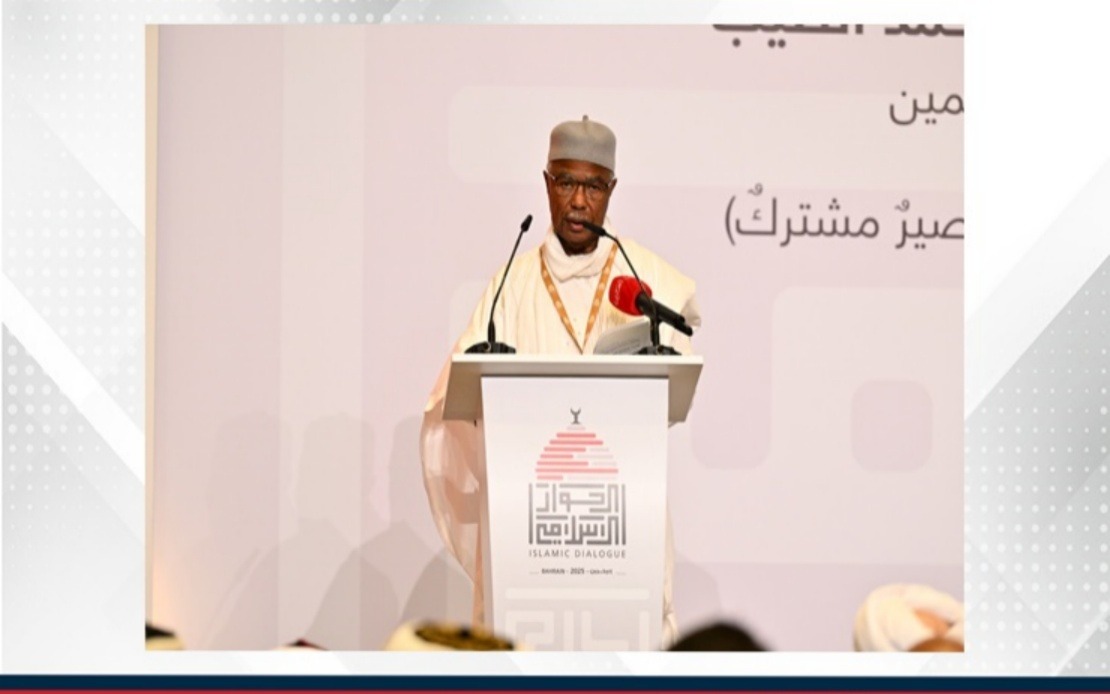
The Organisation of Islamic Cooperation on Friday threw its weight behind a landmark defense pact uniting three major Islamic nations, signaling strong institutional support for what regional observers view as a significant realignment of security cooperation in the Muslim world. The three-way agreement between Saudi Arabia, Turkey, and Pakistan was inked at a high-level summit convened in Mecca, with participating delegations led by Turkish President Recep Tayyip Erdogan, Saudi Crown Prince Mohammed bin Salman, and Pakistani Prime Minister Shehbaz Sharif gathering at Al-Safa Palace to formalize the arrangement.
OIC Secretary-General Sharein Brahim Taha framed the accord as far more than a conventional military arrangement, characterizing it instead as a foundational component of a broader vision for bolstering peace and security across the Islamic world and beyond. His statement underscored how the pact reflects a concerted commitment by these three strategically positioned nations to deepen their defense cooperation, with particular emphasis on advancing regional stability through coordinated action and sustained dialogue. The language employed by the OIC leadership suggested recognition of the agreement's potential to reshape geopolitical dynamics in a region confronting multifaceted security challenges ranging from terrorism and proxy conflicts to maritime disputes and great-power competition.
At its core, the Mecca Joint Defence Agreement establishes a collective security framework with significant implications for how member states might respond to future threats. The arrangement contains a mutual defense clause stipulating that any armed assault against one signatory nation would be treated as aggression against all three, effectively creating a tripwire mechanism designed to deter potential adversaries through credible collective response capabilities. Turkish officials emphasized that the pact targets no specific country but rather aims to strengthen each nation's defensive posture while promoting burden-sharing across the security partnership, a formulation designed to position the agreement as defensive rather than provocative in nature.
For Malaysia and other Southeast Asian nations with significant ties to the three signatories, the agreement carries important strategic implications. Turkey maintains active defense relationships across the region and plays a diplomatic role in various multilateral forums. Saudi Arabia remains a crucial economic and religious partner for Malaysia, while Pakistan has long-standing security cooperation frameworks with several ASEAN members. The consolidation of defense cooperation among these three powers may influence regional security architecture, particularly regarding maritime security in the Indian Ocean and broader counterterrorism operations that affect Southeast Asian interests.
The decision to sign the agreement in Mecca, Islam's holiest city, was deliberately symbolic, emphasizing the religious and civilizational dimensions of the partnership beyond conventional military considerations. This choice of venue reinforced the OIC Secretary-General's characterization of the pact as embodying shared determination among Muslim-majority states to address mounting security challenges through strengthened solidarity. The location signaled to the broader Islamic world that this arrangement represents a commitment to collective problem-solving rooted in shared religious and cultural identity rather than narrow national interest calculations.
Taha's public endorsement carries weight within the OIC framework, which comprises 57 member states and serves as the primary institutional platform for coordinating positions among Muslim-majority nations on matters of common concern. His explicit support suggests that the three signatories have successfully framed their agreement as consistent with broader OIC objectives, potentially facilitating diplomatic acceptance among member states that might otherwise harbor reservations about bilateral or trilateral defense arrangements. The Secretary-General's hope that the pact would contribute to regional peace and prosperity represented a forward-looking assessment intended to shape how the agreement is perceived within Islamic diplomatic circles.
The timing of this summit and agreement reflects deeper strategic calculations by all three nations regarding their roles in global security architecture. Turkey continues positioning itself as a bridge between Europe and the Islamic world while managing complex relationships with regional powers. Saudi Arabia, under Crown Prince Mohammed bin Salman's leadership, has pursued an increasingly assertive regional security strategy while attempting to reduce its dependence on Western military support. Pakistan faces persistent security challenges along its borders and has sought to strengthen its position through strategic partnerships with major powers and regional actors.
The defense cooperation outlined in the agreement encompasses multiple dimensions beyond simple military alliance-building. Officials indicated that the framework facilitates enhanced information-sharing, joint strategic planning, and coordinated approaches to transnational security threats including terrorism and maritime piracy. Such arrangements typically involve establishing joint command structures, conducting coordinated military exercises, and developing common protocols for crisis communication and response mechanisms. These operational elements, while not elaborated in public statements, form the substantive foundation of modern defense partnerships.
For Southeast Asian observers, the agreement warrants attention regarding potential ramifications for regional balance and multilateral security architectures in which Malaysia participates. The OIC's institutional embrace of the pact may embolden similar defense initiatives among other Muslim-majority nations, potentially creating overlapping security arrangements that could complicate regional diplomacy. Conversely, the emphasis on collective security against aggression reflects principles consistent with ASEAN's founding documents, suggesting potential compatibility between the Mecca agreement and Southeast Asian security frameworks.
The OIC Secretary-General's reference to the agreement as historic suggests recognition that this represents a qualitative shift in how these three nations coordinate on security matters. Previous cooperation existed in bilateral formats, but the trilateral structure and explicit mutual defense provisions mark a departure toward more institutionalized collective action. This evolution reflects broader trends among developing nations seeking to reduce security dependence on traditional Western allies while building regional capacity for independent action.
Diplomatically, the agreement positions the three signatories as serious architects of their own security framework rather than passive consumers of great-power security guarantees. The mutual defense clause effectively creates an alternative security arrangement for the region, potentially influencing how neighboring states and external powers calculate their strategic moves. For Malaysia and other ASEAN members maintaining balanced relationships with multiple powers, such regional initiatives introduce new variables into security calculations while potentially offering opportunities for security cooperation with these three influential Muslim-majority states.
The OIC's enthusiastic reception of the agreement reflects institutional interest in demonstrating relevance to member states confronting genuine security challenges. By publicly supporting the Mecca pact, the organization positioned itself as endorsing pragmatic security cooperation while maintaining its broader agenda of promoting Islamic solidarity and peaceful conflict resolution. This balancing act resonates particularly in Southeast Asia, where nations simultaneously value sovereignty, regional cooperation, and strategic autonomy in navigating relationships with major powers and neighboring states.

