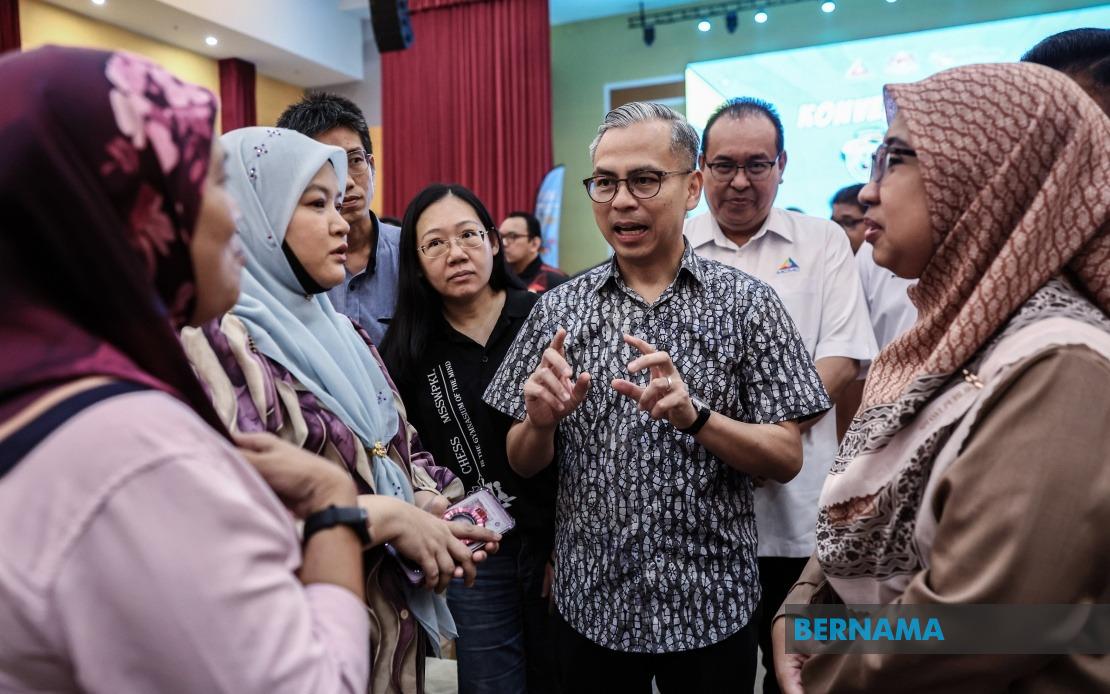
PKR has moved to reassure members and supporters that the temporary absence of deputy president Nurul Izzah Anwar will pose no impediment to the party's administrative machinery or strategic direction. Information Chief Datuk Seri Fahmi Fadzil made the declaration in Kuala Lumpur on Thursday, underlining that the party's organisational structure remains robust and capable of functioning without disruption during her leave period.
Nurul Izzah, the daughter of Prime Minister Datuk Seri Anwar Ibrahim, submitted a request for temporary leave to focus on her doctoral research and address personal commitments. Rather than accepting her resignation from the deputy president role, the PKR Central Leadership Council approved the leave arrangement, signalling the party's intent to retain her in its upper echelon once she concludes her studies. Fahmi stated that Nurul Izzah retains her membership and will remain an active contributor to PKR's political and ideological objectives in the future.
The arrangement delegates her responsibilities to Vice-President Datuk Seri Saifuddin Nasution Ismail, who assumes interim charge of the deputy president's portfolio during the leave. This succession plan demonstrates PKR's confidence in Saifuddin's capacity to manage the deputy president's duties while maintaining continuity in party governance. The Communications Minister characterised the transition as seamless, with no anticipated gaps in decision-making or operational efficiency.
The move comes amid broader speculation surrounding PKR and its allies within the ruling coalition. Questions have arisen about whether Subang Member of Parliament Wong Chen might step down from his parliamentary seat, a matter that has generated considerable discussion within political circles. Fahmi declined to provide details, noting that no official information had reached PKR on the subject and that any parliamentary vacancy announcement would properly emanate from Dewan Rakyat Speaker Tan Sri Johari Abdul.
Rumours have also swirled about a possible early general election, with observers suggesting the government might seek a fresh mandate before the constitutional deadline. Fahmi firmly dismissed such speculation, affirming that no accelerated electoral timeline exists in government planning. He indicated that the administration remains committed to conducting the next general election by year-end 2026 at the latest, allowing the current administration sufficient runway to deliver on its governance agenda.
The Federal Government's immediate priority centres on ensuring stable and effective administration, Fahmi explained. He highlighted the sustained commitment from all component parties within the Unity Government framework to maintain backing for Prime Minister Anwar Ibrahim's leadership throughout his current term. This emphasis on continuity reflects concern within coalition circles about potential fractures or defections that might undermine governmental stability.
Within Pakatan Harapan and the broader Unity Government, Fahmi noted, there exists unified determination to advance national recovery and implement the structural reforms that Malaysian society demands. The coalition partners have aligned themselves around an agenda designed to address accumulated governance deficits and modernise state institutions. This collaborative posture stands in contrast to the adversarial party politics that have characterised Malaysian governance historically.
One significant outstanding matter commanding government attention involves operationalising recommendations from the Royal Commission of Inquiry into Lembaga Tabung Haji covering the 2014-2020 period. The RCI's findings have identified systemic issues within the pilgrimage savings authority that necessitate institutional remediation. Implementing these recommendations represents a test of the government's reform credentials and its willingness to address past governance failures transparently.
Fahmi hinted that Prime Minister Anwar Ibrahim intends to make several significant announcements in the near term that will favourably impact the public interest and national development. While the Communications Minister provided no specifics regarding the timing or substance of these anticipated declarations, his remarks suggest the administration is preparing policy or administrative measures that it believes will resonate positively with Malaysians. Such announcements, if substantial, could help sustain the government's reform narrative and demonstrate tangible progress on its governance agenda. The remarks underscore ongoing efforts by the Unity Government to maintain momentum on its transformation initiatives while securing political stability necessary for their implementation.

