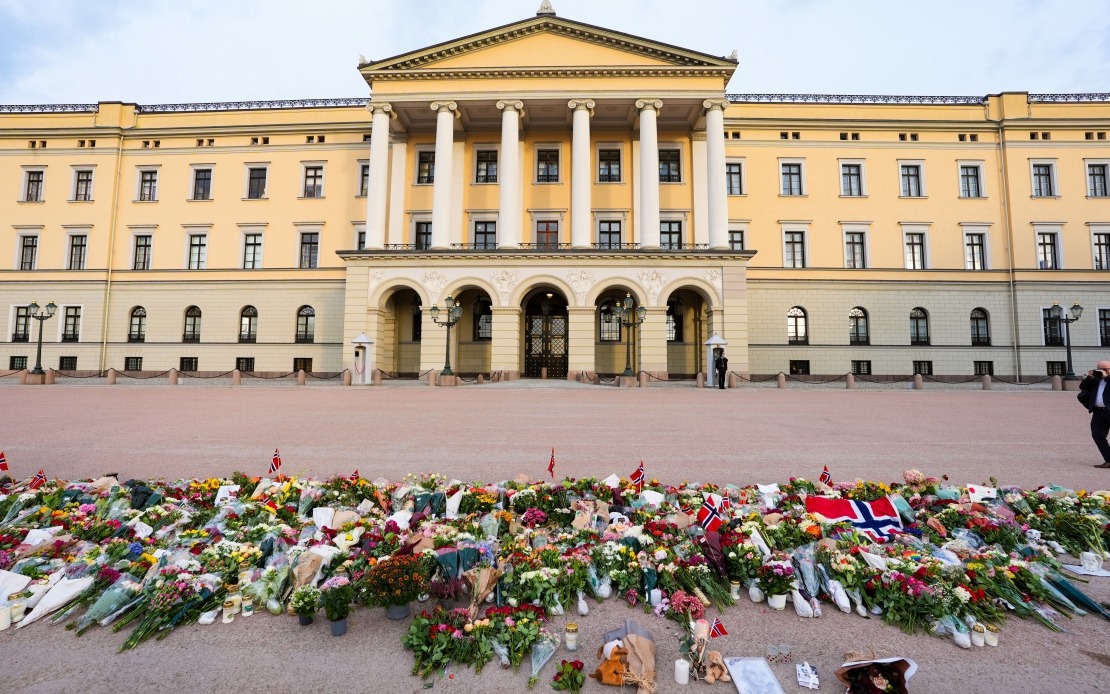
Norway's King Harald V, who had reigned for more than three decades as one of Europe's longest-serving monarchs, passed away on Friday at the age of 89. The Norwegian Royal Palace announced that the king died peacefully at the National Hospital in Oslo at 6:35 am local time, concluding a reign that began in January 1991 and saw him become the continent's oldest active head of state. The lowering of the royal flag to half-staff at the palace marked the formal end of an era in Scandinavian history.
The king's final illness began in mid-August when he was admitted to the capital's National Hospital for medical assessment and treatment. Palace officials subsequently revealed that Harald had been undergoing cortisone therapy to manage hemolytic anemia, a condition affecting red blood cell production that had caused his body to retain fluid. This chronic ailment had required ongoing medical supervision, though initial reports suggested his condition remained manageable under hospital care.
The trajectory of his health deteriorated markedly when he developed a bacterial infection in his bloodstream whilst hospitalised, Norwegian state broadcaster NRK reported. This secondary complication proved more serious than the primary blood disorder, ultimately leading to his death. The combination of advanced age, the existing haematological condition, and the acquired infection created circumstances that medical staff could not reverse, despite the resources available at one of Scandinavia's premier medical facilities.
Under Norway's constitutional framework, succession occurred automatically upon his death. Crown Prince Haakon, Harald's eldest son and immediate heir, ascended to the throne without ceremony or delay, becoming King Haakon VII according to Norwegian royal naming conventions. This smooth transition reflected the kingdom's long-established institutional practices governing the transfer of power, which emphasise continuity and constitutional order rather than elaborate coronation rituals.
The new monarch will undertake a series of formal obligations to complete his accession. An extraordinary Council of State meeting at the Royal Palace will allow senior government figures to meet the new king and receive formal confirmation of succession. Following this gathering, Haakon's regnal title will be officially announced, though royal circles had long anticipated he would adopt the designation Haakon VII as a tribute to his distinguished predecessor who bore the same name.
Norway's constitution mandates that the new sovereign take an oath before the Storting, the country's parliament, to uphold the realm's laws and democratic principles. Unlike many European monarchies, Norway does not conduct coronation ceremonies, reflecting its Presbyterian heritage and emphasis on constitutional rather than ceremonial monarchy. This streamlined approach to formalising royal transitions has characterised the Scandinavian kingdom for generations.
Harald's reign spanned a transformative period in Norwegian and European history. He ascended the throne in January 1991 following the death of his father, King Olav V, just months before the dissolution of the Soviet Union reshaped the continent's geopolitical landscape. During his 35-year tenure, Norway navigated major decisions regarding European integration, economic policy centred on its vast petroleum reserves, and social modernisation. His longevity as reigning monarch placed him among Europe's longest-serving heads of state.
The Norwegian king's status as Europe's oldest sitting monarch at the time of his death underscored both the advantages of modern medicine and the unusual concentration of extended reigns among contemporary European royalty. Several other elderly monarchs across the continent—including Spain's King Juan Carlos, who had abdicated in 2014, and Britain's late Queen Elizabeth II, who died in 2022—demonstrated how extended lifespans had altered expectations regarding royal service and succession timing. Harald's retention of the throne into his late eighties reflected changing norms about aging and active governance.
His passing carries particular significance for regional observers, as Norway maintains close ties with other Scandinavian and Northern European nations, including Sweden and Denmark, where similar constitutional monarchies continue to evolve. The succession of the younger generation of Scandinavian royalty, now represented by Haakon and his contemporaries, signals a shift in leadership style and approach to monarchy in the twenty-first century. These transitions often prompt broader reflection within the Nordic region about the role and relevance of hereditary institutions in modern democracies.
For Malaysia and other Commonwealth realms and constitutional monarchies throughout Southeast Asia and beyond, the Norwegian succession provides instructive precedent regarding institutional stability during transitions of power. The seamless transfer of authority under established constitutional rules demonstrates how formal frameworks and decades of institutional practice can ensure continuity even as individuals change. Such examples remain relevant to nations negotiating questions about succession, democratic legitimacy, and the appropriate role of hereditary institutions in contemporary governance structures.
The late king's most enduring legacy may be his demonstration of how a constitutional monarch can maintain public respect and institutional relevance across rapidly changing eras. Harald navigated the Cold War, the post-communist transition, the digital revolution, and significant social evolution within his kingdom. His longevity in office, combined with consistent commitment to constitutional principles and engagement with Norwegian society, established a template for modern European monarchy that future analysts and observers will likely study for years to come.

