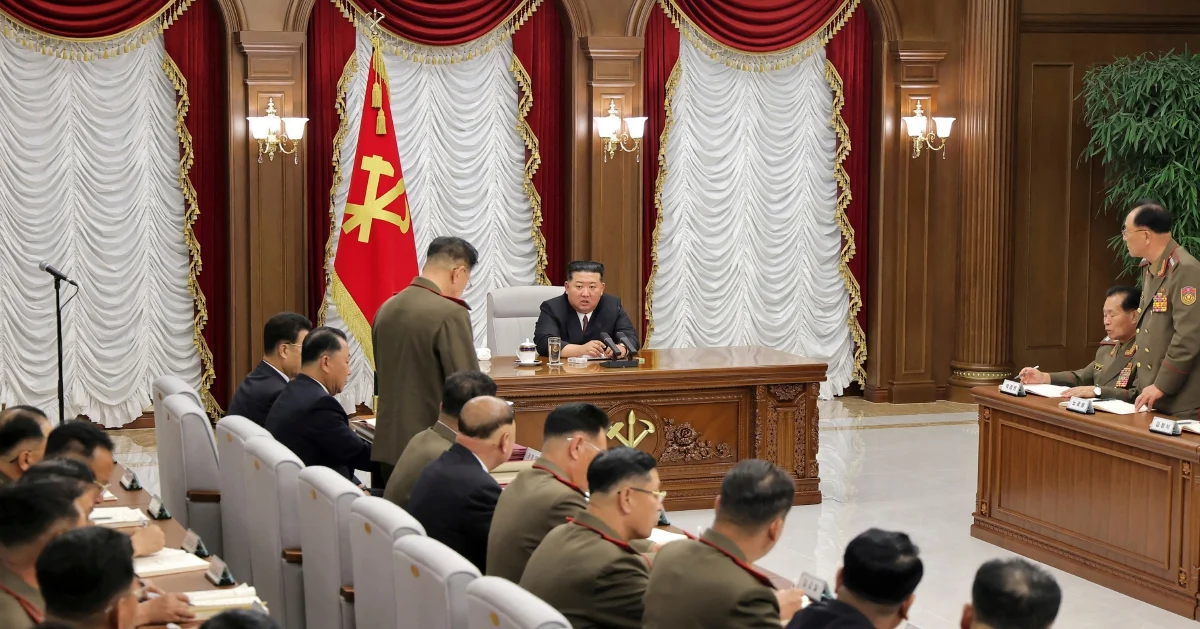
North Korean leader Kim Jong Un has taken direct action against a high-ranking military official, stripping him of his position in the ruling party and condemning his alleged misconduct as a grave political offense. State media released the announcement in the early hours of Saturday, signalling the leadership's intent to address what it characterized as serious corruption within the military establishment. The move reflects ongoing tensions within North Korea's power structure and Kim's apparent determination to maintain tight control over both political and military institutions.
The official was accused of accepting bribes, a charge that Kim Jong Un's administration framed not merely as personal enrichment but as a fundamental breach of loyalty to the state. This characterization is significant within North Korea's political context, where accusations of corruption often carry implications far beyond financial misconduct. By labelling the conduct a "political crime," the regime has signalled that such behaviour represents a challenge to the system itself rather than an isolated instance of individual wrongdoing. This rhetorical framing suggests the incident may have broader implications for how the leadership views discipline and accountability within its military ranks.
The timing and prominence of the announcement through state media indicate that Kim Jong Un wishes to make an example of this case. Public denunciations of corruption serve multiple purposes within North Korea's governance structure: they demonstrate the leader's commitment to rooting out disloyalty, reinforce hierarchical discipline, and project an image of decisive authority. By ensuring the news reached international audiences through official channels, the regime has also conveyed a message about its internal standards and its willingness to act against high-ranking officials regardless of their military credentials.
The expulsion from the ruling Workers' Party of Korea represents a significant humiliation for the official and likely signals a diminished role in future state matters. Membership in the ruling party is not merely a political honour in North Korea but a prerequisite for meaningful influence and access to state resources. Removal suggests the official will face considerable restrictions on his activities and movements going forward, and may portend further consequences if the regime determines the alleged misconduct warrants additional punishment.
The case also reflects broader challenges facing North Korea's governance apparatus. Military corruption, whether actual or alleged, poses particular difficulties for isolated regimes that depend on military loyalty for survival. The military establishment controls vast resources and maintains order within the state, making it essential that Kim Jong Un preserve its cohesion and command structure. Any suggestion of widespread corruption within military ranks could undermine public confidence and complicate the regime's ability to project strength to both its own population and the international community.
For regional observers and analysts monitoring North Korea, such incidents provide limited but important windows into the regime's internal dynamics. Personnel changes at the senior level, particularly involving military figures, often signal shifts in Kim Jong Un's confidence levels and his strategic priorities. The willingness to remove established military officials suggests a leadership that feels sufficiently secure in its position to enforce accountability, though it may also reflect genuine concerns about institutional discipline that the regime views as threatening.
The alleged bribery also raises questions about the broader state of North Korea's economy and administrative systems. Corruption typically flourishes where oversight is weak, resource scarcity creates incentives for illicit gain, and officials possess discretionary power over valuable commodities or opportunities. The fact that a senior military official felt emboldened to accept bribes suggests either that such practices have become normalized within certain circles, or that the official miscalculated the political risks involved.
This development carries implications for how outside powers assess North Korea's stability and the regime's capacity to maintain internal order. Regional states, particularly South Korea, Japan, and the United States, monitor such personnel changes for insights into potential shifts in military doctrine, succession planning, or Kim Jong Un's consolidation of power. While a single expulsion does not indicate systemic instability, it contributes to the broader picture of how North Korea's leadership manages its institutions and enforces discipline.
The incident also underscores the continued relevance of personalistic authority in North Korea's political system. Unlike institutional democracies where corruption cases follow established legal procedures and involve multiple accountability mechanisms, North Korea's system places enormous discretionary power in the leader's hands. Kim Jong Un's direct denunciation signals that ultimate authority and justice flow from his personal judgment rather than from independent legal institutions or party bodies. This concentration of power, while ensuring the leader's control, also creates vulnerabilities if decision-making becomes arbitrary or if officials lose confidence in the predictability of the system.
As North Korea navigates ongoing economic challenges and international isolation, the regime's approach to internal discipline remains a crucial factor in maintaining cohesion. Whether this particular case represents a broader crackdown on corruption or an isolated incident will become clearer as observers track further developments within North Korea's military and party leadership in coming months.

