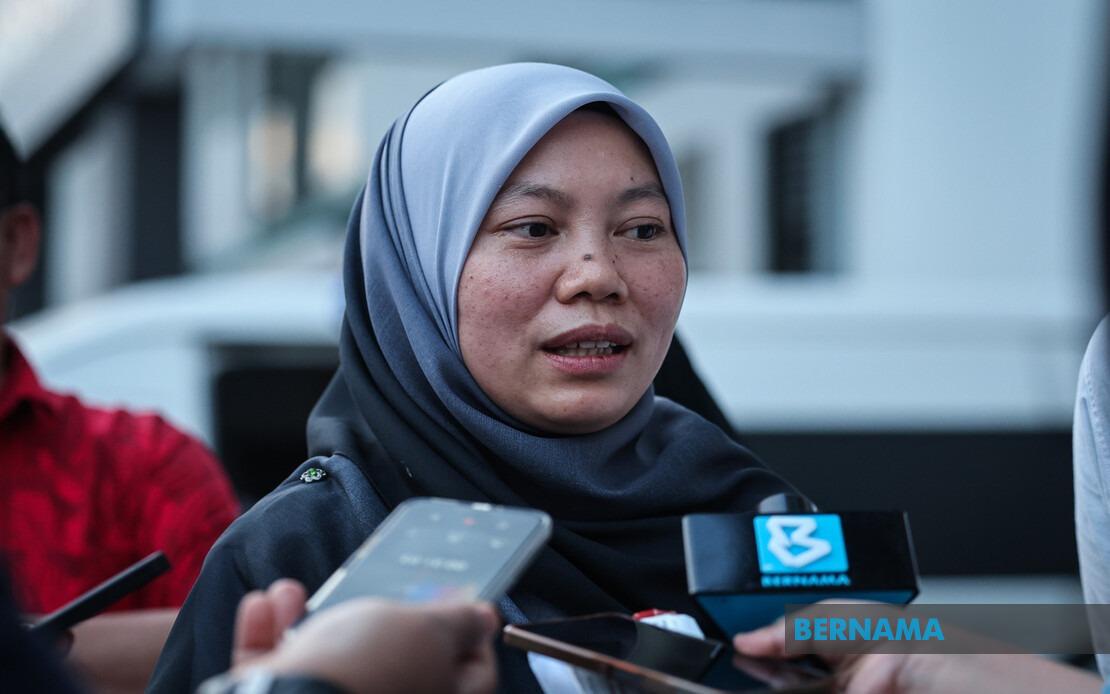
Pakatan Harapan candidate Nor Zulaila Abd Ghani is banking on what she describes as enthusiastic voter reception to carry her through the ballot box in the Tiram state seat race, as Johor's political landscape gears up for its 16th state election on July 11. Speaking in Pasir Gudang after a community engagement event with Entrepreneur Development and Cooperatives Minister Steven Sim Chee Keong, Nor Zulaila projected confidence about her electability, attributing her optimism to the consistent positive feedback she has encountered while canvassing door-to-door across her constituency.
The PH contestant drew a distinction between her on-the-ground reception and the online noise that has dogged her campaign, noting that while social media platforms such as Facebook have hosted some critical commentary, her neighbourhood engagements have been markedly hospitable. This observation carries weight for understanding voter sentiment in contemporary Malaysian elections, where the disconnect between vocal digital critics and silent majority support has become increasingly pronounced. Nor Zulaila's reading of the grassroots mood suggests that hyperlocal engagement may still trump algorithmic amplification in determining electoral fortunes at state level, even as digital campaigning reshapes political communication.
Central to her campaign narrative is a deliberate pivot towards youth mobilisation through non-partisan recreational channels. Rather than relying on formal political rallies or town halls, Nor Zulaila has embedded herself in community sports and leisure activities—participating in sepak takraw tournaments, futsal matches, and snooker games alongside young constituents. This tactical shift reflects a broader recognition among opposition parties that younger voters, particularly those aged 18 to 40, exhibit deep scepticism towards conventional political messaging and institutions. By meeting voters where they already congregate socially, she hopes to bypass defensive psychological barriers that youths typically erect against formal campaign pitches.
During these informal gatherings, Nor Zulaila has been emphasising voter responsibility and the tangible ways that electoral participation shapes lived experience. She highlights to youth that irrespective of their cynicism about Malaysia's political trajectory, their voting decisions directly influence the government policies and daily regulatory environment that will affect their careers, housing prospects, and quality of life. This framing attempts to convert abstract civic duty into personal self-interest—a messaging strategy that acknowledges youth voter apathy while offering a pragmatic counterargument rooted in immediate material consequences rather than patriotic appeals.
The candidate's campaign has not proceeded without friction. She expressed frustration over the recent defacement of her campaign billboards, viewing such incidents as counter to the tone and standards she wishes to establish. Her appeal for remaining campaign activities to maintain dignity and decorum reflects both a genuine preference for substantive political competition and a strategic calculation that escalating negativity could alienate the moderate swing voters likely to determine the outcome in Tiram. With Johor's electorate historically volatile and capable of delivering surprise results, the tenor of campaigning could meaningfully influence turnout and vote distribution among undecided voters.
The Tiram contest sits within the broader 16th Johor state election, a significant political fixture that will test the coalition politics currently governing the state. For Pakatan Harapan, individual seat performances in urban and semi-urban constituencies like Tiram carry disproportionate symbolic weight, as these areas tend to be early indicators of opposition momentum or decline. Nor Zulaila's optimism, if validated by the ballots cast on July 11, would signal continued PH resilience in Malaysian electoral politics despite national headwinds and internal coalition frictions.
Early voting is scheduled for July 7, offering a subset of the electorate an opportunity to cast ballots before the formal polling day. This staggered voting calendar has become a standard feature of Malaysian elections, typically accommodating essential workers, security personnel, and other groups with scheduling constraints. The early voting cohort sometimes provides harbingers of broader electoral trends, though individual seat races like Tiram are too granular for early voting patterns to prove conclusively predictive.
Nor Zulaila's campaign strategy—blending hyperlocal grassroots presence with strategic youth engagement through recreational rather than formal political channels—offers a case study in how opposition parties are adapting to evolving voter behaviour in Malaysia. The gambit hinges on her ability to translate positive interpersonal reception into converted votes, a translation that is not automatic in electoral politics. Her confidence appears rooted in genuine community interactions rather than wishful projection, but the ultimate test will come when ballot boxes close on July 11.
The Tiram seat represents one of many contests across Johor where similar dynamics are playing out—candidates repositioning themselves around community issues, attempting to navigate between digital criticism and on-ground sentiment, and recalibrating their messaging to reach demographics that have historically viewed electoral participation with ambivalence. For Malaysian political observers, such individual races collectively illuminate how the country's political parties are evolving their engagement models and whether new approaches to voter mobilisation can shift the arithmetic of Johor politics.

