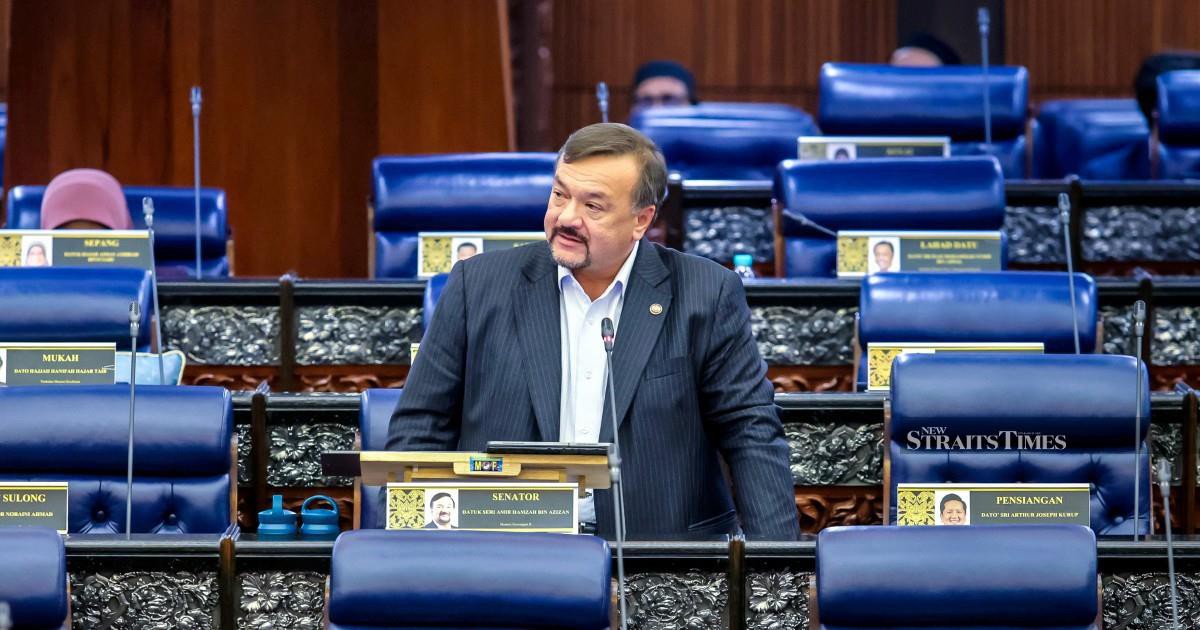
The government has made clear its commitment to pursuing accountability at Tabung Haji without fear or favour, signalling that no official or figure will escape scrutiny regardless of their political standing or historical connections to the institution. This assurance comes as investigations into the savings and investment body's operations intensify, focusing particularly on decisions made during its past administration that have drawn public concern and raised questions about governance standards.
Tabung Haji, formally known as the Lembaga Tabung Haji, serves as Malaysia's primary institution dedicated to facilitating savings for Muslim Malaysians intending to perform the Hajj pilgrimage. With millions of ringgit in assets and a significant membership base spanning all states, the institution's financial health and management practices directly affect hundreds of thousands of ordinary Malaysians who rely on it. Any mismanagement or irregular investments at Tabung Haji carries implications far beyond administrative circles, touching the aspirations and savings of working families across the country.
The pledge to conduct impartial investigations reflects growing public awareness about corporate governance failures that have emerged in recent years. Tabung Haji, despite its religious and social significance, operates substantial investment portfolios and engages in significant financial transactions. When such institutions fail to maintain rigorous oversight or when decisions lack transparency, the consequences ripple through society, eroding public trust in management systems and regulatory frameworks that are meant to protect ordinary citizens' savings.
This commitment also signals a shift in how the government approaches accountability in state-linked institutions. Rather than protecting officials by virtue of their previous roles or connections, authorities are indicating that investigations will follow evidence and procedures without regard for political considerations. Such an approach gains particular importance in Southeast Asia, where questions about institutional governance and transparency have attracted increasing international scrutiny and affected investor confidence in the region.
For Malaysian hajj pilgrims and Tabung Haji members, this accountability focus carries practical significance. The institution manages funds that individuals have contributed through disciplined savings programmes over many years, often representing substantial personal investment toward fulfilling one of Islam's five pillars. When these funds are exposed to questionable investment decisions or mismanagement, members face genuine jeopardy to their life savings and their ability to undertake the Hajj journey when circumstances permit.
The government's stance also addresses longstanding concerns about how past administrations have handled high-profile investigations involving former officials. By explicitly stating that no protection will be extended to those found responsible, authorities are attempting to restore public confidence in institutional governance and demonstrate that accountability mechanisms function regardless of political affiliation or historical prominence. This approach aligns with broader regional trends toward strengthening anti-corruption frameworks and corporate oversight.
Tabung Haji's investment history has generated considerable public discussion, particularly regarding real estate transactions, property acquisitions, and other major capital allocation decisions made during earlier periods. Questions have surfaced about due diligence processes, conflict of interest protocols, and whether investment decisions prioritised institutional returns or served other purposes. As investigations proceed, these questions require thorough examination to establish what occurred and why.
The institutional reforms emerging from this investigation could extend beyond Tabung Haji itself. Other government-linked companies and state institutions managing significant public assets may face similar scrutiny, and frameworks established during the Tabung Haji investigations could influence oversight standards across the broader institutional landscape. This represents an opportunity to strengthen governance practices systematically across Malaysia's numerous statutory bodies and government-linked entities.
For the broader Malaysian business community and international observers, the government's commitment to transparent investigations sends an important signal about the regulatory environment and the seriousness with which authorities approach institutional accountability. This transparency strengthens Malaysia's reputation as a jurisdiction where governance standards are being progressively strengthened and enforced consistently, factors that influence long-term investor confidence and institutional credibility.
The investigations into Tabung Haji thus represent more than a review of past decisions at a single institution. They constitute a test of whether Malaysian governance systems can operate with genuine independence and hold officials accountable based on evidence rather than political considerations. As the investigation proceeds, outcomes will likely influence public perception of institutional accountability across Malaysia and may establish important precedents for how future investigations into state-linked entities are conducted and reported.

