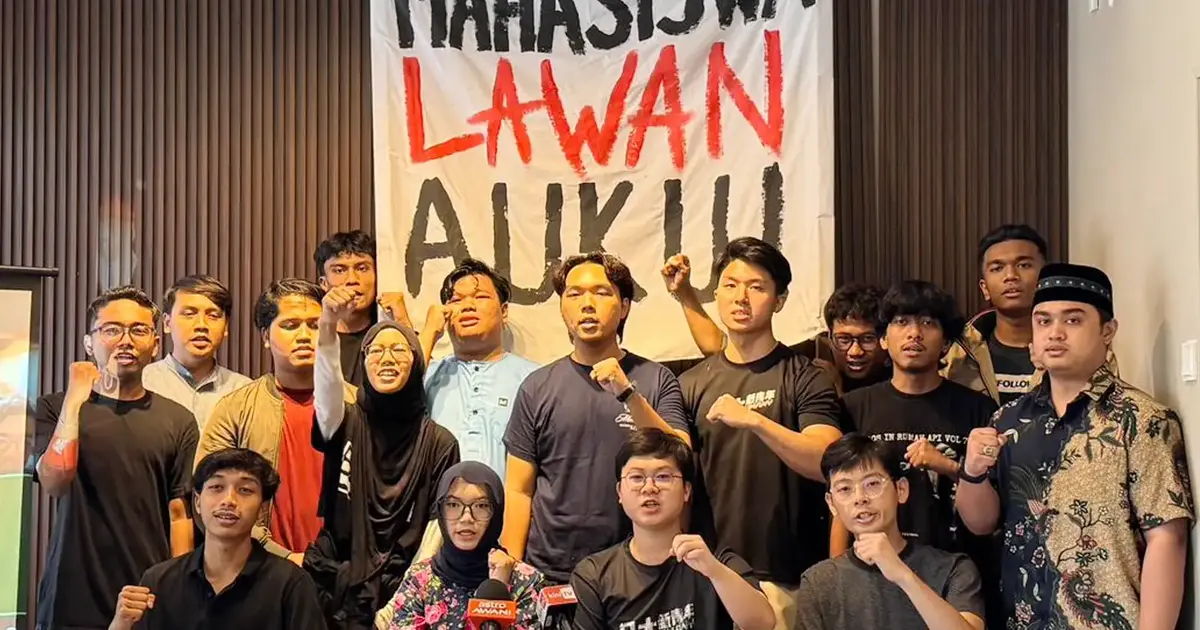
Prime Minister Anwar Ibrahim has reassured the public that his administration has no intentions of introducing fresh legislative measures designed to constrain student activities, following the scrapping of AUKU earlier this year. The undertaking signals the government's commitment to expanding civil liberties on university campuses after decades of restrictions that have limited student unions and activism.
The AUKU, formally known as the Universities and University Colleges Act, had served as the legal framework governing higher education institutions in Malaysia since 1971. The regulation became notorious for provisions that effectively banned student unions, restricted political activities on campus, and granted university authorities broad powers to discipline students for participating in demonstrations or advocacy work deemed threatening to institutional order. Throughout its 53-year tenure, AUKU became a focal point for civil rights advocates who viewed it as an impediment to democratic participation and freedom of expression among young Malaysians.
Anwar's statement represents a pivotal acknowledgement from the highest executive level that the government views the liberation of student freedoms as a definitive policy position rather than a temporary concession. By explicitly ruling out compensatory restrictions through alternative legislation, the Prime Minister has essentially closed the door on any incremental creeping of controls through the backdoor of new law-making. This is particularly significant given the historical pattern in many democracies where authorities have used multiple regulatory layers to achieve restrictive objectives when singular laws face public opposition.
The backdrop to this commitment involves mounting pressure from student movements, civil society organisations, and education advocates who had campaigned for AUKU's removal over successive administrations. The law had become emblematic of Malaysia's complicated relationship with democratic freedoms on campuses, where the state maintained tight controls that contrasted sharply with the relative liberalisation occurring in other sectors of society. The Anwar administration's decision to scrap AUKU aligned with its broader positioning as a government more amenable to reforms touching fundamental rights and institutional accountability.
For Malaysian students, the implications are substantial. Universities traditionally fostered intellectual discourse and social consciousness among younger generations, yet AUKU had created a chilling effect where students self-censored participation in legitimate political discourse. The removal of the legislation opens possibilities for revitalised student unions, which had operated in dormancy or underground formats for decades in various institutions. Student movements have historically played catalytic roles in regional political transitions, and Malaysia's young generation may now participate more openly in debates concerning national policies and institutional governance.
The Prime Minister's assurance also carries weight beyond domestic considerations. Southeast Asia has watched Malaysia's democratic trajectory closely, and student freedoms function as a barometer for broader civil liberties. Countries within the region grappling with questions about balancing national stability with individual freedoms have often referenced Malaysia's AUKU debates. The government's unambiguous stance against new restrictive legislation signals to international observers and domestic constituencies that Malaysia is genuinely committed to expanding democratic space rather than merely repositioning constraints.
However, student organisations and rights advocates will likely monitor implementation carefully. While the Prime Minister's statement provides clear policy direction, the real test lies in how universities exercise their considerable institutional autonomy in responding to student activism. Many campuses have absorbed decades of restrictive culture, and administrators accustomed to strict control may resist rapid change in campus culture. Additionally, the absence of new restrictive laws does not automatically translate to complete liberation of campus activism, since existing regulations in other statutes could potentially be invoked to constrain student political organising.
The government's position also reflects broader recognition that knowledge economies and competitive global higher education markets increasingly depend on fostering intellectual curiosity and critical thinking. Universities that maintain excessive controls struggle to attract international students and faculty, and limit research productivity through self-imposed constraints. Countries investing in world-class higher education institutions understand that vibrant student communities drive innovation ecosystems. Malaysia's decision to abandon AUKU acknowledges this economic imperative alongside democratic principle.
Looking ahead, the practical implications will unfold gradually across Malaysia's public and private university landscape. Student organisations will likely begin registering formally and organising public events, testing the boundaries of their newfound space. Universities will develop policies governing student conduct in the post-AUKU era, and the tone of these institutional directives will reveal how thoroughly the regulatory culture has shifted. The government's pledge not to introduce replacement legislation provides a crucial safeguard, ensuring that any limitations on campus activism emerge from institutional policy rather than state-enforced legal frameworks.
The Prime Minister's commitment ultimately represents a watershed moment for Malaysian higher education. The statement carries weight because it forecloses the avenue of legislative substitution that authoritarian governments frequently employ when pressured to relax controls. By declaring opposition to new restrictive laws, Anwar has tied his administration's credibility to genuine expansion of student freedoms rather than merely trading one form of restriction for another. For Malaysian universities and their student populations, this declaration opens the prospect of campuses that genuinely function as intellectual commons where diverse viewpoints can be expressed and debated without fear of state sanction.

