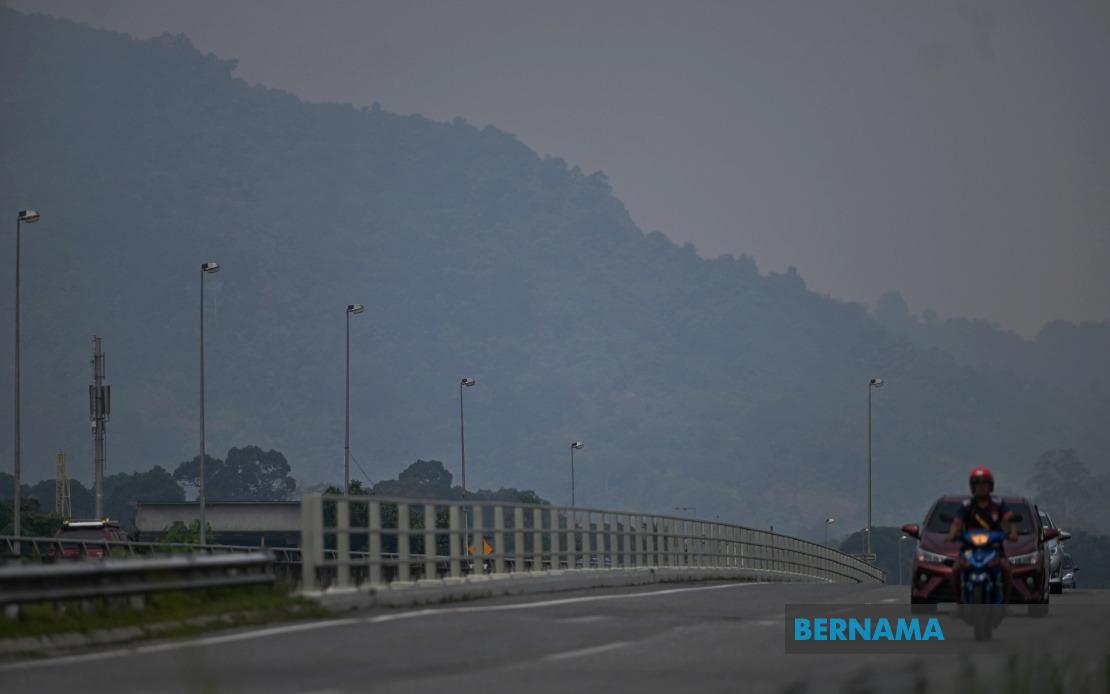
Sarawak faced a significant air pollution crisis on August 21, with the Serian monitoring station recording an Air Pollution Index of 227—classified as 'very unhealthy'—by mid-afternoon, signalling one of the worst air quality events affecting the state in recent times. The Department of Environment confirmed that the deterioration extended across the state, with nine additional monitoring stations registering unhealthy API readings, reflecting the widespread nature of the transboundary haze affecting the region.
According to Azuri Azizah Saedon, deputy director-general (development) at the Department of Environment, Sri Aman experienced the second-most severe pollution with an API of 187, underscoring the severity of conditions in the southern Sarawak corridor. The state capital Kuching registered 176, while Samarahan reached 175 and Sarikei hit 174. Moving eastward, the readings progressively moderated but remained unhealthy: Sibu recorded 157, while Bintulu and Samalaju both reported 154. Kapit and Mukah rounded out the affected areas with readings of 130, which still exceeded the threshold for healthy air quality and posed health risks to vulnerable populations including children, the elderly, and those with respiratory conditions.
The source of this transboundary pollution originated primarily from Kalimantan, Indonesia, where meteorological monitoring revealed extensive fire activity. The ASEAN Specialised Meteorological Centre detected 288 hotspots across Kalimantan, 53 in Sumatra, and just two within Malaysian territory—one in Sarawak and one in Terengganu. The concentration of fire sources in Indonesian territory reflects the broader Southeast Asian haze phenomenon that regularly affects the region during dry seasons, creating diplomatic and public health dimensions that extend beyond individual nations.
The trajectory of the smoke plumes proved particularly consequential for Sarawak's western regions. Satellite imagery and regional haze monitoring indicated that moderate to dense transboundary smoke plumes originating in West Kalimantan were moving northward, directly affecting western Sarawak including the Serian area. Most of the southern ASEAN region experienced continued dry conditions, creating ideal circumstances for the persistence and spread of fire-generated aerosols, though northeastern Borneo and northern Sumatra received some rainfall that helped limit fire activity in those zones.
The escalating situation prompted the Department of Environment to activate both the National Open Burning Action Plan and the National Haze Action Plan, mechanisms designed to synchronise responses across multiple government agencies confronting the dual challenge of combating domestic open burning and managing the broader transnational haze phenomenon. These coordinated frameworks represent Malaysia's institutional response to cyclical air quality crises, though their effectiveness depends substantially on real-time intelligence, enforcement capacity, and cooperation with regional partners grappling with similar environmental pressures.
Enforcement efforts intensified across Sarawak as the environmental agency escalated daily patrols in regions identified as having open burning potential, aiming to prevent the domestic contribution to air pollution while the state faced external smoke intrusions. The distinction between local and transboundary sources matters for policy: while Sarawak can directly control open burning through penalties and education, addressing pollution from distant Indonesian hotspots requires diplomatic engagement and regional coordination mechanisms that operate at a different pace and scale.
Public health implications of the pollution spike warrant serious consideration. API readings above 150 are classified as unhealthy, and Serian's 227 reading places exposure levels in a category where even short-term outdoor activity poses risks. Schools and public authorities in affected areas faced decisions regarding outdoor activities, with persistent exposure particularly concerning for children's respiratory development and for individuals with asthma or other pre-existing conditions. The spike in Serian and the secondary elevation in Sri Aman suggest particular geographic vulnerability, possibly related to local topography or prevailing wind patterns that concentrate smoke.
The Malaysian public received clear guidance from the Department of Environment and the Fire and Rescue Department on responsible conduct during haze episodes. Citizens were urged to refrain entirely from open burning—a critical message in communities where agricultural land clearing or waste disposal through burning remains common practice. Reporting mechanisms were publicized, directing observers of illicit fires to contact the Fire and Rescue Department at 999 or the Department of Environment's dedicated haze hotline at 1-800-88-2727. These public engagement channels reflect recognition that environmental compliance depends partly on community participation.
For Malaysia, particularly for states like Sarawak positioned downwind of major Indonesian fire sources, the August 21 episode underscores the structural vulnerability embedded in regional geography and land-use patterns. Sarawak's economy, dependent on forestry, agriculture, and increasingly tourism, faces recurring disruptions from transboundary haze over which local authorities exercise limited direct control. The situation illustrates the practical limits of national environmental policy when external actors—in this case Indonesian agricultural and land-clearing operations—generate consequences that cross borders and overwhelm local mitigation capacity.
The timing and intensity of such haze events also reflect broader Southeast Asian land-use tensions. Indonesia's peatland conversion, agricultural expansion, and plantation operations generate the hotspot activity that fuels regional haze. Malaysian environmental agencies can monitor, report, and activate response frameworks, but fundamental resolution requires addressing the underlying drivers of transboundary fire activity through regional dialogue, technology transfer, and potentially trade or diplomatic leverage—conversations that operate above the technical level where the Department of Environment functions.
For Malaysian readers and policymakers, the Sarawak air quality crisis of August 21 reinforces an uncomfortable reality: while the nation can enforce environmental standards domestically, seasonal transboundary haze will remain an episodic vulnerability for states situated on the wrong side of prevailing wind patterns relative to fire sources. This year's episode, with Serian's API exceeding 220, demonstrated that preparedness, public information, and inter-agency coordination constitute essential but ultimately incomplete responses to a fundamentally regional environmental challenge requiring sustained diplomatic and economic engagement with neighbouring countries.

