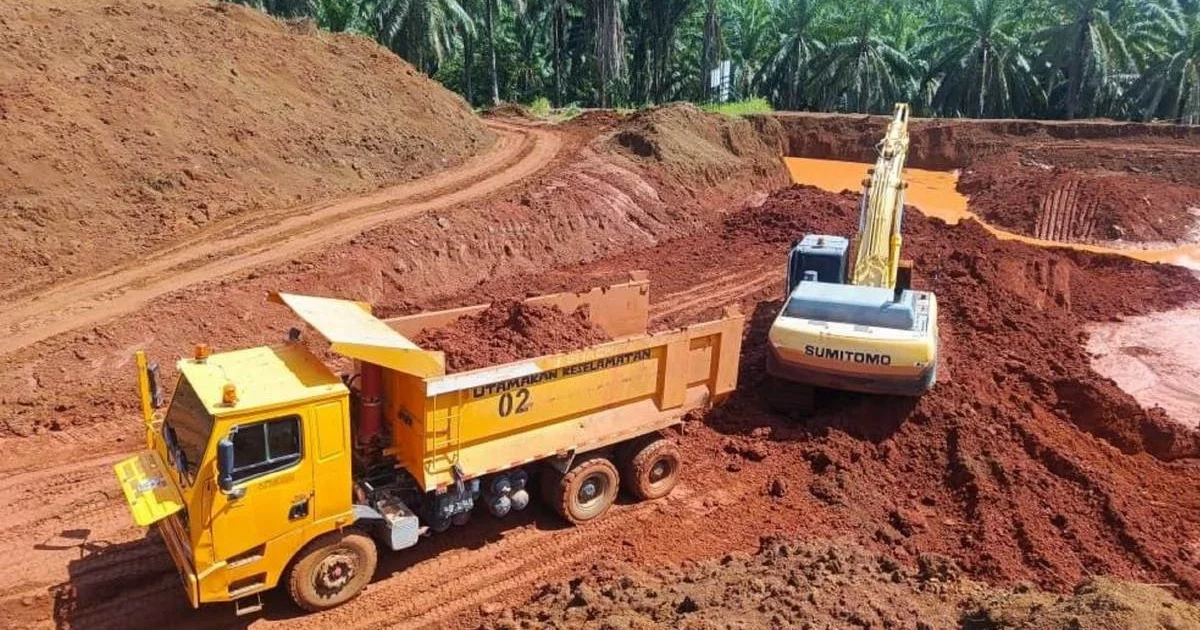
Kuantan enforcement authorities have broken up a significant illegal bauxite mining enterprise operating covertly on a Felda plantation in Bukit Goh, resulting in the detention of nine individuals and the seizure of assets estimated at RM3.75 million. The operation, which involved the unauthorised extraction of bauxite-bearing soil from federal agricultural land, represents a continuing concern over illicit mining activities across Pahang despite intensified regulatory oversight.
The raid recovered approximately 10,000 tonnes of bauxite-bearing soil that had been stockpiled at the site, alongside heavy excavation equipment and commercial vehicles used to transport the extracted material. The combined value of these confiscated assets underscores both the scale of the illegal operation and the significant financial incentives driving such unauthorised mining ventures in the region.
Bauxite mining has emerged as a focal point for enforcement action across Malaysia, particularly in Pahang, where unregulated extraction has been linked to environmental degradation and land use conflicts. The placement of mining operations within a Felda settlement indicates the sophisticated nature of illegal ventures, which often exploit agricultural concessions to mask or shield their activities from regulatory scrutiny. Felda land, typically designated for smallholder farming, represents a precious resource, making its diversion to unauthorised mineral extraction especially problematic from a land management perspective.
The scale of this bust reflects renewed commitment from state-level authorities to curtail illicit mining networks that have proliferated in recent years. Such operations generate significant revenue for criminal syndicates while simultaneously depleting public resources and creating liabilities for environmental remediation. The sophisticated logistics required to extract, process, and transport 10,000 tonnes of bauxite-bearing soil suggests an organised criminal enterprise rather than ad-hoc illegal activity, indicating the involvement of structured networks with established supply chains and distribution networks.
For Malaysian readers and policymakers, this enforcement success highlights the ongoing tension between resource extraction pressures and sustainable land stewardship. Bauxite mining, if conducted legally through proper licensing and environmental safeguards, contributes meaningfully to Malaysia's industrial base and export revenue. However, illegal operations circumvent critical environmental impact assessments, labour protections, and revenue-sharing arrangements that legitimate extraction demands.
The detention of nine suspects will likely prompt investigations into the operational hierarchy and financial networks supporting this illicit enterprise. Authorities typically examine connections between field operatives, equipment suppliers, transportation networks, and end purchasers to dismantle these syndicates comprehensively. The seizure of machinery and vehicles simultaneously disrupts the operational capacity of the network and removes tools essential for continuing extraction activities.
Bauxite-bearing soil extracted from Peninsular Malaysia typically contains aluminium oxide concentrations suitable for downstream processing into alumina and aluminium products. The established demand for raw bauxite from domestic and regional smelting operations creates persistent economic drivers for illegal extraction, particularly in regions where enforcement capacity remains stretched or regulatory frameworks inadequately enforced. Criminal networks exploit such gaps systematically.
The financial value assigned to the confiscated assets—RM3.75 million—represents either the replacement cost of equipment and estimated ore value, or the anticipated revenue from successful sale of the extracted material. Either interpretation suggests substantial profitability for those organising the operation, explaining why enforcement must remain vigilant despite the risks and penalties involved.
Regional context matters considerably here. Bauxite mining controversies have affected multiple Southeast Asian nations, with Indonesia, Vietnam, and Cambodia experiencing environmental and social conflicts related to rapid, often poorly regulated extraction. Malaysia's regulatory framework, while imperfect, generally maintains higher standards than some regional competitors. Illegal operations that evade these standards represent attempts to capture supernormal profits by externalising environmental and social costs onto local communities and the broader public.
This enforcement action will be closely monitored by environmental groups and land rights advocates, who view Felda settlements as symbolically important communal assets. Any evidence that mining operators deliberately targeted federal agricultural land may intensify political pressure for enhanced land-use monitoring and stricter penalties for violations affecting settlement areas.
Moving forward, the case underscores the need for integrated approaches combining improved field surveillance, technology-enhanced monitoring of extraction sites, and stronger coordination between state mining authorities, environmental regulators, and law enforcement agencies. The sophisticated nature of this operation suggests that conventional compliance approaches require supplementation with more proactive intelligence-gathering and investigation capabilities.
The nine detainees now face investigation under applicable mining and land laws, with potential charges reflecting conspiracy, unauthorised extraction, and environmental violations depending on individual roles within the operation. Successful prosecution would serve as a meaningful deterrent to other potential illegal operators evaluating the risk-reward calculations of unauthorised bauxite mining in Malaysia.

