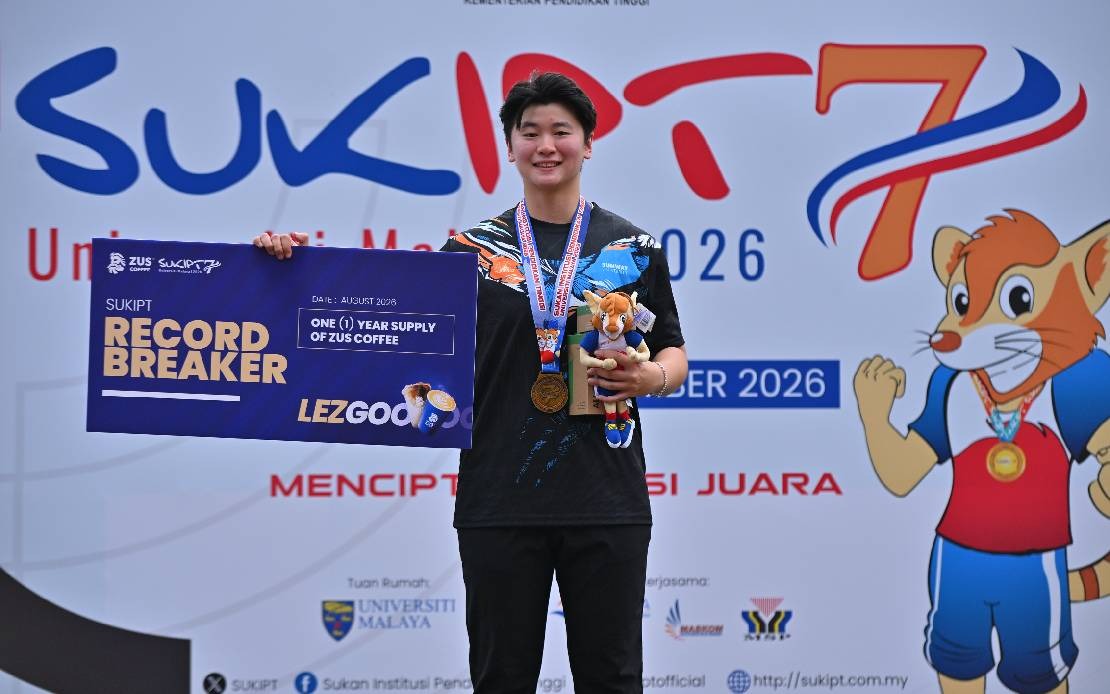
Javelin thrower Ng Jing Xuan delivered a symbolic triumph for Sunway University on National Day by obliterating the longstanding meet record at the 2026 Higher Education Institutions Sports Games held at UM Arena in Kuala Lumpur. The 22-year-old athlete's performance, which saw her launch the javelin 46.92 metres into the air, erased a decade-old benchmark that had stood since 2016, demonstrating the rapid progression of athletic standards within Malaysia's university sports ecosystem.
The previous record of 44.41 metres had been established by Nur Fatin Adibah Suharman from Universiti Malaysia Perlis, a mark that had remained unchallenged for a full decade. Jing Xuan's achievement represents not merely a personal victory but also reflects the investment Malaysian universities are making in developing elite athletic talent. The improvement of nearly 2.5 metres underscores how systematic training programmes and competitive opportunities at the tertiary level are producing measurable gains in performance metrics across track and field disciplines.
However, the athlete herself remained candid about the gap between her aspirations and what she accomplished on the day. Her primary objective extended beyond capturing a SUKIPT title—she had harboured hopes of surpassing her own national record of 52.17 metres, a threshold that would have represented a more comprehensive statement of her capabilities. Speaking after the competition, Jing Xuan acknowledged this shortfall while maintaining perspective on what she did achieve, suggesting that the conditions or her own readiness fell short of what her training sessions had prepared her for in the lead-up to the games.
The timing of her preparation had been intense and deliberate. Following her participation in the Asian U23 Athletics Championships earlier in the year, Jing Xuan embarked on a month-long concentrated training block specifically designed to prepare her for SUKIPT. This kind of targeted periodization is standard practice among elite throwers but speaks to the professionalization of university sports in Malaysia, where athletes now follow training cycles aligned with multiple competitive calendars throughout the year.
One logistical factor that Jing Xuan identified as potentially affecting her performance was an unexpected schedule modification. The women's javelin final had been moved from an afternoon time slot to the morning, a shift that disrupted her established warm-up routine and mental preparation. Such scheduling changes, while often necessary for operational reasons, can significantly impact the rhythm and consistency of technical performances in throwing events, where proprioception and muscle memory play crucial roles in execution. The athlete's candid admission that her throws felt sluggish reflects the degree to which even minor alterations to competition logistics can influence outcomes.
Despite falling short of her personal national record, Jing Xuan's establishment of the SUKIPT benchmark positions her prominently within Malaysia's track and field landscape. Her performance substantially outpaced her competitors in the women's javelin final. Farisha Athirah Wai from Universiti Pendidikan Sultan Idris claimed the silver medal with a throw of 36.21 metres, placing her more than 10 metres behind the champion. The bronze medal went to Tai Yu Tian from Universiti Putra Malaysia with a distance of 32.74 metres, further illustrating the pronounced gap between Jing Xuan's level and that of her nearest rivals.
The competitive disparity evident in these results raises important questions about talent development and resource allocation within Malaysian higher education institutions. When one athlete significantly outperforms her peers, it may indicate either exceptional individual talent or disparities in access to coaching, facilities, and training support across different universities. Understanding this distinction becomes crucial for sports administrators seeking to develop a deeper bench of world-class throwers who can consistently compete at Southeast Asian and continental levels.
Looking forward, Jing Xuan has articulated her competitive priorities for the remainder of the year and beyond. The ASEAN University Games scheduled for December represents an immediate objective, followed by the Southeast Asian Games next year, both of which offer platforms for Malaysian athletes to demonstrate their capabilities against regional counterparts. These competitions carry significant stakes not merely for individual athletes but for Malaysia's sporting reputation across Southeast Asia, where countries like Thailand, Vietnam, and Indonesia are progressively strengthening their athletic programmes.
Jing Xuan's trajectory illustrates how university sports systems can nurture talent that eventually contributes to national performance at senior international competitions. The pathway from SUKIPT success to SEA Games representation reflects an integrated talent management approach that Malaysian sports organizations have increasingly adopted. Her focus on these regional and international benchmarks, rather than dwelling solely on her SUKIPT result, demonstrates the maturity of an athlete who understands that university competitions, while important, function as stepping stones toward higher-level representation.
The timing of her record-breaking performance—coinciding with Malaysia's National Day observance—added symbolic resonance to the achievement. National sporting moments often resonate differently within the broader cultural context, and Jing Xuan's gold presentation to Sunway University occurred within the patriotic atmosphere of the Merdeka Day celebration. This convergence of athletic excellence and national commemoration reflects how sports achievements can intersect with collective national identity, even at the university competition level.
For Malaysian athletics as a discipline, Jing Xuan's performance suggests that javelin throwing continues to be an area of relative strength within the national sporting portfolio. The sport requires significant technical instruction and specialized facilities, resources that not all developing sports programmes possess. The fact that Malaysia continues to produce competitive javelin throwers capable of breaking records and competing at continental level points to the durability of expertise and infrastructure established in this particular discipline over previous decades.
Moving forward, the focus for Jing Xuan and her coaching team will likely shift toward closing the gap between her SUKIPT record and her national record, a pursuit that demands addressing whatever factors prevented her from achieving that ambition during this competition. Whether through further refinement of technique, adjustment to competition scheduling preferences, or additional training stimulus, the pathway toward that 52.17-metre benchmark and potentially beyond remains open. The ASEAN University Games will provide another opportunity to test her current form under international pressure, offering valuable data for preparations leading toward the SEA Games.

