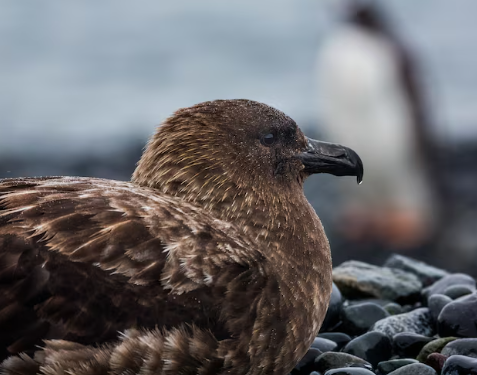
New Zealand confirmed its first detection of the H5N1 bird flu virus on Wednesday, July 15, after a brown skua seabird discovered on a Wellington beach tested positive for the infection. Biosecurity Minister Andrew Hoggard made the announcement, signalling that the highly contagious strain has now reached every inhabited continent. The discovery follows similar detections in neighbouring Australia, where officials have recorded 14 confirmed or presumed cases of the H5 bird flu as of the same date, making New Zealand's case an expected but nonetheless concerning development for the island nation.
The H5N1 virus has posed an escalating global threat since 2021, when it began circulating widely through wild bird and mammal populations across multiple continents. The virulent H5 strain has demonstrated remarkable transmissibility, resulting in mass mortality events in wildlife populations and triggering outbreaks in commercial poultry operations and dairy farms. The virus has also crossed into human populations, with confirmed infections among farmworkers, though human-to-human transmission remains limited. The detection in New Zealand represents the culmination of the virus's geographic expansion, with no major landmass remaining unaffected.
Official statements from Hoggard emphasised that the single detection has not yet triggered widespread disease transmission within New Zealand's ecosystem. He noted the absence of evidence indicating mass mortality among wild birds or transmission between avian populations, and stressed that New Zealand's poultry industry remains unaffected by the virus. These findings align broadly with Australia's experience, where despite confirmed detections the virus has not erupted into large-scale outbreaks across wild or domestic bird populations. However, such reassurances come with the acknowledgement that surveillance remains ongoing and the situation remains fluid.
New Zealand authorities had anticipated the virus's eventual arrival and spent months preparing preventive measures in coordination with the poultry industry. These preparations included developing comprehensive biosecurity protocols and resilience strategies designed to limit the virus's spread should it establish a foothold in domestic bird operations. Nevertheless, the nation faces a singular challenge that distinguishes it from virtually every other country confronting H5N1: the extraordinary vulnerability of its native bird populations to infectious disease.
New Zealand's unique evolutionary history has left its avifauna exceptionally exposed to novel pathogens. For millions of years, the islands evolved in isolation from native land mammals, a circumstance that shaped the development of the native bird species in ways fundamentally different from continental counterparts. Many species lost the capacity for flight entirely, including the iconic kakapo and takahe, while others developed ground-nesting behaviours and minimal predator avoidance strategies. This evolutionary trajectory produced remarkable biodiversity found nowhere else on Earth, yet it simultaneously created populations ill-equipped to withstand diseases that continental species have encountered and developed resistance to over countless generations.
The vulnerability of New Zealand's birds has intensified dramatically in recent centuries through habitat degradation and the introduction of invasive predators including stoats, rats, and feral cats. These compounding pressures have already driven numerous species toward extinction or reduced populations to critically low numbers. Many of New Zealand's endemic bird species now exist in tiny, isolated populations maintained through intensive conservation efforts, making them extraordinarily sensitive to any additional mortality factor. The arrival of a highly lethal pathogen to this already fragile ecosystem presents an existential threat to species that have survived all previous natural and human-induced challenges.
Recognising this extraordinary peril, New Zealand's health officials have launched an emergency vaccination programme targeting 300 core breeding birds representing five of the nation's most critically endangered species. The takahe and kakapo, both flightless birds with populations in the low hundreds to low thousands, have been prioritised for the vaccination initiative. This programme represents an unprecedented conservation intervention, reflecting the desperation of officials confronting a potential mass extinction event. By vaccinating breeding stock, authorities hope to preserve genetic diversity and maintain viable populations should the virus spread uncontrollably through New Zealand's wild bird populations.
Brett Gartrell, a professor of wildlife health at Massey University, articulated the profound anxiety gripping conservation specialists across New Zealand. Gartrell emphasised that the nation's birds possess no evolutionary history of exposure to viral pathogens of this magnitude, leaving them bereft of any adaptive defences. He warned that should H5N1 spread rapidly through New Zealand's environment, the carefully maintained conservation breeding programmes could prove inadequate to prevent extinctions. Even the vaccinated core populations might fail to achieve sufficient immunity if viral transmission accelerates beyond the capacity of vaccination campaigns to keep pace, creating a scenario where New Zealand could witness the extinction of species that have persisted for millions of years.
The situation reflects a broader vulnerability facing island nations and regions with unique endemic biodiversity. New Zealand's predicament demonstrates how isolated ecosystems, however remarkable their biological diversity, remain acutely susceptible to pandemic pathogens in an era of rapid global travel and environmental change. The nation now faces a race against time: vaccination programmes must establish sufficient immunity within breeding populations before the virus potentially reaches critical endangered species in the wild. Should vaccination efforts prove successful, they may establish a model for protecting endemic biodiversity elsewhere against emerging infectious diseases, transforming a potential catastrophe into a conservation blueprint for the future.

