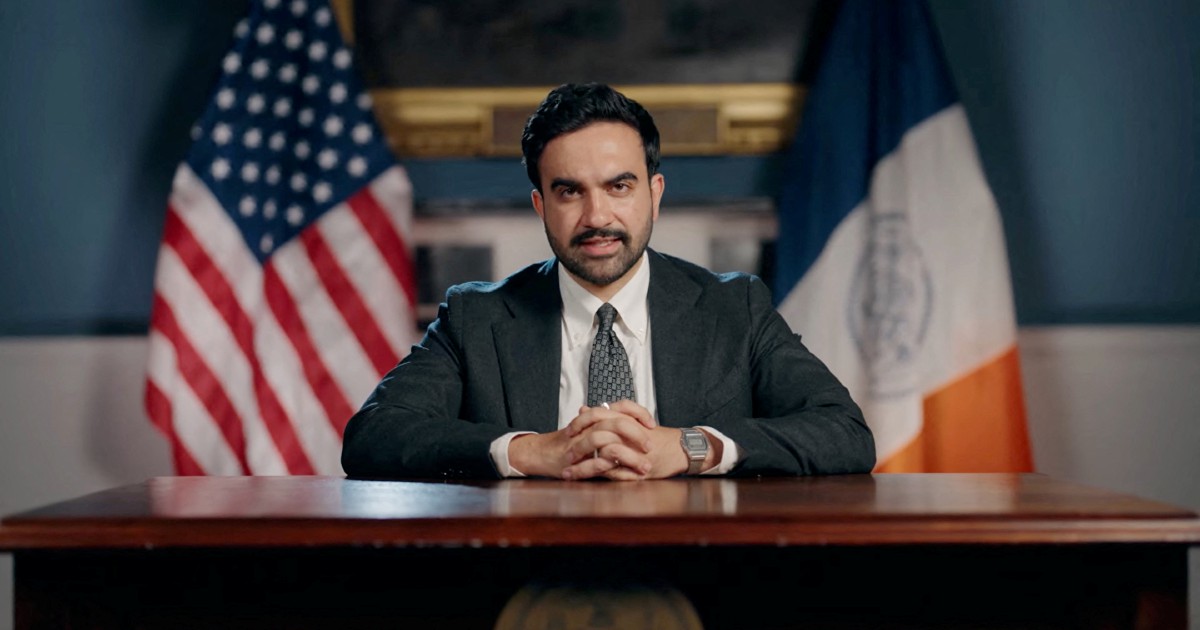
The mayor of New York City has pushed back against suggestions that municipal authorities could or should arrest Israeli Prime Minister Benjamin Netanyahu under an International Criminal Court warrant, clarifying the constitutional and jurisdictional limitations facing local law enforcement. Mayor Zohran Mamdani said on Tuesday that New York City's government operates within constraints that prevent it from implementing international judicial orders independently, and has instead appealed to Washington to take responsibility for the matter.
The statement from Mamdani addresses mounting pressure from various quarters following the ICC's issuance of arrest warrants for Netanyahu and other officials. This legal development has created a complex situation at the intersection of international law, US foreign policy, and municipal governance, with activists and some officials questioning what local authorities should do if the Israeli leader enters their jurisdiction. The clarity provided by Mamdani's office, however, establishes that New York City's police and judicial system operate under the US constitutional framework, not the international legal regime.
Under the US legal system, the authority to honor international arrest warrants—or to decide whether to comply with ICC orders—rests with the federal government, not with states or cities. The United States maintains a complicated relationship with the ICC, having signed but never ratified the Rome Statute that established the court. This non-ratification means Washington is not formally bound by ICC decisions, though the institution maintains significant symbolic and legal weight in international affairs. The distinction between what international bodies can demand and what American jurisdictions can legally implement has proven important in previous cases involving other foreign leaders.
Mamdani's call for federal authorities to step in reflects the proper constitutional hierarchy in the American system. The State Department and federal law enforcement agencies would ordinarily coordinate any decision to arrest a visiting foreign leader, weighing diplomatic consequences against legal obligations. This rarely occurs in practice, as nations typically extend certain protections to heads of state and top officials during official visits, a principle rooted in international law even beyond ICC frameworks. The tension between international justice mechanisms and diplomatic immunity protections remains one of the most contentious issues in global law.
The situation carries particular resonance for Malaysian and Southeast Asian observers, given the region's complex engagement with international legal institutions. Several nations in the area have experience with ICC warrants and investigations, and questions about the court's legitimacy and enforcement mechanisms remain live topics in regional discourse. The Netanyahu warrant also touches on broader debates about whether the ICC applies its mandate consistently across different conflicts and regions, concerns that have animated criticism from various governments and civil society groups worldwide.
For New York City specifically, the issue represents a broader challenge facing major global cities that host international figures. The metropolis regularly receives dignitaries, business leaders, and government officials from nations with fraught international relations or contested human rights records. City authorities must navigate between respecting the rule of law, honoring international agreements, and acknowledging the realities of contemporary geopolitics. Mamdani's clarification essentially establishes that such navigation is not the municipality's burden alone.
The federal government's approach to the Netanyahu warrant will likely depend on several factors, including the trajectory of US-Israel relations, domestic political considerations, and the administration's views on the ICC's legitimacy and role. Previous American administrations have taken varying stances toward the court, with some viewing it with skepticism while others have engaged more constructively. The current decision-making framework will reflect the Biden administration's particular positioning on these international legal questions.
Activists and civil society groups have expressed frustration with what they view as an inadequate response to alleged international crimes, particularly those related to conflicts in Gaza and elsewhere. From their perspective, allowing high-ranking officials to travel freely despite ICC warrants undermines the court's credibility and sends a message that powerful nations can evade accountability. This argument contests the traditional diplomatic immunity framework and represents a newer school of thought within international relations that prioritizes universal jurisdiction and accountability over state sovereignty protections.
Conversely, many governments—including most Western democracies—have historically prioritized diplomatic relations and stability over enforcement of controversial international warrants. The practical challenges of arresting a sitting head of state extend beyond legal theory to include security concerns, potential diplomatic crises, and broader geopolitical consequences. A country that arrests a foreign leader based on an ICC warrant risks becoming a flashpoint for international conflict, though proponents of accountability argue such risks are necessary costs of justice.
The Netanyahu warrant situation ultimately highlights the fragmentation of contemporary global governance, where multiple legal systems, institutional frameworks, and power dynamics coexist without clear hierarchy or enforcement mechanisms. The ICC operates on the basis of universal jurisdiction principles, yet it lacks police forces or independent enforcement capacity, depending instead on member states to apprehend those subject to its warrants. When major powers decline to cooperate—or when constitutional systems prevent certain actors from participating—the court's effectiveness diminishes significantly.
For Malaysia and the broader Southeast Asian region, this episode offers lessons about the complex interplay between international law and national sovereignty. As nations in the area continue developing their own approaches to transitional justice, accountability mechanisms, and engagement with international legal institutions, they must grapple with similar questions about where enforcement authority properly resides and how international and domestic legal systems can coexist. The New York City situation demonstrates that even in nations with strong rule-of-law traditions and deep integration into international systems, the practical implementation of global justice mechanisms remains contested and conditional.

