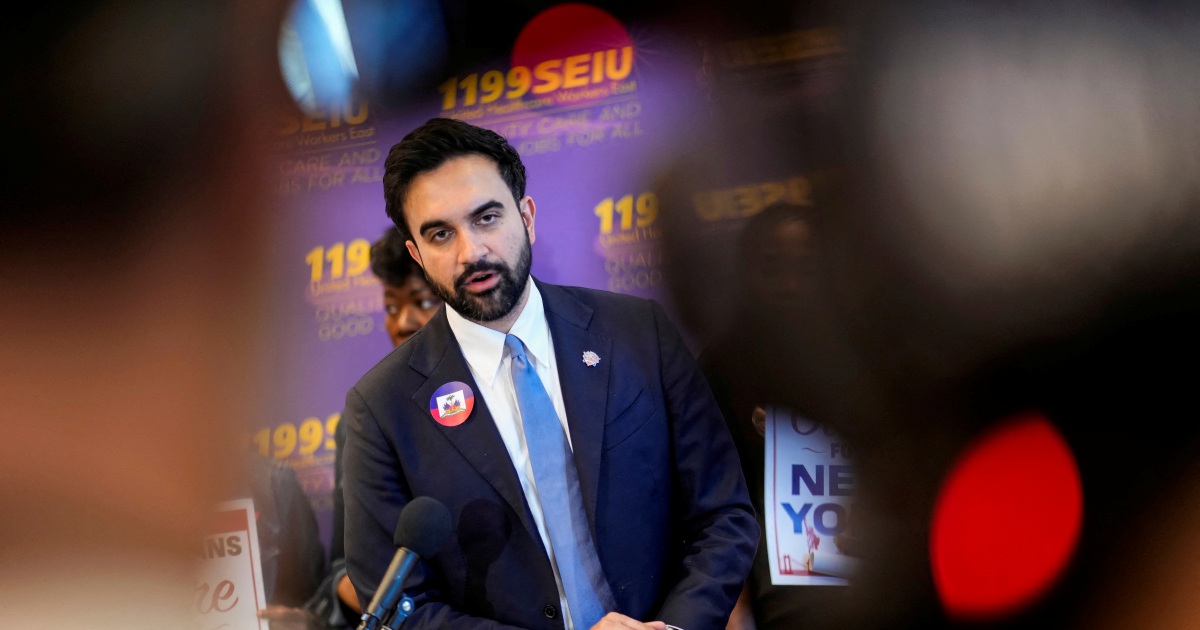
New York Mayor Zohran Mamdani disclosed in a recent interview that his administration is deliberating whether to move forward with arresting Israeli Prime Minister Benjamin Netanyahu during his attendance at the forthcoming UN summit in New York, a statement that has drawn fierce criticism from Netanyahu's office. The disclosure, published on Saturday, underscores the intensifying legal and diplomatic pressures surrounding Netanyahu as he navigates international appearances amid ongoing controversies at home and abroad.
The prospect of such an arrest stems from the International Criminal Court's prior indictment of Netanyahu on charges related to his military operations and policies in the Middle East. The ICC has previously issued arrest warrants for various international figures, and many countries that are signatories to the Rome Statute are technically obligated to enforce such warrants. New York, as a global hub hosting the UN headquarters, places the mayor in an unusual position where such enforcement becomes theoretically possible, though laden with profound diplomatic implications.
Mamdani's deliberation reflects broader tensions within American political circles regarding how to balance traditional diplomatic courtesies with emerging accountability mechanisms for international figures. The United States itself is not a party to the ICC, which complicates the legal framework. However, state and local authorities in the US have occasionally entertained the possibility of enforcing international warrants on their own initiative, creating novel constitutional and jurisdictional questions that have rarely reached resolution.
The political stakes are substantial. Netanyahu's attendance at UN meetings carries symbolic weight for Israel's diplomatic standing, and any attempted arrest would represent an unprecedented diplomatic incident. Such action would likely rupture the traditionally close relationship between New York's municipal government and Israel's leadership, while simultaneously placing the administration at odds with the federal government's foreign policy apparatus, which typically manages such sensitive matters.
For Netanyahu, the timing compounds existing legal jeopardy. He faces ongoing investigations and proceedings related to corruption allegations within Israel itself, while simultaneously dealing with international scrutiny regarding military operations in Gaza and their humanitarian consequences. Each layer of legal exposure narrows his room for maneuver and increases the stakes of international travel, which once enjoyed the protective shield of broad diplomatic immunity but now faces erosion through the ICC's expanding reach.
The mayor's office has provided limited specificity regarding the substantive basis for such action, leaving analysts to speculate whether this represents serious intent or a rhetorical gesture aligned with particular constituencies. New York's substantial Palestinian-American and Arab-American communities have mobilized politically around issues of Middle Eastern policy, and some observers interpret Mamdani's remarks as responsive to these constituencies. However, others view it as a genuine exploration of legal avenues aligned with international humanitarian law frameworks.
Israeli officials responded swiftly and sharply to Mamdani's remarks. Netanyahu's camp dismissed the suggestion as legally baseless and diplomatically reckless, emphasizing Israel's democratic legitimacy and the questionable jurisprudential standing of using NYC municipal authority to enforce international warrants against a sitting prime minister. The rebuke highlighted the deep divisions between Israeli leadership and progressive municipal authorities, particularly in American cities with substantial Jewish and Palestinian populations where such tensions frequently surface.
The situation reflects broader questions about the trajectory of international accountability mechanisms and their intersection with state sovereignty. The ICC has struggled with legitimacy questions, particularly regarding its disproportionate focus on African nations and leaders from non-Western powers. Netanyahu's potential exposure to arrest procedures would represent a significant test case regarding whether the institution's reach extends evenhandedly to leaders from established democracies, or whether practical and political constraints limit its actual enforcement power.
For Southeast Asian observers, this incident carries relevance beyond the immediate Israeli-Palestinian context. It signals expanding legal exposure for political and military leaders who operate in jurisdictions potentially sympathetic to international humanitarian law frameworks. The precedent—should it advance—could influence how regional leaders calculate the risks of international travel and how accountability mechanisms evolve across Asia. Countries in Southeast Asia, several of which host ICC delegations or face their own humanitarian scrutiny, must grapple with how such developments affect future diplomatic protocols.
The unresolved tension between Mamdani's statements and actual enforcement capabilities remains paramount. Even if the mayor's office attempted to move forward, the US federal government would likely intervene, citing national security and diplomatic interests. Such intervention would expose the fragmented nature of American governance and the competing priorities between municipal activism and national foreign policy interests.
Moving forward, Netanyahu faces a calculation regarding UN attendance. Declining to appear would cede diplomatic ground and signal capitulation to legal threats. Attending exposes him to unprecedented municipal-level legal action, even if federal courts ultimately block any enforcement. The very possibility of arrest procedures, regardless of their legal merit, represents a symbolic victory for those seeking accountability and a troubling precedent for sitting leaders of established nations accustomed to diplomatic protection. This incident illustrates how contemporary international law increasingly complicates the traditional sanctuary that UN participation once provided to world leaders.

