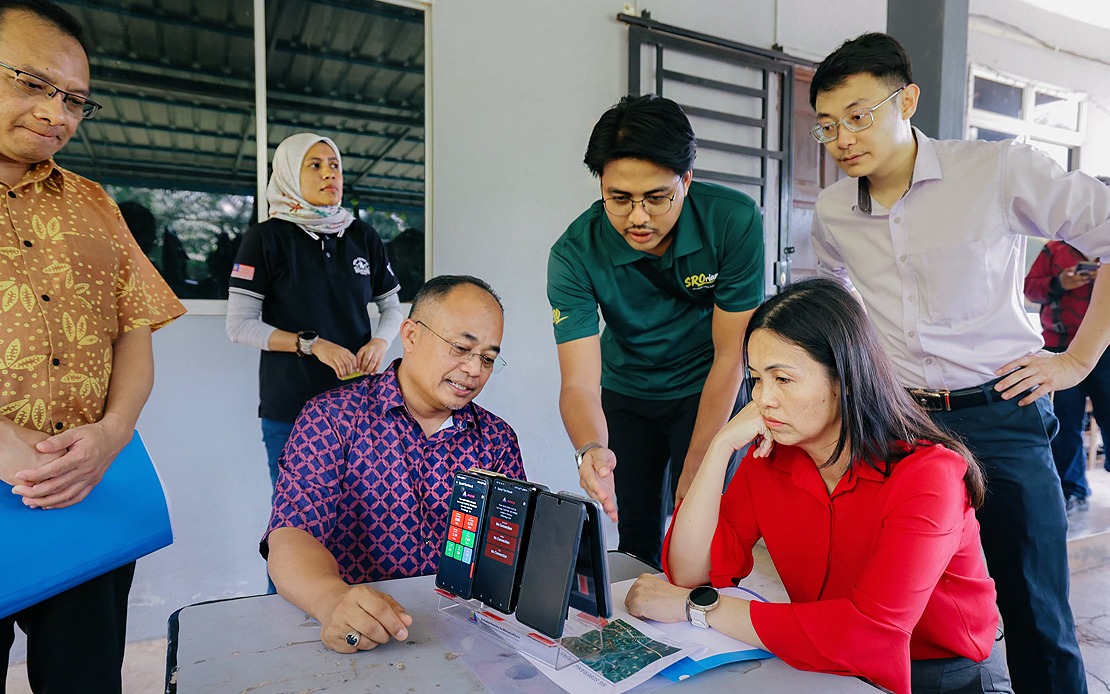
Residents living in Kampung Seberang Gajah, a rural locality in Tangkak, can expect their longstanding internet connectivity problems to be remedied through the construction of an additional telecommunications infrastructure. Deputy Communications Minister Teo Nie Ching made this announcement on July 9 following an on-site assessment of current service conditions in the village, signalling concrete government action to bridge Malaysia's persistent digital divide affecting smaller communities.
The connectivity challenges experienced by villagers stem from insufficient coverage provided by two existing telecommunications towers already positioned nearby. Despite these installations, their signal reach and capacity prove inadequate for meeting the residential area's broadband requirements, creating a technological gap that has isolated residents from digital services essential for education, commerce, and access to government resources. This scenario reflects a broader pattern affecting numerous rural settlements across Malaysia where infrastructure deployment has not kept pace with population needs.
To systematically address this coverage deficiency, the Malaysian Communications and Multimedia Commission (MCMC) has directed commercial telecommunications service providers to establish a new tower within the area. The directive represents a regulatory intervention designed to compel market players to expand their network footprint in commercially marginal regions, addressing market failure where profit-driven expansion alone has proven insufficient. Such government-mandated rollout strategies have become increasingly important as Malaysia pursues its Digital Economy blueprint and aims to ensure no community remains disconnected from the information age.
Teo outlined that planning and design specifications for the telecommunications installation have already been completed, with the project now entering the administrative phase. The responsible service provider is currently navigating the approval machinery of relevant local authorities—a procedural step essential under Malaysian planning regulations but one frequently cited as a bottleneck in infrastructure acceleration. She emphasised the critical importance of expediting both the licensing process and subsequent construction timelines, recognising that delays in approvals can indefinitely postpone relief for affected communities.
The site inspection involved coordination among multiple government and regulatory stakeholders, underscoring the multi-agency nature of telecommunications infrastructure deployment in Malaysia. Attending the survey were Bukhari Yahya representing state administrative interests, Rizal Abd Malek of the MCMC's Southern Region Office, and personnel from telecommunications companies involved in the rollout. This collaborative presence signalled political commitment to resolving the issue while engaging all institutional players responsible for implementation and oversight.
The situation in Kampung Seberang Gajah exemplifies the persistent challenges rural Malaysia encounters in achieving universal broadband access. While urban and semi-urban areas benefit from competitive network rollout driven by commercial interests, geographically dispersed or economically less attractive areas require explicit government intervention to incentivise infrastructure investment. The telecommunications sector's structure—dominated by a handful of major providers—means that regulatory direction proves necessary to ensure equitable geographic distribution of digital resources.
From a policy perspective, this initiative reflects the government's recognition that digital connectivity has transcended luxury status to become essential infrastructure akin to electricity and water supply. Residents in underserved areas suffer educational disadvantages, limited entrepreneurial opportunities, and reduced access to telemedicine and e-government services. Rural communities increasingly require stable internet to participate in Malaysia's evolving digital economy and access services that have migrated online, particularly following the pandemic's acceleration of digital transformation across both public and private sectors.
The anticipated improvements carry significant implications for residents' quality of life and economic prospects. Enhanced connectivity enables students to access online educational resources and participate in distance learning, farmers to obtain market information and modernise agricultural practices through digital tools, and small businesses to reach broader customer bases through e-commerce. For government service delivery, reliable broadband allows rural residents to access healthcare information portals, submit applications digitally, and participate in online civic engagement.
The timeline for implementation remains contingent on municipal approval processes, though Teo's public urging of acceleration suggests political pressure will be applied to expedite bureaucratic procedures. Malaysian telecommunications infrastructure projects frequently experience delays in the permitting phase, and continued high-level advocacy could materially shorten the implementation horizon. Residents' immediate priority involves ensuring permits materialise within weeks rather than months, allowing construction to commence before year's end.
This development also highlights ongoing tensions between commercial service provider operations and public interest obligations. While profit maximisation incentivises deployment in densely populated urban centres, regulatory frameworks increasingly expect operators to contribute to universal service goals. The MCMC's directive effectively mandates cross-subsidisation where returns from lucrative urban markets support expansion into less profitable rural territories, a policy mechanism that helps distribute digital dividends more equitably across Malaysian society.

