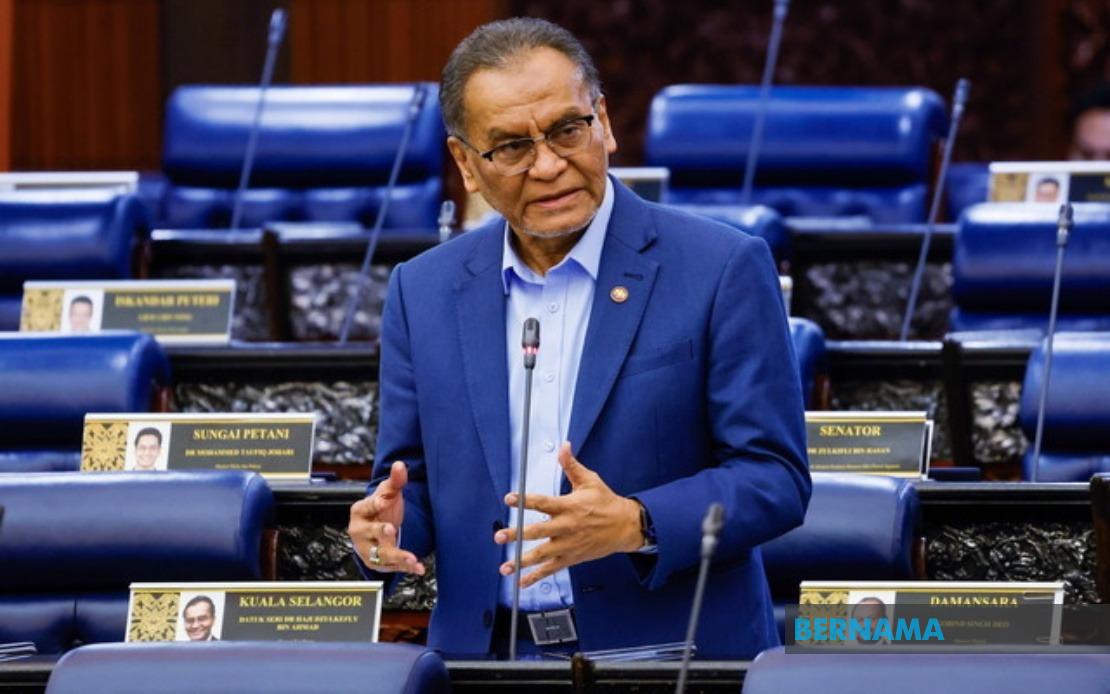
The Malaysian Health Ministry has set its sights on building a new hospital in Bandar Enstek, located in Nilai, Negeri Sembilan, as part of a broader strategy to manage healthcare demand in the Seremban district. Health Minister Datuk Seri Dr Dzulkefly Ahmad revealed the initiative in a parliamentary written reply, signalling a significant shift in how federal authorities are approaching healthcare infrastructure expansion in the state. The proposed facility represents a response to mounting pressures on existing medical services, particularly at the increasingly congested Tuanku Ja'afar Hospital, which has struggled to keep pace with the region's explosive residential and commercial development.
The decision to pursue a facility in the northern Seremban corridor reflects the Ministry's recognition that traditional approaches to healthcare capacity management no longer suffice for communities experiencing rapid urbanisation. Bandar Enstek itself has emerged as a major population centre over the past decade, attracting thousands of residents seeking modern amenities and affordable housing options within proximity to Kuala Lumpur. This demographic shift has placed unprecedented strain on existing healthcare infrastructure, with Tuanku Ja'afar Hospital increasingly overwhelmed during peak periods. The new hospital is thus positioned as a critical infrastructure project capable of distributing patient loads more equitably across the district while simultaneously serving residents in areas previously underserved by major medical facilities.
The announcement follows consultations between the Health Ministry and Negeri Sembilan Menteri Besar Datuk Seri Aminuddin Harun on June 16, during which discussions centred on the proposed Tuanku Ja'afar Hospital 2 project in Rasah. Rather than proceeding with the original plan, ministry officials determined that a hospital in Bandar Enstek would better align with current demographic patterns and infrastructure development in the state. This recalibration demonstrates a pragmatic approach to resource allocation, prioritising population centres where growth is most pronounced rather than maintaining earlier strategic assumptions that may no longer reflect ground realities.
The state government has already identified two separate parcels of land, each comprising 50 acres or approximately 20 hectares, that are owned by the Federal Lands Commissioner and located within the target area. These sites represent strategic assets that could accommodate a modern tertiary hospital with integrated outpatient facilities, emergency departments, and specialised treatment centres. The identification of multiple potential locations provides the Health Ministry with flexibility in site selection, allowing officials to conduct thorough assessments of accessibility, infrastructure connectivity, and long-term expansion potential before finalising a decision.
Proceeding with the project requires navigating bureaucratic pathways that, while established, can extend timelines considerably. The Health Ministry intends to conduct site inspections in the near future, examining both parcels to determine which location offers optimal operational and logistical advantages. Following this evaluation, the ministry must submit an application for land-use conversion to the Department of the Director General of Lands and Mines, a process that engages multiple government agencies in ensuring compliance with land administration protocols. Once land-use conversion receives approval, preliminary project work will commence immediately, encompassing land surveying, soil investigation, conceptual design development, project cost estimation, and comprehensive Value Assessment exercises that determine financial viability and cost-effectiveness.
Beyond the main hospital project, the state government has committed additional land resources to broader healthcare development. Aminuddin has agreed to alienate 36.748 acres, roughly equivalent to 14 hectares, of Federal Reserve land in Bandar Seremban for future healthcare initiatives. This land allocation is intended to support multiple objectives, including construction of an additional block for the existing Tuanku Ja'afar Hospital itself and establishment of a Centre of Excellence focused on specialised medical training and research. Such complementary investments suggest a comprehensive vision for elevating healthcare capacity and capability across Negeri Sembilan rather than relying on a single infrastructure project.
The expansion initiative occurs within a context of broader healthcare workforce challenges that the Malaysian government is attempting to address through multiple policy mechanisms. The Returning Expert Programme, administered through TalentCorp, aims to incentivise Malaysian medical and healthcare professionals working internationally to return to domestic employment. The programme offers tangible benefits including income tax exemptions and excise duty waivers on locally manufactured vehicles, addressing financial considerations that often motivate overseas employment. Applications from the healthcare sector have been particularly robust, with the largest cohorts of interested returnees hailing from professionals currently based in the United Kingdom, Singapore, and Australia, reflecting established migration patterns among Malaysian medical specialists and doctors.
While encouraging diaspora members to return remains strategically important, the Health Ministry simultaneously acknowledges the necessity of tapping international talent pools to address critical service gaps. Foreign medical professionals have long operated within Malaysia's healthcare system, subject to regulatory oversight by the Malaysian Medical Council and the Malaysian Nursing Board, which enforce standards ensuring service quality and patient safety. The ministry currently appoints non-citizen medical specialists to address shortages in critical disciplines and geographically challenging locations where local recruitment proves insufficient. Additionally, the ministry engages non-citizen graduate medical officers who are permanent residents or spouses of Malaysian citizens, integrating them into housemanship training programmes at Ministry facilities as a pathway toward building the domestic medical workforce.
The question of foreign nurse recruitment represents a more contentious and complex policy arena, one that remains under active study. The Health Ministry has not yet concluded its assessment of feasibility regarding expanded recruitment of foreign nursing personnel, reflecting ongoing consultations with relevant ministries and agencies on implications for workforce standards, labour market dynamics, and service delivery. This measured approach contrasts with more aggressive international recruitment of physicians and specialists, suggesting that policymakers recognise distinct considerations surrounding nursing roles, including concerns about wage suppression, working conditions, and integration into local healthcare teams.
For Malaysian healthcare stakeholders, particularly those in Seremban and surrounding districts, the new Bandar Enstek hospital announcement addresses a genuine and persistent infrastructure deficit. Over recent years, residents in growing communities have reported extended waiting times at existing facilities, difficulty securing appointments with specialists, and overcrowded emergency departments during peak periods. A well-resourced tertiary hospital in Bandar Enstek promises to alleviate these pressures while improving healthcare accessibility for populations in the northern Seremban corridor. The project also carries broader regional significance, as Negeri Sembilan's healthcare infrastructure development has implications for population distribution and economic activity across the Klang Valley and northern Selangor regions.
The timeline for project completion remains uncertain, given the preliminary stage of land evaluation and the various regulatory approvals required before construction can commence. However, the government's apparent commitment to moving forward—evidenced by the identification of specific land parcels and articulation of a development sequence—suggests that planning and preliminary works could accelerate over the coming months. For patients, healthcare workers, and communities dependent on Tuanku Ja'afar Hospital, this initiative represents tangible recognition that existing infrastructure has reached capacity and that expansion is necessary to maintain service standards and meet future demand as Negeri Sembilan continues its demographic and economic expansion.

