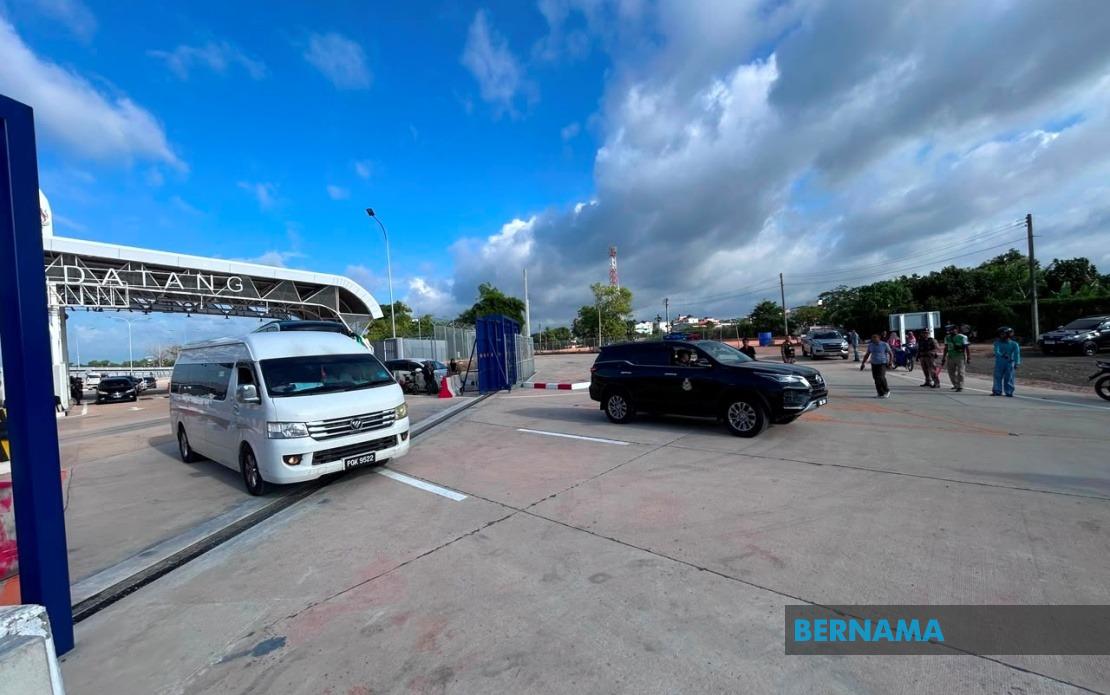
A fresh road corridor connecting Malaysia's Bukit Kayu Hitam Immigration, Customs, Quarantine and Security complex with Thailand's Sadao Customs, Immigration and Quarantine facility began operations on July 11, marking a significant milestone in bilateral infrastructure development. The route opened its gates to the public at 6 am, with officials anticipating it will substantially alleviate the perennial traffic bottlenecks that have plagued this critical international border point, especially during peak travel periods such as weekends and holiday seasons.
Prime Minister Datuk Seri Anwar Ibrahim and Thai Prime Minister Anutin Charnvirakul jointly inaugurated the new corridor yesterday, underscoring the project's importance as both nations seek to deepen economic cooperation and facilitate seamless people-to-people movement. The initiative reflects a broader commitment from both governments to modernise border infrastructure and enhance the efficiency of cross-border operations, which have long faced capacity constraints that hindered the smooth flow of traffic and commerce across one of Southeast Asia's busiest land frontiers.
Early observations from the opening day revealed encouraging signs, with traffic moving at healthy speeds throughout the new route. Users who traversed the corridor offered encouraging testimonies about its design and operational efficiency. Mohd Faizal Ahmad, a 42-year-old motorist from Penang, highlighted the organisational improvements and convenience the new infrastructure provides for Malaysians heading to Thailand, noting that the expansion should meaningfully reduce the travel delays that have historically characterised school holiday periods when cross-border traffic volumes surge dramatically.
For heavy vehicle operators, the new route delivers tangible operational advantages that extend beyond mere congestion relief. Wan Muhammad Shahid Wan Mohd Desa, a 28-year-old lorry driver, explained that the expanded carriageway enables better separation between commercial and private vehicles, particularly during entry procedures into the Sadao complex. This segregation addresses a longstanding frustration where large trucks and passenger cars competed for limited road space when transiting from Bukit Kayu Hitam to Danok, creating cascading delays that affected both categories of traffic.
The Sadao CIQ facility itself represents a substantial upgrade in terms of physical infrastructure and service delivery capabilities. Mat Li Daman, a 59-year-old Thai national with frequent travel needs, noted that the new complex offers considerably more space and improved amenities compared to its predecessor, including enhanced facilities for documentation processing and vehicle entry declarations. This modernisation is particularly meaningful for regular cross-border users who can now complete administrative procedures in a more comfortable and efficient environment, potentially reducing the time spent in clearance queues.
For Malaysia's northern region, particularly Kedah and Penang, this development carries significant economic implications. The reduced travel friction should stimulate leisure tourism flows between the two countries, as the improved convenience makes bilateral trips more attractive for families and individual travellers. Reduced border crossing times translate directly to more competitive travel packages and shorter overall journey durations, factors that influence tourism demand patterns and destination choice decisions among Malaysian and Thai tourists.
The bilateral trade dimension should not be overlooked in assessing this project's significance. By streamlining the movement of goods through improved road infrastructure and more efficient border clearance procedures, the corridor supports Malaysia's logistics sector and reduces transportation costs for businesses engaged in cross-border commerce. Thai exporters supplying Malaysian markets benefit equally, and the combined effect should stimulate commercial activity along this important trading axis.
From a Southeast Asian perspective, this infrastructure development exemplifies the practical regional integration occurring beyond formal multilateral frameworks. While ASEAN mechanisms provide the political architecture for closer ties, projects like this new crossing demonstrate how neighbouring nations can collaborate on tangible solutions that genuinely improve daily life for millions of citizens. The corridor serves both domestic commuters and international travellers, reflecting the interconnected nature of modern border regions where communities, families, and businesses increasingly operate across jurisdictional lines.
The project also reflects evolving approaches to border management in the region. Rather than viewing borders primarily as barriers requiring stricter control, contemporary infrastructure investments recognise them as nodes in networks where efficiency and facilitation can coexist with security imperatives. The new facility design enables more sophisticated screening and documentation processes without compromising the speed of legitimate cross-border movement, a balance that previous infrastructure struggled to achieve.
Looking forward, the success of this corridor will likely influence future infrastructure planning in the region. If traffic volumes indeed decline at the main Bukit Kayu Hitam-Sadao crossing as anticipated, it validates the approach of investing in alternative routes that distribute traffic across multiple entry points rather than concentrating all cross-border flows at single locations. This model could be replicated at other congested Malaysia-Thailand corridors, particularly the west coast passage through Kota Bharu-Sungai Golok, where similar infrastructure constraints generate comparable congestion challenges.
Sustainable benefits will depend on how traffic patterns evolve and whether the new facility can absorb future growth in cross-border movements. Initial assessments suggest the infrastructure was thoughtfully designed with expansion capacity considerations, though the true test will emerge during peak holiday seasons when cross-border traffic reaches its highest volumes. Should the new corridor successfully manage these peak periods, it will validate the investment and encourage similar bilateral infrastructure initiatives that strengthen Malaysia's connectivity with its neighbours and position the country as a regional logistics hub.

