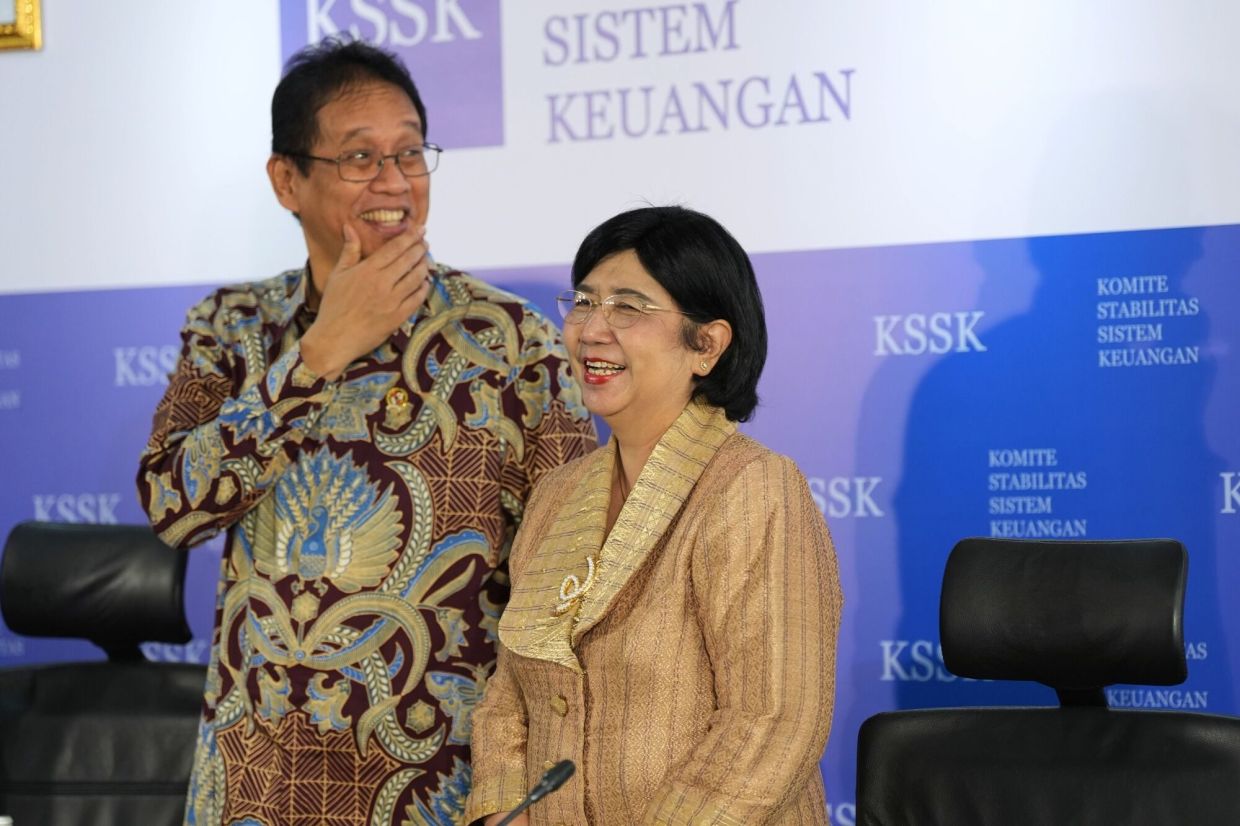
Destry Damayanti has signalled a strikingly different approach to her new role as Indonesia's acting central bank governor than her predecessor, with her first major move being a visit to Finance Minister Purbaya Yudhi Sadewa's office even before meeting President Prabowo Subianto. This choreography was deliberate. Where Perry Warjiyo, her predecessor, maintained formal distance and conducted rare one-on-one meetings with the finance ministry—the most recent publicly documented encounter occurring at central bank headquarters in September 2025—Destry has opened with visible warmth and collaboration. The pair have already appeared together at press briefings, exchanging handshakes and projecting unified messaging on Indonesia's economic direction.
Prabowo's decision to nominate Destry as the sole candidate for the permanent governor position reflects a calculated political choice. She represents a compromise candidate: a market-respected technocrat with impeccable credentials and two decades of central banking experience, yet someone whose closer working relationship with the finance ministry suggests alignment with the administration's ambitions for accelerated economic growth. The President seeks to reach 8% GDP growth by 2029—an ambitious target that requires both monetary flexibility and fiscal support. Yet this same political calculus creates an inherent tension that will define Destry's tenure: how to deliver for a government seeking faster expansion while maintaining the institutional credibility that keeps international investors confident in Indonesia's currency and financial system.
The rupiah has been the barometer of investor anxiety regarding Indonesia's economic management. Down approximately 6% against the dollar this year, it remains the worst-performing currency across Asia, a stark reminder that confidence has eroded under Prabowo's first year in office. The President's populist initiatives—including massive spending on free school meals and increased state involvement in commodity markets—have alarmed capital markets concerned about fiscal discipline and macroeconomic stability. Rating agencies have responded accordingly: both Fitch and Moody's placed Indonesia on negative watch citing policy uncertainty, although S&P Global maintained a stable outlook. When Destry's nomination was announced, markets reacted positively, with the rupiah strengthening to its best level in a month, suggesting investors hope her appointment signals a return to orthodox monetary management.
Destry brings substantial credentials to address these concerns. Her educational background includes undergraduate studies in economics from the University of Indonesia and a master's degree in regional science from Cornell University—training that has positioned her within Indonesia's technocratic establishment. Before joining Bank Indonesia as deputy governor since 2019, she served as chief economist at PT Bank Mandiri, one of Indonesia's largest state-owned banks, and held a commissioner position at the Indonesia Deposit Insurance Corporation, the same agency once headed by Finance Minister Purbaya. This shared institutional history creates natural alignment between the two officials, yet it also raises questions about whether professional relationships might eventually compromise the independence monetary policy requires.
The challenge facing Destry extends beyond political management. Bank Indonesia under Warjiyo deployed an intricate array of policy tools to navigate competing pressures. Since May, the central bank has raised interest rates on three occasions while simultaneously intervening directly in foreign exchange markets to support the rupiah and deploying non-rate instruments to sustain credit growth and economic activity. This balancing act reflects the central bank's dual mandate: maintaining price stability while supporting the real economy. Destry must continue this multifaceted approach even as external conditions tighten. Rising global interest rates and a strengthening dollar create persistent pressure on the rupiah regardless of domestic policy choices, potentially forcing difficult decisions about rate increases at moments when the government wishes to prioritise growth stimulus.
Economists have cautiously welcomed Destry's appointment, though with realistic expectations about the constraints she faces. Helmi Arman, an economist at Citigroup, noted that improved communication between the central bank and government is likely, yet cautioned that "the broader environment for institutional credibility remains dynamic." This assessment reflects a widespread view that while Destry's closer relationship with the finance ministry may improve policy coordination, it cannot resolve fundamental tensions between monetary prudence and political growth targets. Irman Faiz, chief economist at PT Bank Danoman, articulated the critical principle: coordination between monetary and fiscal authorities is necessary and desirable, but what he termed "policy subordination" is not. In practical terms, this means the central bank must retain the authority to raise rates when inflation or currency stability deteriorates, regardless of government preferences for looser monetary conditions.
The rupiah's vulnerability creates an ongoing test of Destry's resolve. Domestic inflation remains relatively contained, offering space for monetary accommodation, yet external pressures—rising US rates and dollar strength—continuously threaten the currency. This disconnect between domestic price stability and external imbalances is characteristic of many emerging markets, but Indonesia's particular vulnerability stems partly from the investor confidence deficit created by recent policy uncertainty. If Destry proves willing to maintain hawkish stances on rates when the rupiah comes under pressure, she rebuilds credibility. Conversely, if political pressure induces rate cuts during periods of currency weakness, markets will quickly interpret this as subordination of monetary policy to growth objectives, potentially triggering capital outflows and self-fulfilling currency depreciation.
Destry's regular engagement with the investor and analyst community—something she has maintained throughout her deputy governor tenure—positions her well to manage market expectations and communicate the central bank's rationale for policy decisions. This transparency and accessibility represent valuable assets, particularly given the information void that surrounded some of Warjiyo's decisions. Yet communication alone cannot substitute for demonstrated independence when difficult choices arise. The true test will come when interest rate decisions conflict with government fiscal stimulus announcements, or when currency intervention becomes necessary despite criticism that monetary tightening restrains growth.
Fakhrul Fulvian, chief economist at PT Trimegah Sekuritas Indonesia, has articulated an important forward-looking perspective on Destry's agenda. While preserving the stability achieved in recent years remains important, he argues that the central bank's next phase should extend beyond mere preservation to active improvement of financial conditions. This includes normalising yield curves that have been distorted by crisis-period policies, strengthening monetary transmission mechanisms so that rate changes translate more effectively into real-economy impacts, and rebuilding private-sector confidence sufficiently to drive investment and consumption. These objectives require not just competent technical management but also the institutional authority that flows from demonstrated independence.
Destry's appointment still requires parliamentary approval, a procedural step that carries genuine political weight given Prabowo's coalition control of the legislature. Opposition parties may use confirmation hearings to probe her commitment to central bank autonomy, though such scrutiny is unlikely to derail her nomination given the administration's parliamentary majority. The more meaningful accountability will come from international investors and credit rating agencies, who will monitor her actual policy choices rather than her stated intentions. For Malaysia and other Southeast Asian economies, Destry's performance carries significance beyond Indonesia's borders. The region's financial systems remain interconnected, and Indonesia's currency stability affects regional trade, investment flows, and capital allocation across emerging Asia.
The next critical moment in Destry's tenure will arrive when she must make her first contentious decision—perhaps raising rates despite government discomfort, or resisting pressure for currency intervention that could deplete reserves. How she navigates that first genuine conflict between institutional requirements and political preferences will establish the template for her entire governorship. Markets are betting she will prioritise credibility and stability, but Prabowo's appointment of someone notably closer to the finance ministry suggests political expectations for accommodation. Reconciling these competing pressures while maintaining the rupiah's value and containing inflation represents the central challenge of her leadership.

