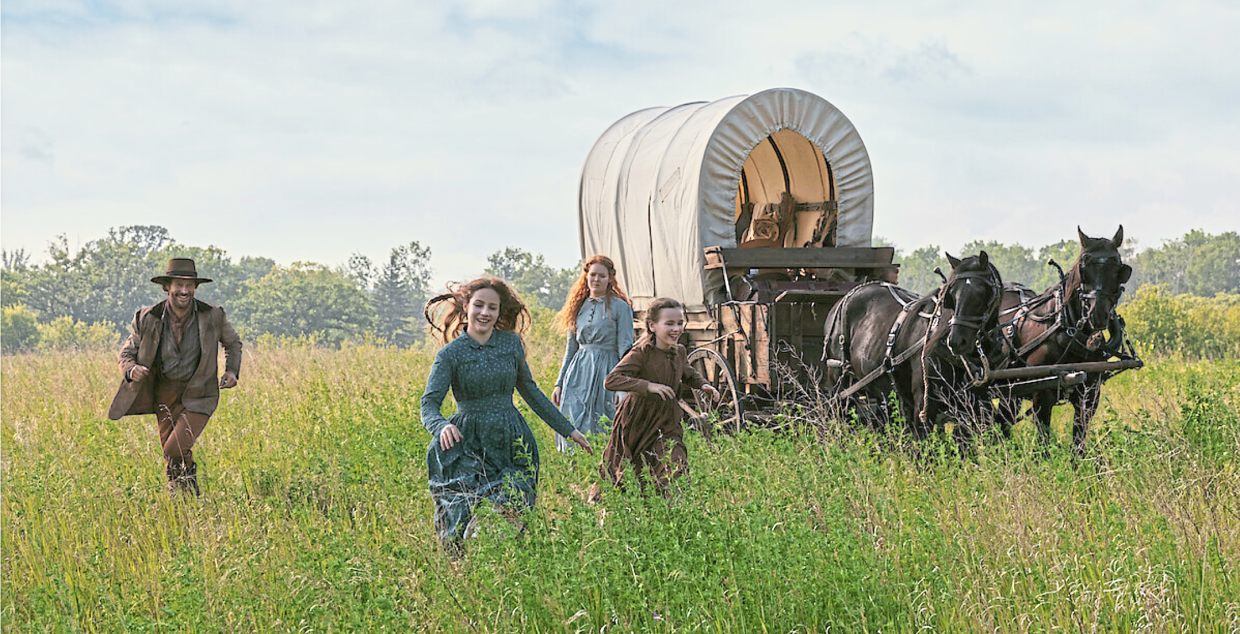
Australian actor Luke Bracey is stepping into one of television's most iconic family dramas as Netflix prepares to launch its 2026 adaptation of Little House On The Prairie, the cherished 1935 novel that has captivated audiences across generations. The streaming giant's interpretation of Laura Ingalls Wilder's literary classic marks a significant moment in the reimagining of historical Americana for contemporary viewers, positioning the intimate family narrative within the broader context of settler-colonial expansion and Indigenous perspectives—a distinctly modern approach to source material that first found its feet on paper nearly nine decades ago.
Bracey takes on the role of Charles Ingalls, the patriarch whose steady presence anchors the Ingalls family through the unpredictable terrain of 19th-century American frontier life. The actor emphasises that the enduring appeal of the original story lies in its fundamental exploration of familial bonds and resilience amid adversity. "It's no mistake, and it is no accident, that the story and the family are so loved by so many people for so long," Bracey reflected, suggesting that the core themes of familial loyalty and perseverance transcend the specific historical moment in which the narrative unfolds. This observation points to why producers felt confident greenlight a project that competes with the considerable shadow cast by the 1970s-era television series, which became a cultural touchstone in its own right during its decade-long run on NBC from 1973 to 1983.
The new ensemble cast surrounding Bracey includes Alice Halsey as Laura Ingalls, the story's central figure whose coming-of-age journey provides much of the narrative's emotional core. Crosby Fitzgerald assumes the role of Caroline, the Ingalls matriarch, while Skywalker Hughes portrays Mary, Laura's elder sister. This casting structure allows the production to explore the family unit from multiple generational perspectives, creating opportunities to examine how different members experience and interpret their shared circumstances on the frontier. The distribution of roles suggests that Netflix's version will grant substantial dramatic weight to female characters, a conscious editorial choice that reflects contemporary storytelling sensibilities.
Halsey's observations about the historical constraints placed upon girls in the 1800s reveal one interpretive lens through which the new adaptation examines its source material. The actress noted that the gender-based limitations of the era—restricted educational opportunities, curtailed autonomy, and limited life choices—represented profound barriers that would have prevented her from pursuing many of her current ambitions had she lived during Laura's time. "Girls didn't have the same opportunities that boys had back then. Girls didn't get to learn as much as boys did," Halsey stated, articulating how the adaptation might use historical distance as a vehicle for discussing contemporary gender equity. This thematic emphasis suggests that Netflix intends to layer the frontier narrative with questions about systemic inequality and social progress, making the period setting a lens through which to examine enduring questions about women's agency and education.
The creative direction falls under Rebecca Sonnenshine, who serves as creator and showrunner, indicating that the project has benefited from a unified artistic vision rather than the fragmented decision-making that sometimes characterises larger adaptations. Sonnenshine's involvement signals a commitment to narrative coherence and thematic consistency across the series, crucial elements when updating beloved source material for audiences whose expectations may be shaped by previous iterations. The decision to position her at the helm demonstrates Netflix's confidence in this interpretation and its marketability to global streaming audiences who may have limited familiarity with the original novel or 1970s television series.
Perhaps most significantly, Netflix has already greenlit a second season ahead of the first season's premiere, an unusually confident vote of confidence that reflects either exceptional screening results or a strategic commitment to building a flagship franchise around the Ingalls family story. This decision reduces the creative uncertainty that might otherwise constrain storytelling ambitions and allows production designers, writers, and directors to conceive of narrative arcs across multiple seasons rather than constructing each episode as a self-contained unit. Skywalker Hughes expressed gratitude for the opportunity to return, noting that the production created "amazing and just perfect memories last season," suggesting a positive working environment that may translate into cohesive on-screen chemistry among the ensemble cast.
For Malaysian and Southeast Asian viewers, this adaptation arrives at a moment when streaming services are increasingly mining Western literary classics and reinterpreting them through contemporary lenses that acknowledge previously marginalised perspectives. The explicit inclusion of settler-colonial and Indigenous narratives within the Little House On The Prairie framework represents a significant departure from earlier adaptations and reflects broader conversations about historical accuracy, cultural representation, and the ways that storytelling can both reflect and shape how audiences understand pivotal historical moments. The frontier mythology has long held considerable cultural cachet throughout the English-speaking world, and Netflix's 2026 release will likely influence how younger audiences across Asia-Pacific regions understand American history and the ideological narratives surrounding westward expansion.

