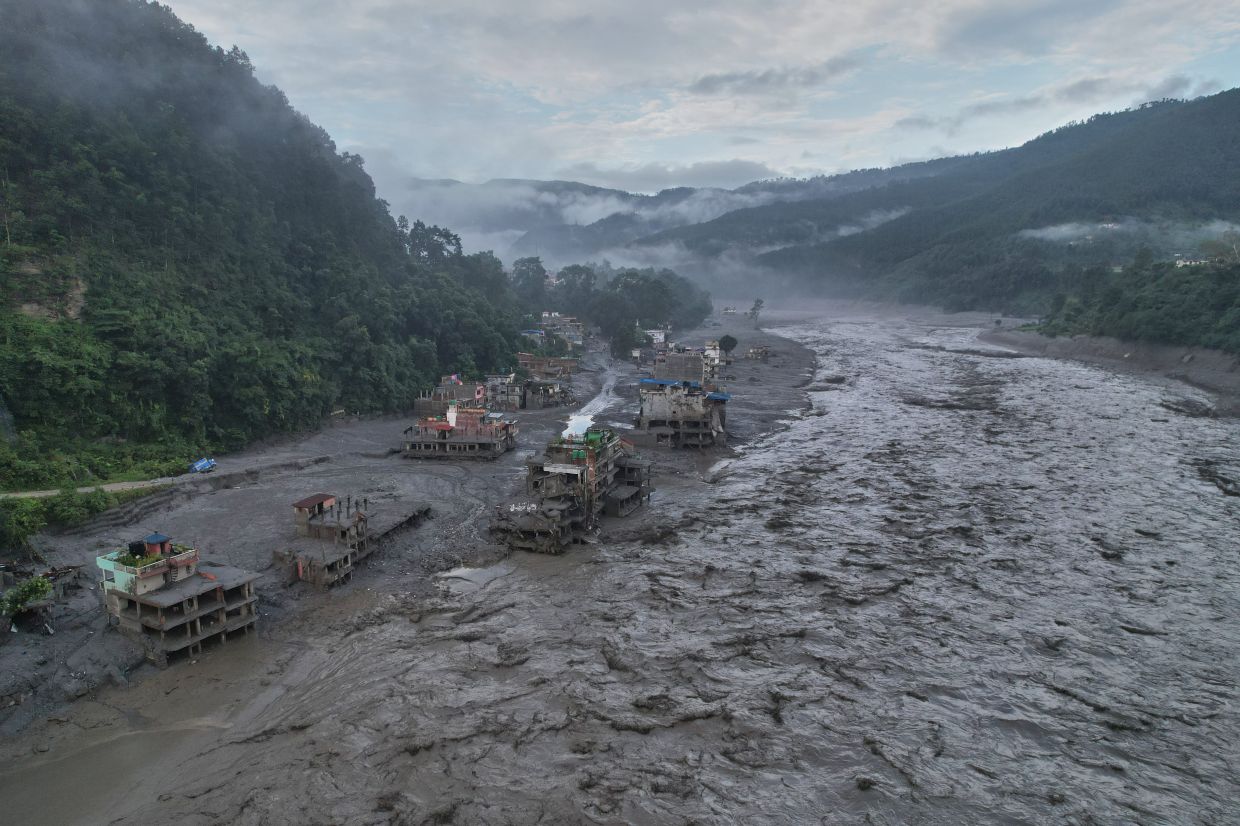
The catastrophic floods that devastated Nepal last week have exposed a critical vulnerability in the region's disaster preparedness infrastructure: communities affected by the surging waters received almost no advance warning before the deluge swept through their valleys. Dharam Raj Uprety, who leads Nepal's National Disaster Risk Reduction and Management Authority, acknowledged this alarming shortcoming, noting that residents had barely five minutes—if that—to seek shelter or evacuate as the torrent engulfed entire settlements. The tragedy has laid bare a constellation of interconnected problems centred on inadequate monitoring systems in remote mountain areas and the absence of robust mechanisms for sharing meteorological and climate data across international borders, particularly with neighbouring China.
The immediate trigger for the catastrophe was the collapse of a glacier high in the Himalayas on August 26, an event that unleashed a cascading avalanche of ice, mud, rock and water down the mountainside with terrifying force. Eyewitness videos captured the moment walls of debris obliterated villages, sweeping away houses, bridges, power infrastructure and vegetation in their path. The disaster has claimed at least 800 lives, with over 3000 people still unaccounted for, making it one of the most destructive environmental events to strike the region in recent years. The economic toll is expected to be staggering, with preliminary estimates suggesting reconstruction costs could exceed US$5 billion—a burden that would strain Nepal's already constrained resources for years to come.
At the heart of this vulnerability lies a fundamental infrastructure problem: Nepal lacks adequate weather observation stations in its high-altitude zones, precisely where the greatest hazards originate. Uprety explained that the absence of transnational data-sharing agreements creates an information vacuum that makes early detection of dangerous conditions nearly impossible. The cost and logistical complexity of installing and maintaining meteorological equipment in extreme mountain environments, combined with the harsh terrain and difficult access, have meant that critical stretches of the Himalayas remain largely unobserved by monitoring systems. This creates a dangerous blind spot during a period when climate change is destabilising the mountain environment at an accelerating pace, warming permafrost and destabilising glacier systems faster than monitoring networks can be developed.
The role of climate change in accelerating this risk profile cannot be overstated. Scientists caution that attributing the specific glacial collapse directly to warming remains premature based on current evidence, yet the underlying mechanism is well understood: rising temperatures weaken the permafrost that acts as a binding agent holding high-altitude slopes and glacier foundations together. As these anchors deteriorate, the risk of catastrophic collapses multiplies. The satellite data available after the disaster indicates that bedrock beneath the glacier gave way, triggering the cascading sequence of failures. This underscores how rapidly changing mountain conditions—driven by anthropogenic warming—are generating new and evolving hazards that traditional monitoring systems were never designed to detect or predict.
The question of data sharing between Nepal and China adds a geopolitical dimension to this tragedy. China's official response, conveyed through the Chinese Embassy in Kathmandu, stated that Beijing has consistently made efforts to monitor conditions on the Tibetan Plateau and to share relevant information with Nepal in a timely manner, subject to technological limitations. However, the statement did not explicitly confirm whether China had provided any advance warning about the August 26 event. China's President Xi Jinping subsequently called for accelerated surveys of glaciers and glacial lakes across the Tibetan Plateau to identify risks and prevent future disasters, while the Communist Party ordered enhanced monitoring and early-warning infrastructure. These moves suggest recognition at the highest levels that the current system is inadequate, yet they do not address the root problem of insufficient cross-border information flows.
For Nepal, the implications are severe and multifaceted. The country depends heavily on tourism as a source of foreign exchange and employment, particularly trekking and mountaineering expeditions in the Himalayas. Disasters of this magnitude not only cost lives and destroy infrastructure but also damage the tourism sector's confidence and operational capacity. Additionally, Nepal's economy remains vulnerable to climate-related shocks given its geographical position and economic reliance on sectors exposed to environmental volatility. The 2015 earthquake required seven to eight years of reconstruction effort—a period during which the nation diverted resources and attention from development priorities. A similar timeline for recovery from this disaster would impose enormous constraints on national policy and resources.
Binod Chaudhary, Nepal's only billionaire and a prominent business leader, has warned that the costs of rebuilding may approach or exceed US$5 billion, putting the scale of this disaster in stark perspective. Such expenditure would represent a substantial portion of Nepal's annual government budget and would likely necessitate international aid and concessional financing to manage. The disaster therefore has broader regional and even global implications, potentially affecting international development priorities and humanitarian funding flows.
The core challenge Uprety has identified—the need to break down barriers to climate and weather data sharing—points toward a solution that transcends technical considerations to become a matter of political will. He emphasised that without removing these boundary restrictions on information exchange, communities in remote mountain areas will remain unable to anticipate disasters originating in their region. This is particularly acute along the Nepal-China border, where glacial hazards can develop in Tibetan territory before affecting downstream populations in Nepal. Establishing formal protocols for real-time data sharing, standardised monitoring methodologies and coordinated early-warning communications would be transformative.
The tragedy has already prompted action within Nepal's disaster management establishment. Uprety's team at the National Disaster Risk Reduction and Management Authority has drafted a comprehensive roadmap focused on strengthening early-warning systems and providing communities with adequate lead time to prepare and evacuate. This document is expected to receive official endorsement soon, signalling that the government recognises the urgency of reform. However, upgrading monitoring infrastructure at high altitude remains enormously expensive, and the capacity constraints facing Nepal's public sector mean that international technical and financial support will be essential.
Looking forward, the Nepal floods serve as a cautionary tale for other mountain nations in South and Central Asia facing similar vulnerabilities. The Himalayas, Hindu Kush and other major Asian mountain ranges contain thousands of glacial lakes, many of which are expanding and destabilising as climate change accelerates. The risks posed by glacial outburst floods, debris flows and cascade failures are not unique to Nepal but affect downstream communities across multiple nations. This suggests that regional cooperation mechanisms—potentially modelled on transnational river commissions—could be valuable in creating frameworks for coordinated monitoring, data sharing and early warning. Such arrangements would benefit not only Nepal but also India, Bhutan, Pakistan and other nations whose populations depend on reliable information about hazards originating in shared mountain regions.
The international community's response to the Nepal disaster will likely influence how seriously climate-related transnational hazards are treated in policy forums. The intersection of climate change, infrastructure vulnerability and geopolitical boundaries creates a governance challenge that existing frameworks struggle to address. Whether this tragedy catalyses meaningful reforms in data sharing protocols, cross-border monitoring arrangements and early-warning coordination remains to be seen, but the human and economic costs of continued inaction are now tragically evident.

