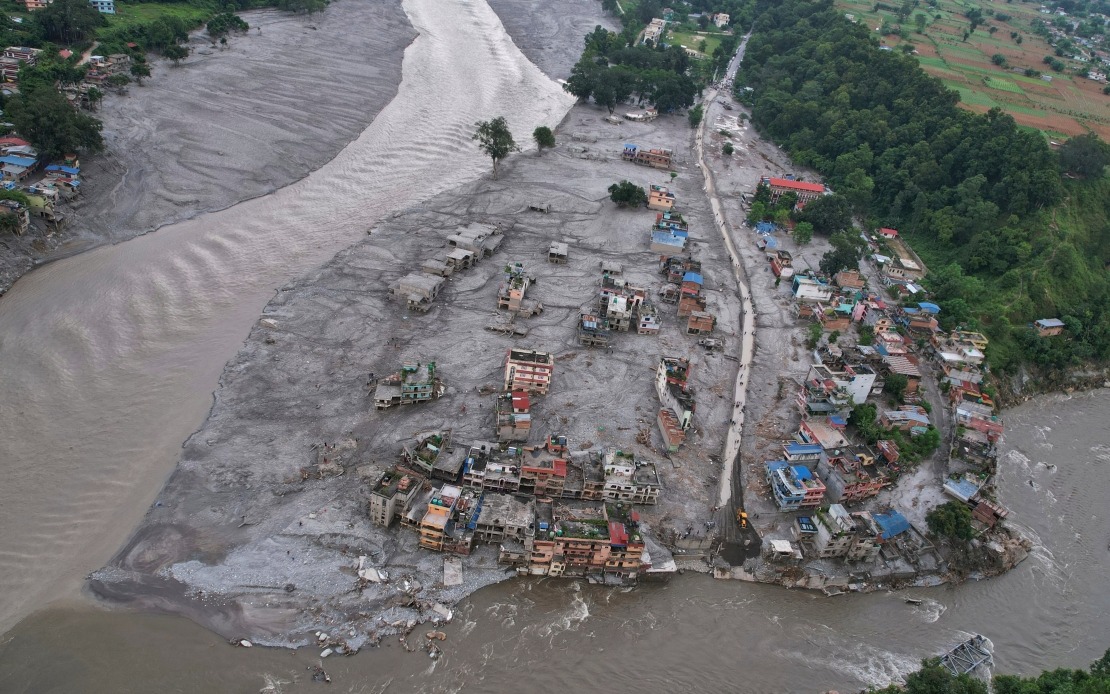
Nepal is taking a cautious approach to international rescue assistance in the aftermath of this week's catastrophic flooding, preferring to evaluate the full scope of the disaster before committing to additional foreign search and rescue missions. The Himalayan nation, reeling from the impact of the Bhote Koshi and Trishuli river floods that struck on Wednesday, has already accepted help from Australia, China, India, and South Korea but is holding off on further commitments. Malaysia, through its Embassy in Kathmandu, has joined several other nations in offering assistance, though the country's readiness to accept such support remains contingent on ground-level assessments still underway.
The scale of the humanitarian crisis has become increasingly apparent as authorities piece together the aftermath. At least 633 people across Nepal and China have been confirmed dead, with nearly 3,000 others—including hundreds of foreign nationals—still missing. The disaster has exposed the vulnerability of major industrial infrastructure in the region, particularly hydropower facilities that dot the mountain terrain. More than 900 workers employed across 11 hydropower projects, some still under construction, found themselves trapped in tunnels and underground powerhouses when the floods swept through on Wednesday morning, creating a secondary crisis layered atop the wider catastrophe affecting civilian populations.
The decision by Nepal to restrict immediate foreign search and rescue deployments reflects both pragmatism and the complexity of coordinating international relief efforts in mountainous terrain. The four nations already providing assistance—Australia, China, India, and South Korea—have legitimate stakes in the response given their nationals working at the affected hydropower facilities. This concentration of rescue operations makes logistical sense and reduces the coordination burden on Nepal's already-stretched emergency services. However, the country's openness to evaluating additional offers from nations like Malaysia suggests that Kathmandu recognizes it may need broader international support as the true extent of the disaster becomes clearer in coming days.
Malaysia's involvement in the relief effort represents the country's commitment to regional humanitarian assistance and reflects Prime Minister Datuk Seri Anwar Ibrahim's earlier emphasis on coordinating aid delivery. The Prime Minister specifically indicated that Malaysia was exploring the deployment of its Malaysian Special Search and Rescue Team (SMART), a specialized unit trained for exactly such high-risk mountain rescue operations. According to Mohd Firdaus Azman, the charge d'affaires at Malaysia's Embassy in Kathmandu, Nepal has communicated that it will make determinations about additional SAR missions only after completing its situational assessment. This measured approach allows Nepal to prioritize rescue efforts where they are most urgently needed rather than overwhelming rescue operations with more teams than can be effectively deployed.
The plight of foreign workers trapped in the hydropower facilities adds an international dimension to Nepal's disaster response. These individuals represent the workforce behind ambitious hydroelectric development projects that Nepal has pursued as a strategy for economic growth and energy generation. The projects span both operational facilities and those still in construction phases, suggesting that the flooding has disrupted multiple layers of Nepal's infrastructure development agenda. The workers' entrapment underground has created time-sensitive rescue scenarios that are particularly challenging given the mountainous terrain and the complexity of accessing tunnel systems.
For Malaysia specifically, the situation carries particular urgency. As of Saturday evening, the Malaysian Foreign Ministry reported that 55 Malaysians in Nepal and 36 Malaysians in China remained uncontactable. These figures underscore the widespread reach of the disaster across the border region and the genuine security concerns facing Southeast Asian nationals in the affected areas. The unaccounted-for Malaysians may include both workers at hydropower facilities and civilians caught in the broader flooding across Nepal and neighboring Tibetan areas of China. This uncertainty has prompted Malaysia's offer of specialized rescue assistance and coordinated aid delivery.
The dynamics of international disaster response visible in Nepal's measured approach to accepting additional foreign aid reflect broader lessons learned from humanitarian crises. Effective international rescue coordination requires clear command structures, compatible equipment and training standards, and realistic assessments of terrain accessibility. Deploying too many rescue teams without proper coordination can actually hinder operations, creating logistical bottlenecks and safety hazards. Nepal's decision to assess the situation before accepting additional SAR missions demonstrates institutional maturity in disaster management, even as the country grapples with overwhelming immediate challenges.
The geographic concentration of the initial flooding in Rasuwa district and along the Bhote Koshi and Trishuli river valleys reflects how mountain flooding can be particularly devastating in the Himalayan context. These river systems have enormous volume and power, and the narrow valleys that channel them leave little escape route for populations living downstream. The timing of the flooding on a Wednesday morning would have meant maximum exposure for workers at industrial facilities and residents in towns along the river corridors. The fact that the disaster extended into Tibetan areas of China, with confirmed deaths there as well, indicates that the flooding was a transnational phenomenon requiring coordinated international response.
The hydropower crisis within the broader flood disaster presents a specialized challenge that explains why Nepal has already accepted assistance from specific countries. Australia, China, India, and South Korea likely possess either direct expertise in hydropower facility rescue, high-altitude rescue capabilities, or both. Their nationals being trapped at the facilities gives these countries motivation to provide rapid assistance and equipment specifically configured for tunneling and underground facility rescue operations. Malaysia's Special Search and Rescue Team, trained across various terrain types and conditions, would be a valuable addition if Nepal's assessment determines that additional rescue capacity is needed beyond what the current international response can provide.
As Nepal conducts its evaluation of the disaster's scope and rescue priorities, the country faces a balancing act between accepting international help and maintaining operational coherence. The window for finding survivors in the hydropower tunnels is likely narrowing with each passing hour, creating pressure to mobilize every available rescue asset. Yet deploying rescue teams without proper coordination or without understanding precisely where they are most needed could waste critical resources. Malaysia and other nations standing ready to assist understand this calculus and have indicated they will respect Nepal's timeline and requirements as the situation develops.

