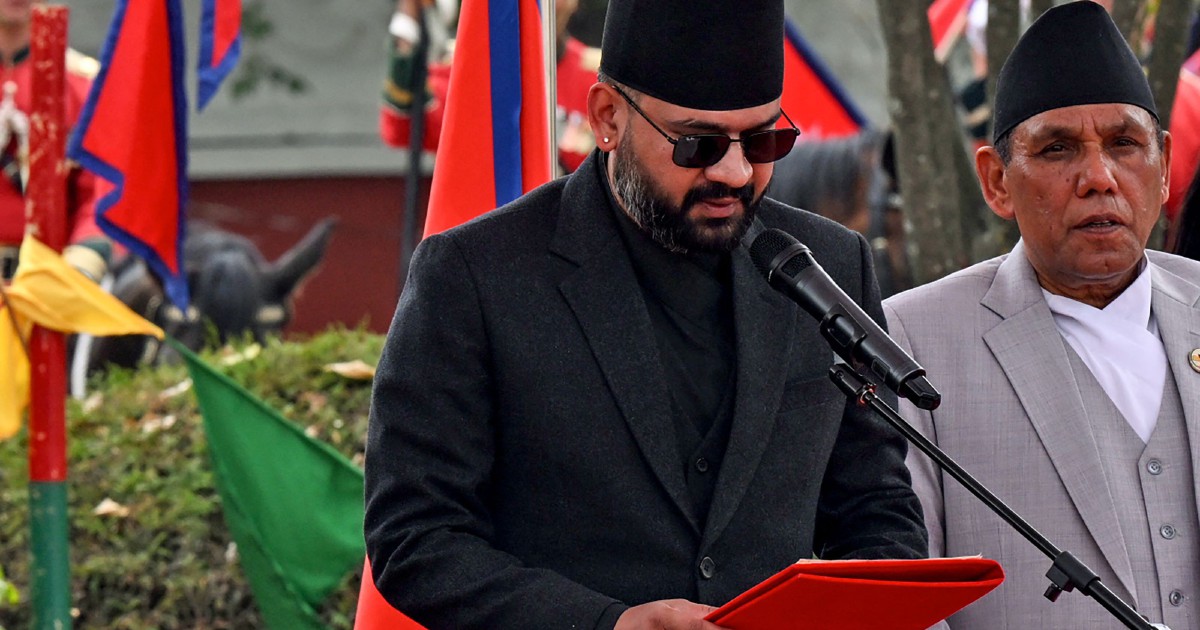
Nepal's Prime Minister Balendra Shah has won an exemption allowing him to retain his signature dark sunglasses while conducting business in parliament, settling a minor protocol dispute that emerged after the speaker initially discouraged the practice. An unnamed official confirmed the decision Tuesday, citing health-related grounds for the accommodation—a resolution that reflects the growing tendency of legislative bodies worldwide to balance tradition with practical considerations.
The distinction is subtle but significant in parliamentary customs. Formal attire codes in legislatures, whether in South Asia or elsewhere, traditionally emphasise removing eyewear indoors as a mark of respect and formality. The Nepalese parliament had evidently subscribed to this convention, prompting the speaker to advise against Shah's habitual wearing of dark lenses during sessions. Yet the decision to grant him an exception acknowledges that such rules cannot rigidly override individual circumstances where health, comfort, or medical necessity demands flexibility.
Shah's case illuminates broader questions about institutional rigidity in contemporary politics. As democratic societies become increasingly diverse and globalised, parliaments face recurring tensions between preserving ceremonial decorum and accommodating the realities of modern life. The practical outcome—allowing the PM to keep his sunglasses—suggests that Nepalese parliamentary leadership recognises this balance. Health matters affecting a sitting prime minister are not trivial; if Shah's eyesight or medical condition requires the protection dark lenses provide, preventing him from wearing them would seem both petty and counterproductive.
From a regional perspective, Nepal's handling of this situation contrasts with how other South Asian legislatures have approached similar questions. In India, Pakistan, and Bangladesh, parliamentary procedures remain notably formal and prescriptive, though each has gradually introduced modest reforms reflecting contemporary practice. Nepal's relatively straightforward resolution—identifying the medical basis and granting the accommodation—represents a pragmatic approach that neither abandons institutional standards nor demands unnecessary sacrifice from elected leaders.
The timeline of the dispute also merits attention. The parliament speaker's initial advice against wearing sunglasses came from a position of maintaining legislative dignity and traditional dress codes. This was not an unreasonable starting point; speakers in many parliaments worldwide are custodians of procedural rules and symbolic standards. However, the recognition that medical considerations can warrant exceptions reflects institutional maturity. Rather than becoming entrenched in a pointless standoff between tradition and individual need, Nepal's authorities moved toward resolution.
Balendra Shah's public persona has long been associated with his dark sunglasses, making them more than mere accessories—they form part of his recognisable identity in public and political life. The decision to permit him to wear them thus carries symbolic weight beyond the immediate sartorial question. It signals that parliament recognises leaders as individuals with their own characteristics and requirements, not merely interchangeable occupants of ceremonial roles. This humanising approach, while seemingly minor, contributes to public perception of institutional flexibility and common sense.
For Malaysian observers, the Nepalese precedent offers interesting reflections on how legislative bodies balance formality with practicality. Malaysia's own parliamentary traditions place considerable emphasis on formal dress and decorum, with extensive rules governing what members may wear and how they should conduct themselves in the chamber. The questions raised by Shah's case—whether rigid adherence to dress codes serves legitimate institutional purposes or merely perpetuates outdated customs—are not unique to Nepal but are relevant across Southeast Asia.
The medical dimension remains at the centre of this situation. While the specific health reasons cited for Shah's need for dark sunglasses have not been publicly elaborated in detail, the general principle is clear: medical accommodations should typically take precedence over aesthetic or ceremonial preferences. Many leaders worldwide experience eye sensitivity, photophobia, or other vision-related conditions that make bright indoor lighting uncomfortable or even painful. Preventing a sitting PM from managing such conditions for the sake of parliamentary tradition would represent misplaced priorities.
This episode also illustrates how even minor institutional matters can become public issues in modern democracies. The fact that a parliament speaker's suggestion about eyewear made it into news reports reflects the media's interest in the workings of government and the public's curiosity about how institutions function. In a larger sense, such stories humanise political processes and remind citizens that parliaments are composed of real people navigating both formal rules and personal realities.
Moving forward, the precedent may influence how other parliaments approach similar questions. If a prime minister's health needs warrant an exception to dress codes, the same logic could apply to other members facing their own medical circumstances. This does not necessarily mean wholesale abandonment of parliamentary standards; rather, it suggests a framework where rules remain in place but can be applied with discernment when genuine health or necessity claims are substantiated.
The resolution also speaks to the broader evolution of parliamentary practice in the region. South Asian legislatures have traditionally maintained relatively rigid protocols, yet recent decades have seen gradual liberalisation—more flexible seating arrangements, permission for electronic devices under certain conditions, and modified dress codes in some contexts. Nepal's decision regarding Shah's sunglasses fits within this larger trajectory of adapting institutions to contemporary reality while preserving their essential dignity and function.

