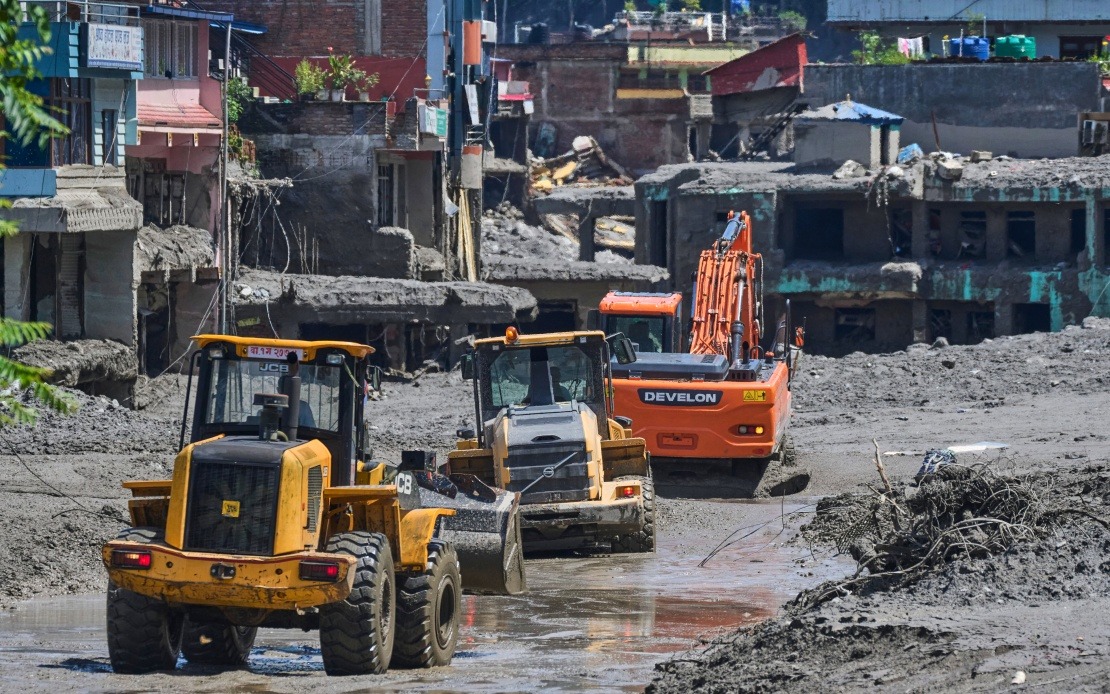
Nepal has mobilised its security agencies and government authorities to execute urgent search, rescue and relief operations following a catastrophic flood event in the Bhote Koshi River that struck multiple districts on Wednesday. According to the Nepal Embassy in Kuala Lumpur, the government has designated these immediate response efforts as high priority, reflecting the scale and severity of the disaster that has left behind considerable loss of life and widespread destruction.
The flooding devastated four districts in central Nepal, with Rasuwa, Nuwakot, Dhading and Gorkha bearing the brunt of the destruction. Infrastructure across these regions has suffered extensive damage, and the full extent of casualties and material losses is still being assessed. The rapid deployment of rescue teams reflects Nepal's institutional response to natural disasters, though the mountainous terrain and infrastructure damage in affected areas present significant operational challenges for recovery workers attempting to reach isolated communities.
The Office of the Prime Minister and Council of Ministers has made a public appeal for comprehensive support from all quarters—individuals, private organisations, businesses and philanthropic entities—to contribute towards the immediate and long-term needs of affected populations. This dual-phase approach acknowledges both the urgent humanitarian crisis requiring emergency shelter and medical care, and the protracted reconstruction effort that will follow. The emphasis on safe relocation and rehabilitation signals recognition that affected communities will require sustained assistance to rebuild their lives and livelihoods.
From Malaysia, the Nepal Embassy has extended the government's appeal directly to the substantial Nepali diaspora community across the country. The diplomatic mission is calling on Nepali nationals working or residing in Malaysia, along with Nepali associations, business communities, social organisations and supporters of Nepal to channel financial contributions towards relief efforts. This approach leverages the diaspora's emotional and cultural connections to Nepal, a strategy commonly employed during natural disasters affecting countries with significant overseas populations.
To facilitate donations, the Nepal government has established dedicated relief mechanisms with two major financial institutions serving as collection points. The Prime Minister's Disaster Relief Fund and Prime Minister's Relief Fund accept contributions through Rastriya Banijya Bank, with two designated account numbers for different relief categories. Additionally, Nepal Bank Limited operates parallel accounts serving the same relief objectives. The provision of multiple account options and accompanying QR codes—shared through the embassy's social media channels—is designed to remove practical barriers to donation and maximise participation from the diaspora.
For Malaysian-based Nepali communities, this appeal carries particular resonance given the historical pattern of natural disasters in Nepal's mountainous regions. The Bhote Koshi River, which originates in the Himalayas and flows through densely populated lower altitudes, has been the site of previous flooding events. The concentration of damage in four districts suggests a localised but intense weather event, typical of monsoon-season flooding patterns that Nepal experiences annually during the June to September period. August precipitation patterns make such events seasonal hazards rather than unprecedented occurrences.
The involvement of security agencies in rescue operations indicates deployment of military or paramilitary resources beyond civilian emergency services, suggesting either the scale of the disaster or the remote nature of affected settlements. In Nepal's geography, such combined responses are standard for disasters occurring in mountainous areas where civilian access may be limited and helicopter evacuation becomes necessary. The coordination between multiple agencies reflects institutional mechanisms developed through experience with previous flood and landslide events.
The emphasis placed by the embassy on appealing to Malaysian-based supporters extends the geographical scope of relief mobilisation beyond Nepal's borders. Southeast Asian countries host significant Nepali populations, including Malaysians of Nepali descent and guest workers in various sectors. Malaysia's Nepali community, while smaller than those in Australia, the United Kingdom or the Gulf States, nonetheless represents a potential source of financial support. Previous major Nepal disasters—including the 2015 earthquake—demonstrated the diaspora's willingness to contribute substantial sums during crises.
The provision of detailed banking information and QR codes reflects modern fundraising approaches adapted to digital-savvy diaspora populations. By offering multiple payment mechanisms and sharing details through social media platforms, the embassy recognises that contemporary diaspora engagement occurs primarily through online channels. This modernised approach contrasts with traditional relief appeals and signals institutional adaptation to contemporary communication patterns.
For Malaysian observers and policymakers, this event underscores the vulnerability of Nepal's infrastructure to climate-related natural disasters and the ongoing development challenges facing the nation. The necessity of appealing to overseas diaspora for relief funding highlights the resource constraints of Nepal's government in managing large-scale disasters independently. For regional cooperation frameworks, the flood demonstrates ongoing humanitarian needs across South Asia that may warrant coordinated ASEAN engagement and support mechanisms, particularly given the region's similar exposure to monsoon-related flooding and the presence of ASEAN member states' diaspora communities in Nepal.

