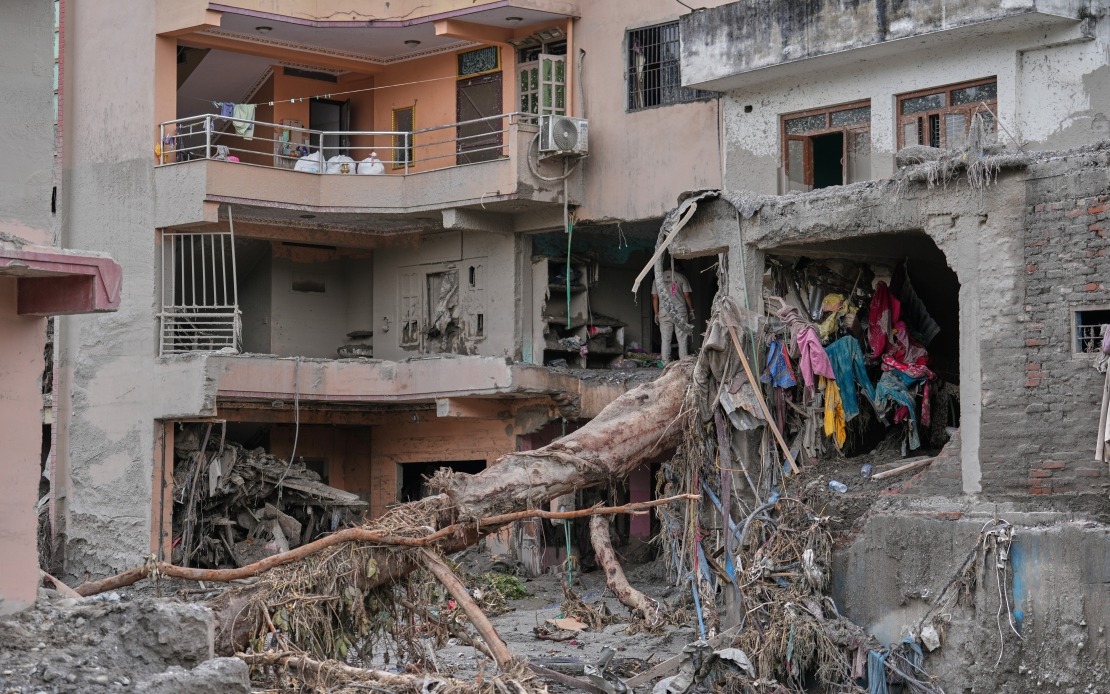
Nepal has adopted a systematic approach to handling unidentified casualties from the devastating floods that swept through the Bhotekoshi River region on August 26, establishing a protocol that involves preserving DNA samples and other identifying materials before final disposition of remains. Prime Minister Balendra Shah announced the initiative through a social media statement on Saturday evening, addressing the humanitarian challenge posed by a disaster that has overwhelmed conventional victim identification procedures across multiple affected districts.
The catastrophic flooding of the Bhotekoshi River five days prior had transformed the waterway into a destructive force, carving a path of devastation across a densely populated river corridor. The impact extended far beyond loss of life, with extensive damage to property, agricultural land, and critical infrastructure serving communities throughout the region. The severity of destruction underscores the region's vulnerability to hydrological disasters during monsoon seasons, a recurring challenge for Himalayan nations with limited early warning systems and vulnerable population centres positioned near river valleys.
As of the announcement, Nepalese authorities had recovered 675 bodies from various locations distributed across a geographically dispersed area. The recovery operations span eight districts: Rasuwa, Dhading, Nuwakot, Chitwan, Tanahun, Gorkha, Nawalparasi East and Nawalparasi West. This wide geographical spread reflects the destructive reach of the flood waters and complicates identification efforts, as bodies have been dispersed considerable distances from their places of origin, making family tracing and recognition particularly challenging.
According to Prime Minister Shah's statement, the government will assume responsibility for managing bodies that remain unidentified following initial efforts to establish their identity. This represents a significant undertaking requiring coordination between multiple government agencies, local authorities, and forensic specialists. The approach prioritises preserving evidence that could facilitate later identification, acknowledging that immediate recognition may prove impossible for all victims, particularly those who were transient workers, migrants, or visitors to the area at the time of the disaster.
The decision to preserve DNA and other identifying materials reflects contemporary disaster management protocols employed by developing nations facing large-scale casualty incidents. Such procedures recognise that families may arrive days or weeks after a disaster to search for missing relatives, and that identification technology continues to evolve, potentially enabling future identification of currently unrecognisable remains. This forward-looking approach balances the immediate necessity of managing deceased victims with the moral imperative to preserve the possibility of family reunification.
For Malaysian observers, Nepal's response illustrates challenges that could confront any Southeast Asian nation experiencing similar natural disasters. Malaysia's own monsoon-prone regions and river systems present comparable risks, particularly in peninsular states where flash flooding during heavy rainfall seasons regularly displaces communities and occasionally claims lives. The protocols Nepal has implemented could inform Malaysian disaster response planning, particularly regarding victim identification and family communication in mass casualty scenarios.
The preservation initiative also highlights the resource constraints faced by developing South Asian nations responding to major disasters. While wealthy nations might deploy extensive DNA laboratories and forensic teams immediately, Nepal's phased approach reflects practical realities of limited budgets and competing demands. The reliance on DNA preservation for future identification suggests the nation may need international assistance or capacity-building support to develop comprehensive forensic capabilities for disaster response.
The geographic spread of casualties across eight districts complicates not only identification but also communication with families and communities. Local authorities must coordinate across administrative boundaries while managing simultaneous rescue operations, displacement assistance, and reconstruction efforts. This fragmentation often means that consistent information reaches families only slowly, creating anguish and uncertainty during the critical post-disaster period when accurate information could facilitate search efforts and family tracing.
The Bhotekoshi River flooding represents one of South Asia's recurring disaster patterns, as glacial melt and monsoon rains combine to create dangerous hydrological conditions. The region's rapid urbanisation and infrastructure development in flood-prone areas have increased potential casualties, transforming what were once predictable seasonal events into catastrophes claiming hundreds of lives. Nepal's experience underscores the region's need for improved early warning systems, disaster-resistant infrastructure design, and enhanced preparedness education for vulnerable populations.
Government announcement of the DNA preservation protocol serves multiple purposes beyond practical victim management. It communicates to bereaved families that authorities recognise the importance of their loved ones' identities and remain committed to providing answers. It also establishes an official record of the disaster's scale and impact, creating documentation that will support reconstruction planning, humanitarian assistance allocation, and accountability mechanisms. These social and political dimensions of disaster response often receive insufficient attention compared to immediate rescue operations, yet prove equally important for community recovery.
For regional observers including Malaysian policymakers, Nepal's DNA preservation initiative demonstrates the importance of establishing clear protocols before disasters strike. Emergency responses determined ad hoc during crisis situations often lack consistency and may fail to capture evidence that could prove valuable later. Advanced planning enables authorities to maintain dignity for the deceased, provide closure for families, and create institutional memory that informs future responses to similar events.

