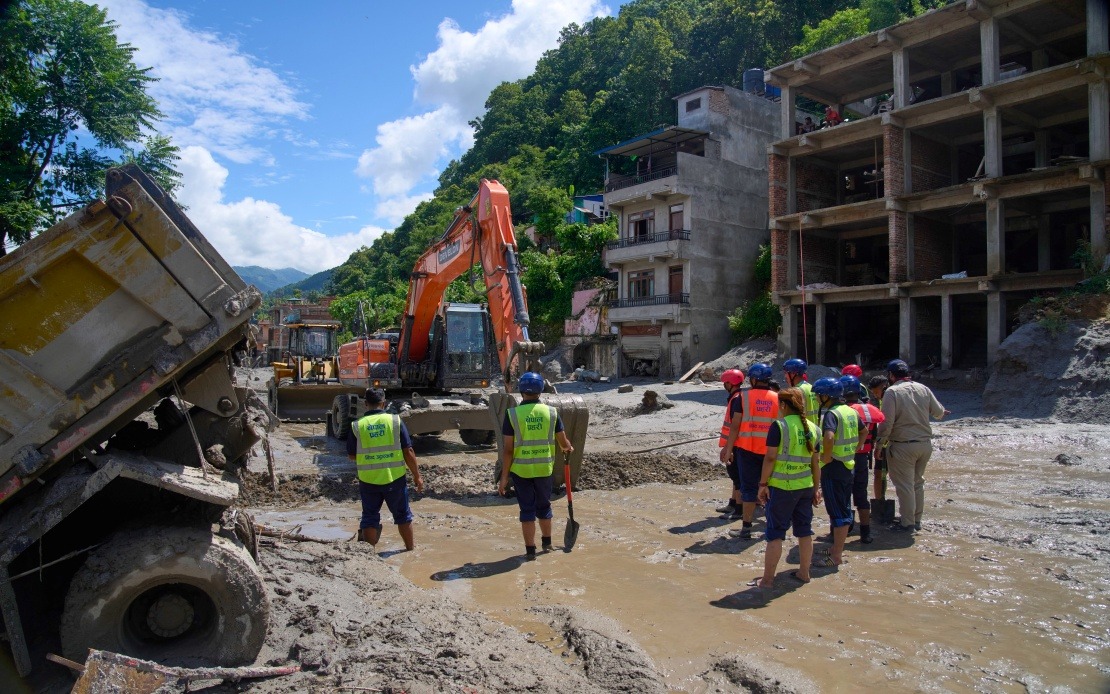
Nepal's Foreign Ministry has activated an Emergency Response Team to manage the coordination and information-sharing efforts surrounding the catastrophic Bhotekoshi River floods that devastated the Rasuwa district. The institutional response represents an attempt to bring structured coordination to what has become an increasingly complex international crisis involving multiple countries and hundreds of unaccounted persons.
The newly formed ERT will function as the central mechanism through which information flows between search and rescue operations, diplomatic missions, and the families of affected individuals. By establishing a dedicated coordinating body, Nepal aims to address one of the critical bottlenecks that typically hampers disaster response efforts—the fragmentation of information across multiple government agencies, military units, and international rescue teams working in parallel without unified communication channels.
Beyond simple coordination, the team has been tasked with verifying the status of foreign nationals caught in the disaster and maintaining communication with diplomatic missions representing affected countries. This verification function addresses a common challenge in international disasters where initial reports of missing persons often prove inaccurate as survivors contact families or are located in temporary shelters without formal registration. The ERT's role in confirming information before disseminating it to families and governments aims to prevent the spread of unverified claims that could impede search operations or cause unnecessary distress.
The consular assistance dimension of the ERT's mandate reflects recognition that foreign nationals affected by the flooding face compounded vulnerabilities. Beyond the immediate physical dangers of the natural disaster, these individuals may face language barriers, lack familiarity with local emergency response systems, and require coordination with their home governments for evacuation, medical treatment, or other support services. By centralising this function, Nepal seeks to ensure that foreign nationals receive systematic support rather than ad hoc assistance dependent on local officials' availability or capacity.
The death toll from the flooding, which struck Wednesday morning, had reached 359 by Thursday evening according to Nepali authorities, with at least 31 persons rescued alive. However, the most pressing concern remains the status of more than 800 persons reported missing, a figure that substantially exceeds confirmed fatalities and suggests many survivors remain unaccounted for in the affected terrain. The mountainous geography of Rasuwa district, combined with infrastructure damage from the flooding, has created accessibility challenges for rescue teams attempting to reach remote communities.
Foreign tourists comprise a substantial portion of the missing, with the majority of international visitors originating from India and Nepal itself. The concentration of missing persons among foreign nationals likely reflects both the popularity of the Bhotekoshi River region for adventure tourism—particularly whitewater rafting—and the difficulties such tourists may face in communicating their status or location to authorities. The international composition of the affected population has transformed what might otherwise be a domestic crisis into a multilateral emergency requiring diplomatic coordination.
The distribution of contact methods through which information can be reported—telephone numbers with WhatsApp capability and a dedicated emergency email address—reflects adaptation to the communication infrastructure available in Nepal during a crisis situation. The dual phone numbers and electronic backup suggest awareness that any single communication channel might become overwhelmed or fail. By providing multiple pathways for families, rescue teams, and observers to report information, Nepal seeks to capture as comprehensive a picture as possible of the disaster's impact on foreign nationals.
For Malaysia specifically, uncertainty persists regarding the number of citizens affected. Malaysian Foreign Minister Datuk Seri Mohamad Hasan has indicated that Nepali authorities have yet to provide confirmation on how many Malaysians remain missing or injured in the flooding. This information gap reflects broader challenges in establishing the precise nationality composition of those unaccounted for, particularly when many survivors may be scattered across difficult terrain without access to documentation or communication devices. The lack of confirmed numbers from Nepali authorities suggests that even a week into the disaster, comprehensive accounting remains incomplete.
The Malaysian government's caution in making definitive statements about the number of its nationals affected contrasts with the urgency of the situation on the ground. This restraint, while potentially frustrating for Malaysian families seeking information, reflects the challenge of obtaining verified data from Nepali authorities managing an overwhelming crisis. The coordination mechanisms established by Nepal's ERT represent one pathway through which such verification might eventually occur, though the process necessarily involves delays as information is gathered, cross-checked, and communicated through diplomatic channels.
The activation of Nepal's Emergency Response Team represents a recognition that the scale and international character of this disaster demand institutional coordination beyond what routine diplomatic channels can accommodate. The team's establishment of clear reporting mechanisms and commitment to information verification suggest learning from previous international disasters where communication failures and unverified reports complicated response efforts. For Malaysian officials and citizens with family members in Nepal during the flooding, this institutional response offers some assurance that coordinated efforts are underway, though the fundamental uncertainty about casualty figures and missing persons locations persists.
The floods themselves exemplify the vulnerability of South Asian tourism infrastructure and communities to climate-related disasters. The Bhotekoshi River region's popularity for adventure tourism, combined with the region's exposure to extreme weather events, creates a persistent tension between economic opportunities and safety risks. As climate patterns shift and extreme weather events become more frequent across the region, such incidents may become more common, necessitating improved disaster response frameworks not only within Nepal but across Southeast Asia and South Asia more broadly.
For Malaysian travellers considering trips to Nepal or similar adventure tourism destinations in the region, the disaster underscores the importance of travel insurance, communication of itineraries to family members, and awareness of seasonal weather patterns in specific regions. The coordination efforts now underway reflect best practices that could be adopted by other countries in the region as tourism development continues and international visitor numbers grow across South Asia.

