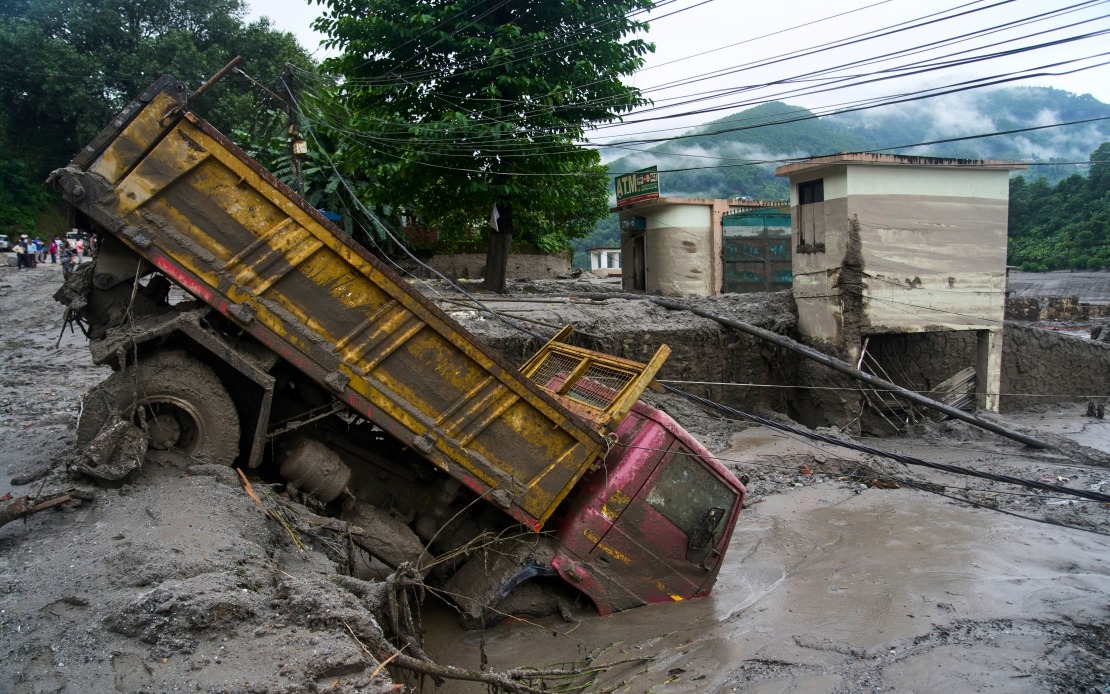
Nepal's authorities have sounded a second alarm over potential flooding in the Bhote Koshi River, where debris-laden waters are once again surging through the same vulnerable stretch that experienced a devastating flash flood just 48 hours earlier. The National Disaster Risk Reduction and Management Authority (NDRRMA) announced the warning on Friday, cautioning that elevated water flows mixed with silt and debris have been detected in Rasuwa district, the same location hammered by a catastrophic deluge on Wednesday, August 26.
The recurrence of dangerous water conditions in such close succession reflects the unpredictable and cascading nature of flooding in Nepal's steep terrain, where mountain rivers can swell rapidly from upstream rainfall, glacial melt, or dam failures. The Bhote Koshi, which originates in Tibet and flows southward through Nepal to join the Trishuli River, has proven particularly susceptible to these sudden surges. For disaster management officials coordinating response efforts across multiple flood zones, the fresh warning compounds an already overwhelming crisis that continues to claim lives and destroy livelihoods.
The NDRRMA's advisory came as rescue operations were still in full swing in the aftermath of Wednesday's initial disaster. Search teams working along the Bhote Koshi and Trishuli river valleys, as well as personnel engaged in relief distribution, were instructed to heighten their vigilance and retreat to elevated ground at the first sign of rising water or unusual atmospheric conditions. This guidance underscores the particular peril facing rescue workers themselves, who must balance the urgency of saving lives with the constant threat of new environmental hazards.
The death toll from the August 26 floods has climbed to at least 475 people, with hundreds more still unaccounted for as rescuers continue searching river channels, ravines, and downstream settlements. The scale of loss reflects both the sudden violence of the initial flood and the difficulty of locating victims in mountainous terrain where bodies may be swept far from the point of impact. Families separated by the disaster remain in limbo, uncertain whether missing relatives are sheltered in temporary camps or among the dead being recovered from the water.
Nepal's vulnerability to such catastrophic flooding stems from several converging factors that particularly affect the Himalayan nation. The monsoon season, which typically runs from June through September, brings enormous volumes of rain to the region, while the steep topography of the terrain means water rapidly concentrates into narrow river valleys with devastating force. Upstream deforestation in recent decades has reduced vegetation cover that once helped absorb and slow rainfall, intensifying runoff. Climate change has made extreme weather events more frequent and unpredictable, further straining disaster response capacities.
For Southeast Asian nations like Malaysia, Nepal's recurring flood disasters carry sobering implications. While Malaysia's tropical monsoons and flood risks differ from Nepal's alpine conditions, both regions face mounting pressure from climate variability and environmental degradation. The Nepali authorities' repeated need to issue emergency warnings highlight how even the most exposed regions struggle to anticipate and prepare for such events, suggesting that countries across Asia must invest more substantially in early warning systems, community resilience, and climate adaptation infrastructure.
The involvement of both the Bhote Koshi and Trishuli rivers in the current emergency demonstrates how flooding can cascade across interconnected waterway systems. The Trishuli, which merges with the Bhote Koshi downstream, has historically been another source of destructive floods in central Nepal. When multiple rivers swell simultaneously, as they did during the August 26 disaster, the compounding effect creates humanitarian crises of unprecedented scale, overwhelming local authorities and requiring national and international assistance.
Nepal's disaster management framework has been tested repeatedly in recent years, but repeated crises expose ongoing gaps in preparedness and response capacity. While the NDRRMA's swift issuance of the Friday warning demonstrates some institutional learning, questions persist about whether communities at risk have adequate access to timely information, sufficient shelter options, or resources to evacuate safely. In many remote villages along the Bhote Koshi, residents may receive warnings with little time to act or nowhere safe to go.
The broader pattern of successive warnings and mounting casualties points toward the reality that disaster risk reduction in Nepal requires transformation beyond emergency response. Investment in structural solutions—including carefully designed flood defenses and improved river management—alongside ecosystem restoration and building code enforcement in flood-prone areas, could reduce future loss. The August 26 and August 28 events together illustrate why prevention and mitigation deserve equal priority with relief operations in Nepal's long-term development planning.
As rescue workers and displaced families navigate the immediate crisis triggered by this week's flooding, the latest warning serves as a grim reminder that the danger has not passed. With hundreds still missing and communities reeling from profound losses, the potential for additional loss makes the coming hours critically consequential. For Nepal and the broader region, these recurrent disasters underscore an urgent imperative to address underlying vulnerabilities before the next monsoon season brings renewed catastrophe.

