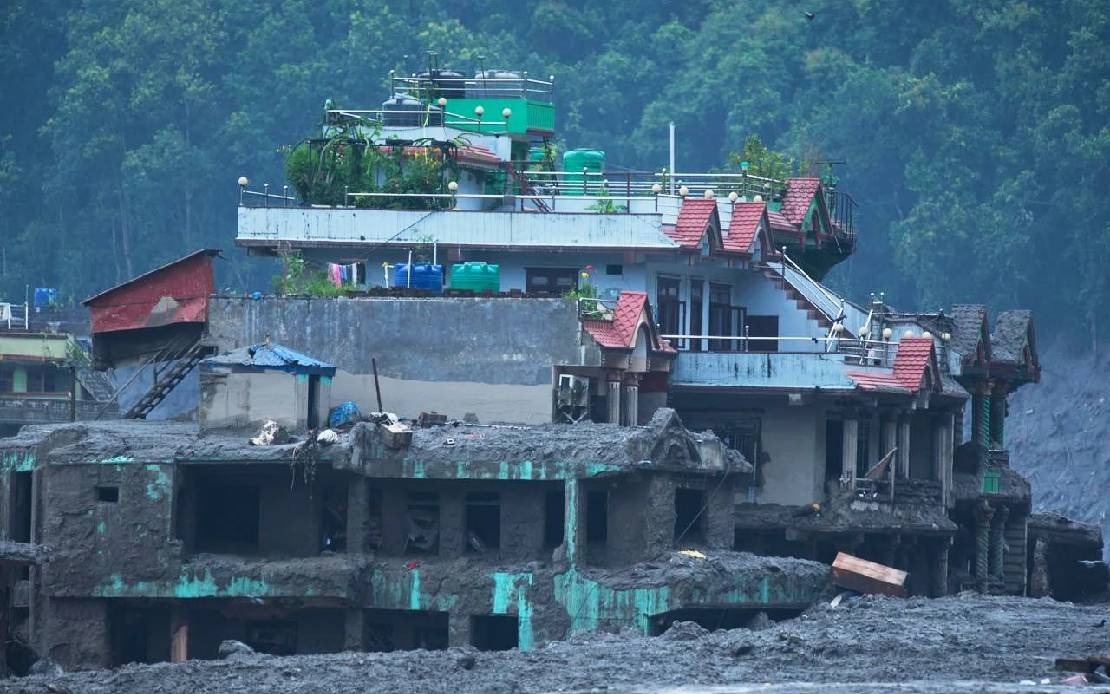
Nepal has launched an urgent appeal for international technical assistance and billions of dollars in reconstruction funding following a catastrophic flood that devastated the Himalayan nation's northern regions. The disaster, triggered by a glacier collapse on Wednesday, unleashed a torrential deluge of rock, ice, mud and debris through mountain river systems, claiming at least 626 lives in Nepal and seven in China's Tibet region while leaving approximately 3,000 people unaccounted for. Finance Minister Swarnim Wagle has indicated that preliminary assessments suggest reconstruction costs could reach between US$4 billion and US$5 billion, though officials emphasize these are initial estimates pending comprehensive damage surveys.
The catastrophic flow destroyed critical infrastructure across its path, including buildings, bridges and power stations, with the scale of destruction challenging the resources of the impoverished nation of 30 million people. Search and rescue operations were suspended on Saturday due to deteriorating weather conditions characterized by heavy rainfall and dense fog, hampering efforts to locate survivors and retrieve bodies in the treacherous mountainous terrain. The timing of the weather obstruction comes at a critical moment when rescue teams were intensifying their push to reach trapped individuals and recover remains, particularly in areas such as Rasuwa district, which bore the brunt of the initial impact.
The missing include approximately 2,426 people in Nepal and at least 554 in China's Gyirong County, with at least 540 foreigners among them—predominantly Hindu pilgrims from India undertaking religious journeys to mountain temples. This international dimension adds complexity to rescue and identification efforts, requiring coordination across multiple nations and jurisdictions. The presence of such large numbers of foreign nationals has elevated the humanitarian and diplomatic significance of the response, with regional powers including India mobilizing resources to support affected pilgrims and broader reconstruction efforts.
Nepal's Foreign Minister Shisir Khanal has articulated precisely what specialized assistance the country requires, noting that domestic capacity exists for primary search and rescue but significant gaps remain in critical areas. The nation particularly needs international expertise for extracting people trapped within tunnels, restoring severed transport and communication links in regions where bridges were destroyed, identifying decomposed remains, conducting DNA analysis and establishing facilities for extended body storage. These technical requirements reflect the exceptional severity of the disaster and the degradation of remains after several days in harsh conditions.
India has emerged as a primary source of immediate support, dispatching three aircraft carrying approximately 60 tonnes of humanitarian relief including blankets, medicines, food and water purification tablets. New Delhi has additionally pledged deployment of specialized tunnel rescue personnel and medical teams to supplement Nepal's domestic capabilities, while offering its national disaster response force and prefabricated bridge systems to restore connectivity across damaged infrastructure. These contributions position India as a crucial partner in both immediate relief operations and medium-term rehabilitation, reflecting both geographical proximity and the shared cultural ties through the significant Indian pilgrimage community affected by the disaster.
China has called for emergency international assistance to areas within its own borders and Nepal affected by the flood, though Beijing has not yet detailed specific contributions to the relief effort. The dual-nation impact underscores the transnational nature of mountain disasters that disregard political boundaries, requiring sustained regional cooperation for effective response. The coordination challenges are compounded by the difficult terrain and weather patterns that characterize the Nepal-Tibet border region.
A critical ongoing concern involves a glacial lake that formed across the Nepal-China border in the aftermath of the flood, which threatened to overflow into Nepal's Lhende Khola and Trishuli rivers, potentially triggering secondary flooding. Rescue operations were briefly suspended on Friday as this danger peaked, though Chinese authorities reported by Saturday that water levels had begun declining as the reservoir gradually drained naturally. Satellite imagery analysis indicated water was seeping through at manageable rates, reducing immediate overflow risks, yet officials have cautioned that two upstream lakes continue to pose monitoring challenges and potential dangers until both completely drain.
The identification and burial of deceased victims presents mounting humanitarian complications, with authorities reporting that many bodies recovered three days after the disaster have undergone significant decomposition in the warm conditions. The Chitwan district administration has implemented protocols involving DNA sample collection prior to burial in designated open spaces, reflecting both practical health concerns regarding pathogen transmission and the risk of epidemic disease. At Kathmandu's Maharajgunj Medical Campus, distraught family members gathered attempting to identify relatives through photographic displays of recovered remains mounted on gates and boundary walls, with only seven of 49 bodies processed through the facility successfully identified.
The immediate operational focus has shifted toward establishing logistics chains to transport rescued individuals from remote border areas into Kathmandu and distributing humanitarian assistance to displaced populations. District officials have emphasized that while concurrent rescue operations continue in accessible areas, the primary emphasis now rests upon organizing systematic evacuation and care provision for survivors who have been extracted from disaster zones. This reorientation reflects pragmatic assessment that weather conditions and terrain challenges will continue to impede active rescue expansion in the near term.
For Malaysia and broader Southeast Asia, this disaster illustrates vulnerabilities inherent to mountainous and glaciated regions vulnerable to rapid hydrological events, while demonstrating the critical importance of disaster preparedness frameworks and regional cooperation mechanisms. The rapid mobilization of Indian resources suggests successful activation of regional disaster response protocols, offering lessons applicable across the ASEAN region where cross-border disasters remain genuine risks. The estimated reconstruction costs of several billion dollars also highlight the profound economic disruption that natural disasters can impose upon developing economies, emphasizing the case for robust disaster risk reduction investment and international burden-sharing arrangements that extend beyond immediate emergency response to medium-term recovery support.

