Negeri Semilan's PKR chapter has completed its internal vetting process and submitted a comprehensive roster of prospective candidates to the party's central decision-making apparatus, marking a significant milestone in preparations for the state election scheduled for August 1. The submission, confirmed by state party chief Datuk Seri Aminuddin Harun on July 1, represents months of grassroots consultation and careful deliberation across the 16 constituencies the party intends to fight during the 16th Negeri Semilan state assembly contest.
Aminuddin, who doubles as the state's Menteri Besar and chairman of the Pakatan Harapan coalition in Negeri Semilan, disclosed that the candidate list encompasses a deliberately broad spectrum of potential nominees. For each of the 16 seats, party leadership has identified between three and five individuals worthy of consideration, ensuring that the final selection process captures diverse demographic profiles. This approach explicitly incorporates women candidates, emerging political talents with limited parliamentary experience, and seasoned veterans whose track records have proven themselves in previous electoral contests.
The diversity in candidate backgrounds reflects contemporary Malaysian political strategy, where coalition partners increasingly seek to balance generational renewal with institutional knowledge. By maintaining a flexible roster at the nomination stage, PKR provides its central authority with genuine options rather than predetermined selections, theoretically allowing party hierarchies to make nuanced decisions that account for local ground realities, community sentiment, and evolving demographic preferences within each constituency.
The coalition architecture for Negeri Semilan remains firmly intact under the Pakatan Harapan framework. Aminuddin expressed confidence that PKR's coalition partners, the Democratic Action Party and Amanah, have similarly completed their internal candidate submissions to their respective central leaderships. This synchronized approach to candidate finalization underscores the necessity for detailed coordination among three separate parties operating under one electoral umbrella, each maintaining distinct organizational structures and decision-making processes that must ultimately produce a cohesive unified slate.
According to the seat distribution framework announced on June 13, the 36 state assembly constituencies have been apportioned among the three coalition partners in accordance with an agreement hammered out through months of inter-party negotiation. PKR will contest 16 seats, positioning itself as the numerically dominant coalition component in this particular state. The Democratic Action Party received allocation to 11 seats, reflecting its electoral presence and organizational capacity within Negeri Semilan. Amanah, the third component of the coalition, will field candidates in the remaining nine constituencies, completing the coalition's total coverage of all state assembly divisions.
The electoral timeline established by the Election Commission structures the remaining campaign period into critical phases. Nomination day has been fixed for July 18, providing candidates and their respective parties precisely two and a half weeks from the submission deadline to prepare formal nomination documents, secure statutory declarations, and complete administrative requirements demanded by electoral authorities. This compressed timeframe means that candidate announcements must occur promptly after final headquarters approval, allowing sufficient lead time for nominees to commence ground-level campaign operations.
Early voting, a mechanism designed to facilitate participation among voters unable to cast ballots on the main election day, has been scheduled for July 28. This four-day gap between nomination closure and early voting commencement is customary in Malaysian electoral cycles and typically coincides with the intensification of campaign activities as candidates transition from internal party processes to public-facing electoral mobilization.
The August 1 polling day represents the culmination of this entire electoral calendar. For Negeri Semilan voters, this contest carries particular significance given the state's political trajectory and its role within the broader Malaysian federation. Negeri Semilan has historically alternated between different political coalitions, and this election will test whether the incumbent Pakatan Harapan government—led by Menteri Besar Aminuddin—can consolidate its position or faces electoral reversal. The state's economic profile, encompassing both rural agricultural constituencies and emerging urban centres, creates diverse electoral dynamics that transcend simple binary political narratives.
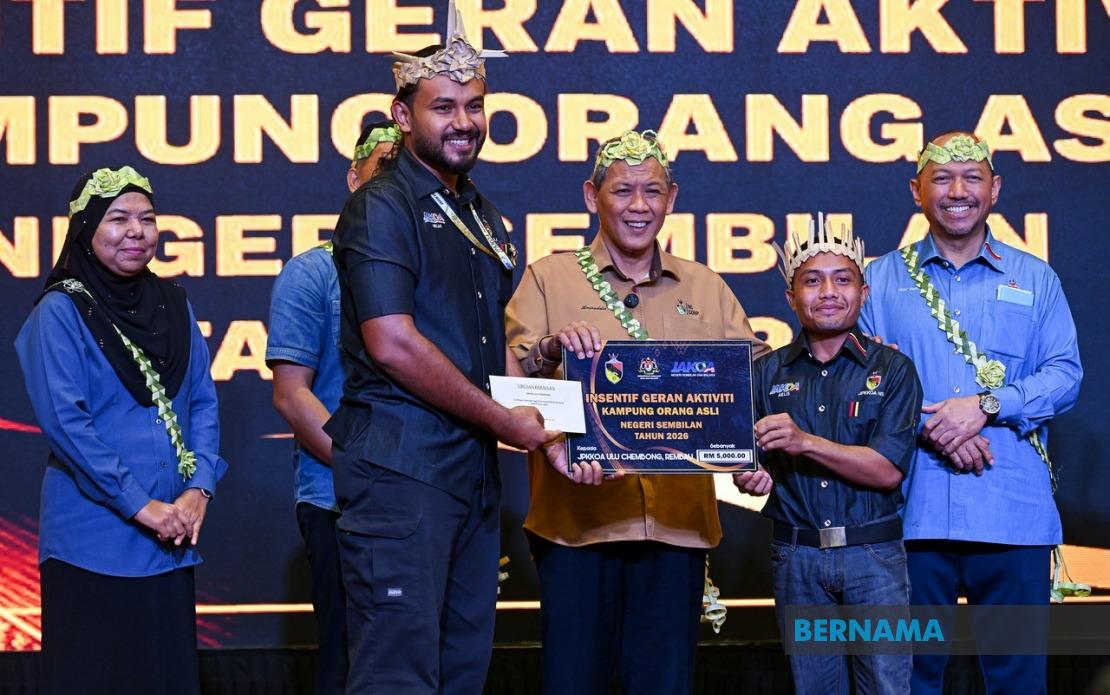
Aminuddin's concurrent presentation of RM415,000 in Orang Asli Village Activity Grant Incentives during his announcement highlighted the government's focus on indigenous community development. This gesture, while framed as governance activity, carries obvious electoral messaging value. Orang Asli communities, concentrated in specific constituencies and historically disadvantaged in resource allocation across Malaysian states, represent a voting bloc that responds to tangible developmental projects and government recognition.
The coordination mechanism Aminuddin referenced—finding a mutually suitable date for coalition-wide candidate announcements—reflects the operational complexities inherent in multi-party coalitions. Unlike single-party political systems where candidate announcements remain straightforward internal communications, coalition partners must choreograph their revelations to prevent individual parties from dominating news cycles or appearing marginalized relative to coalition partners. This careful timing serves both strategic and symbolic functions, projecting unity while acknowledging each component party's distinct identity and role.
For Malaysian observers tracking Negeri Semilan politics, the coming weeks will prove instrumental in evaluating whether the Pakatan Harapan coalition has successfully retained the allegiance of voters who delivered the 2023 federal victory. The candidate quality and profile—once publicly announced—will provide insight into each party's confidence levels and their assessments of which constituencies represent genuine competitive battlegrounds versus safer assumptions. This state election effectively functions as a mid-term evaluation of Pakatan Harapan's performance and remaining political currency in the peninsula's heartland.
The organizational efficiency demonstrated in PKR's candidate submission suggests that coalition preparations are proceeding according to planned schedules. However, the subsequent weeks will reveal whether central party leadership accepts the submitted slates intact or demands revisions that could signal internal party tensions or recalibrations in strategic thinking about specific constituencies.

