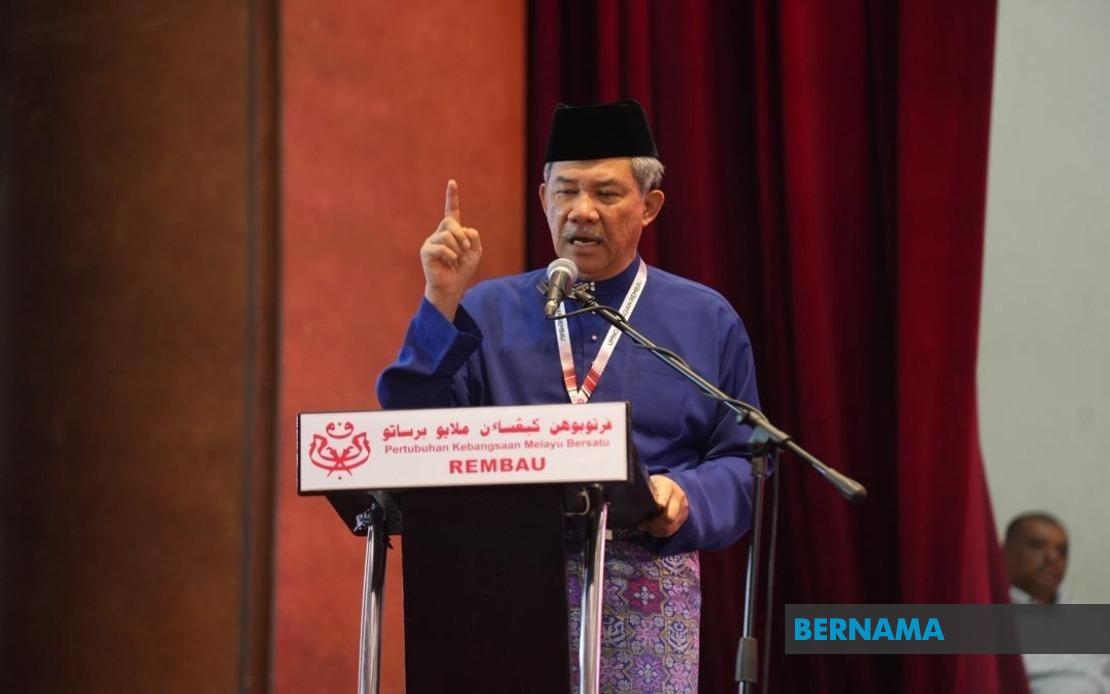
Barisan Nasional Deputy Chairman Datuk Seri Mohamad Hasan has backed the 10 newly appointed members of the Negeri Sembilan State Executive Council, asserting they possess the capability to work effectively with the Menteri Besar and discharge their duties across their designated portfolios in service of the state's population. The statement came following a formal ceremony in Seremban where all exco members took their oaths of office before the Yang Dipertuan Besar of Negeri Sembilan, Tuanku Muhriz Tuanku Munawir, at Istana Besar Seri Menanti.
Mohamad, who represents Rantau in the state assembly, articulated a wider vision of the exco's role beyond administrative function. He characterised the position as fundamentally a conduit—one that functions in both directions between the machinery of state and the citizens it serves. This dual responsibility requires exco members to become effective communicators of government initiatives while simultaneously acting as receptors for community concerns and feedback.
The Rantau assemblyman elaborated on this bridging function, emphasising that government policies require careful explanation to the public to ensure understanding and acceptance. Without such communication efforts, even well-intentioned initiatives risk public confusion or resistance. An exco member must therefore possess communication skills alongside administrative competence, capable of translating complex policy decisions into accessible language for their constituencies.
Equally important, Mohamad stressed, is the responsibility exco members carry to consolidate issues, grievances, suggestions, and perspectives emanating from their communities. This upward flow of information serves a critical feedback mechanism, allowing state administration to identify problems, refine approaches, and enhance public welfare initiatives in ways grounded in actual community experience rather than theory alone. The collective wisdom of ground-level observations, when properly channelled, can significantly improve governance quality.
Mohamad underscored that the effectiveness of any exco member depends substantially on their preparedness for office. He advocated that newly appointed members undertake thorough briefings from the departments under their respective purviews, ensuring they grasp the functions, administrative structures, and existing programmes they will oversee. This foundational knowledge acquisition prevents embarrassing gaps in understanding and enables smoother transitions into their portfolios.
Maintaining cordial and productive working relationships between the exco and government departments emerged as another crucial pillar in Mohamad's assessment. The exco does not operate in isolation; rather, it exists within an ecosystem of state institutions and bureaucratic structures. When these relationships deteriorate, policy implementation suffers, delays accumulate, and ultimately the public bears the cost through inefficient service delivery. The BN deputy chairman's emphasis on relationship maintenance reflects practical understanding of how state government actually functions beyond formal hierarchies.
The appointment of the 10 new members represents a significant development in Negeri Sembilan's political landscape following recent political developments. The ceremonial oath-taking before the ruler serves both symbolic and constitutional purposes, formally investing these individuals with executive authority while maintaining the constitutional prominence of the monarchy in state governance. Such ceremonies underscore Malaysia's constitutional monarchy framework and the ruler's role as guardian of state affairs.
For Malaysian readers, the broader implications extend beyond Negeri Sembilan's borders. State exco appointments reflect the health of political institutions and merit-based governance across the country. As Negeri Sembilan implements governance through its newly constituted executive, residents elsewhere will observe whether these principles Mohamad articulated—responsive communication, genuine community engagement, departmental coordination—translate into tangible improvements in service delivery, policy outcomes, and public satisfaction. The benchmark established here could influence expectations and standards in other states.
The appointment also highlights continuity within Barisan Nasional's political dominance in Negeri Sembilan, with the BN deputy chairman personally endorsing the new team's capability. This public show of confidence aims to reassure both the state administration and the public that the transition brings competent stewardship. In Malaysian politics, such endorsements from senior party figures carry weight in shaping public perception and investor confidence.
Meanwhile, Mohamad touched upon the potential Melaka State Election, noting that its timing remains contingent upon the Melaka Chief Minister's strategic decision to seek dissolution of the state legislative assembly. This comment reflects the fluid nature of Malaysian state politics, where dissolution decisions—though formally requiring the Yang Dipertua Negeri's consent—rest ultimately on political calculations by chief ministers concerning their government's stability and electoral prospects. Such decisions can reshape regional political alignments and have cascading effects on coalition stability at federal and state levels.
The development of capable state-level executive councils carries particular significance for Malaysia's federal system, where states retain substantial powers over land, Islam, and local government. The quality of exco members directly influences how these powers translate into policy outcomes affecting millions of residents. As Malaysia continues navigating complex political transitions at both state and federal levels, the competence and integrity of appointed officials become increasingly vital to maintaining public confidence in institutions and government effectiveness.

