The race for control of Negeri Sembilan shifted into high gear on July 18 as the state's 16th election formally commenced with the opening of nomination centres across all eight district zones. Prospective candidates converged on the nomination points from 9 am, with a one-hour submission window closing at 10 am to lodge their candidacy papers with the respective Returning Officers. This compressed timeframe marks the official transition from months of behind-the-scenes party preparation into the public electoral battleground, setting in motion a sequence of events that will conclude with voters casting their ballots on August 1.
The Election Commission's carefully orchestrated timeline provides political parties and candidates with exactly 14 days to campaign, running from the announcement of the final candidate list through 11.59 pm on July 31. This compressed campaign period represents a significant factor shaping how parties will allocate resources and prioritise messaging in what remains a highly competitive three-cornered contest. The administrative efficiency of this schedule also reflects Malaysia's established electoral machinery, which has become increasingly refined through regular state-level contests across the country.
Demographically, nearly 900,000 Negeri Sembilan residents hold the power to reshape the state's political landscape. The eligible voter roll comprises 867,151 ordinary citizens, supplemented by 16,884 military personnel and their spouses, and 5,455 police personnel and their spouses. This composition underscores the military and security establishment's presence in the state's electoral calculations, a factor that occasionally influences campaign dynamics in Malaysia's heartland. The total represents a significant portion of the state's population and demonstrates the broad franchise that will determine which coalition governs the state for the coming term.
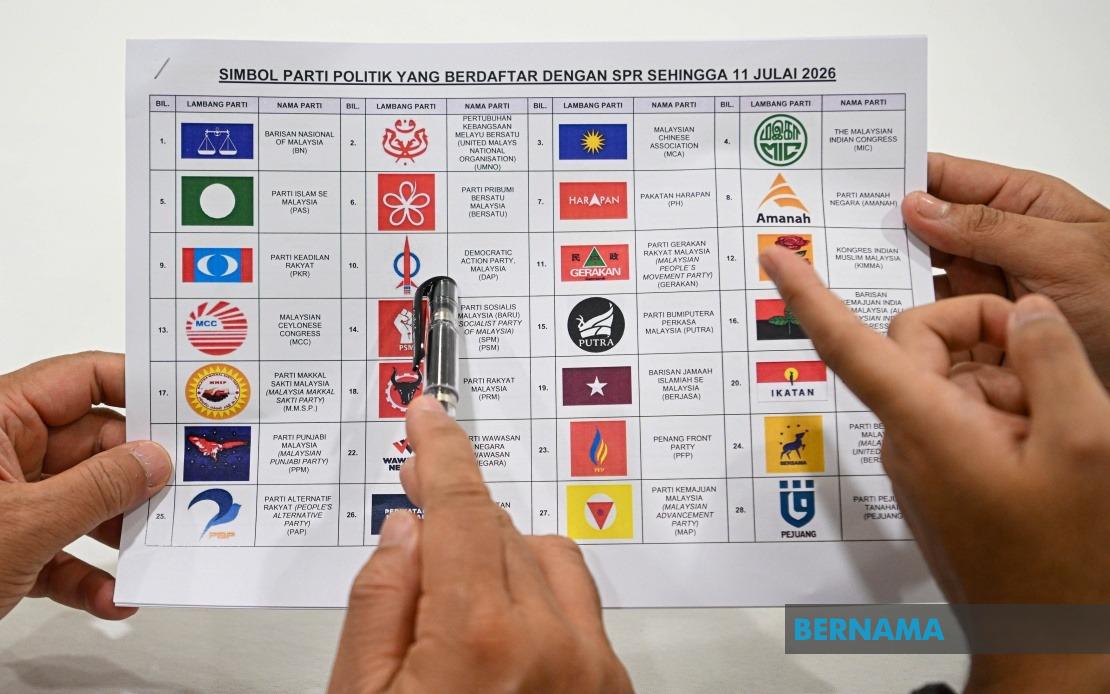
Party arithmetic reveals a highly fragmented electoral arena where no single contestant dominates the ballot. Pakatan Harapan has committed maximum resources by contesting all 36 state seats, signalling its determination to retain or expand its foothold from the previous election. Barisan Nasional's more selective strategy targets 25 seats, reflecting either strategic constraints or a calculated decision to concentrate efforts on winnable constituencies. Perikatan Nasional's 11-seat campaign presence indicates its continued effort to establish relevance in peninsular politics beyond its eastern strongholds. Smaller parties including Parti Orang Asli Malaysia, the Socialist Party of Malaysia, and Parti Barisan Jemaah Islamiah Se-Malaysia each fielded single candidates, while Bersatu's 24-seat participation—including two Urimai-affiliated candidates running under its banner—underscores the complex coalition mathematics defining contemporary Malaysian politics.
The dominance of national political coalitions in state elections reflects a broader Malaysian trend where federal and state contests have become increasingly intertwined. For Negeri Sembilan specifically, the outcome carries implications beyond the state assembly, potentially influencing the delicate balance of federal coalition dynamics and presidential council alignments that shape ministerial positions and development spending. The state's location along the Klang Valley corridor also means its governance affects regional economic flows and infrastructure investment patterns.
Security arrangements underscore the election authorities' commitment to maintaining order during nomination day's anticipated crowds. The Negeri Sembilan police mobilised 4,800 officers from state resources, bolstered by an additional 1,373 personnel dispatched from Bukit Aman headquarters. This sizeable deployment reflects expectations that nomination day will attract substantial gatherings of party supporters, candidate entourages, and political figures keen to demonstrate organisational strength and public enthusiasm. The Election Commission explicitly cautioned all participants to respect established protocols and avoid confrontational behaviour that might compromise the nomination process's integrity.
Weather conditions presented a secondary operational consideration that the Malaysian Meteorological Department addressed through advance forecasting. Predictions indicated generally clear skies across most of Negeri Sembilan during morning hours, though Port Dickson and Seremban could experience precipitation. Afternoon thunderstorms were forecast statewide, necessitating contingency planning by election organisers to ensure nomination submissions proceeded smoothly despite atmospheric disruption. Such meteorological coordination represents a routine but often overlooked dimension of Malaysian electoral administration.
Preparation levels had progressed substantially by nomination day's arrival. The Election Commission reported that 464 nomination forms had been distributed to interested parties, while 70 prospective candidates had already paid the mandatory election deposits confirming their serious candidacy. This early commitment suggests relatively robust interest in contesting the election, though the final candidate count would emerge only after the morning's submissions were processed and verified. These figures provide a preliminary indicator of electoral competitiveness and the number of multi-candidate contests that voters would face in individual constituencies.
The previous state election in 2023 established the competitive baseline against which the current contest unfolds. Pakatan Harapan secured 17 of 36 seats, enabling it to form government with slender parliamentary mathematics that required careful coalition management. Barisan Nasional captured 14 seats, positioning itself as the principal opposition. Perikatan Nasional's five seats granted it modest influence and potential kingmaker status should coalitions prove fractious. These results demonstrated that Negeri Sembilan's electorate rejects any single coalition's dominance, preferring instead to distribute representation across competing blocs. Whether 2024 amplifies or reverses these patterns depends on how effectively each coalition resonates with voter priorities during the compressed campaign period ahead.
The nomination process itself represents more than mere administrative formality. It provides the public's first comprehensive view of each party's candidate selections, revealing leadership decisions about who merits electoral investiture and where resources concentrate. These choices communicate subtle signals about organisational confidence, demographic representation priorities, and strategic positioning. For Negeri Sembilan voters, nomination day marks the transformation of electoral competition from abstract political jockeying into concrete contests featuring identified individuals seeking their mandate.
As campaigns formally commence following candidate confirmation, the state enters a critical fortnight where parties will articulate competing visions for Negeri Sembilan's future. Infrastructure development, economic opportunities, education quality, and healthcare accessibility feature among perennial voter concerns that campaigns will inevitably address. The intersection of state-specific issues with broader federal political currents creates a complex electoral environment where local and national considerations operate simultaneously, shaping how citizens ultimately cast their ballots on August 1.

