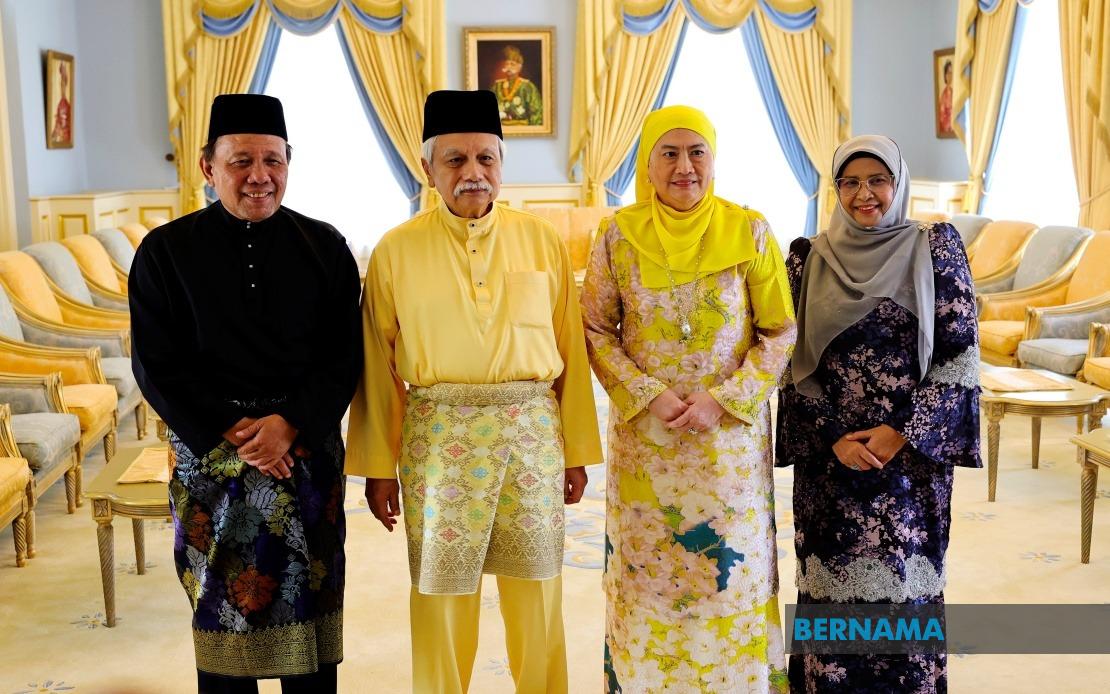
Datuk Ismail Lasim took his oath as Negeri Sembilan's Menteri Besar on Friday in Seri Menanti, formally receiving the mandate from Tuanku Muhriz Tuanku Munawir to lead the state administration. In his inaugural address, the Juasseh assemblyman articulated a governance framework anchored on two critical commitments: the elevation of the royal institution as a cornerstone of state administration, and the continuation of collaborative federalism with the central government under the ruling Unity coalition.
The newly minted Menteri Besar emphasised that respect for the monarchy and preservation of Negeri Sembilan's unique constitutional customs represent obligations binding every citizen of the state, not merely matters of ceremonial protocol. He framed the relationship between government and the royal institution as symbiotic, arguing that harmonious ties between the two entities serve as the foundation for effective governance and social stability. This framing carries particular weight in Negeri Sembilan, where the Rulers' Council system—distinct from other Malaysian states—vests significant constitutional authority in the collective voice of the state's traditional leadership.
Ismail's emphasis on institutional respect appears designed to signal continuity and reassurance to traditional stakeholders following the transition of leadership. By explicitly committing to the protection and advancement of the royal institution, he seeks to position his administration as custodian rather than innovator, a posture that may prove politically advantageous in a state where customary governance structures enjoy deep cultural legitimacy. The pledge carries practical implications as well: any future policy adjustments or administrative reforms will likely be presented within the context of preserving rather than disrupting established institutional relationships.
The Menteri Besar articulated a nuanced approach to managing potential friction between modernisation imperatives and traditional institutional preservation. He acknowledged that conflicts may arise and outlined the necessity for the state government to develop constructive mechanisms for resolving disputes while maintaining the integrity of the royal institution. This diplomatic formulation suggests awareness that rapid policy implementation or administrative changes could generate resistance from quarters protective of traditional prerogatives, and that building consensus through inclusive dialogue will be essential to his political survival.
Regarding federal-state relations, Ismail stressed that Barisan Nasional's participation in both the Negeri Sembilan state government and the national Unity Government coalition creates natural synergies rather than complications. His assertion that continued cooperation between state and federal authorities serves constituent interests underscores the pragmatic alignment of BN's leadership across multiple tiers of government. This position differs markedly from opposition-ruled states where constitutional friction and political rivalry often strain centre-periphery relations, demonstrating how coalition alignment can facilitate smoother resource allocation and policy coordination.
The new Menteri Besar's stance on inherited policies reflects a deliberate break from the sometimes-combative approach of incoming administrations eager to distinguish themselves through programmatic discontinuity. Instead, Ismail signalled willingness to retain popular initiatives from his predecessor, provided they demonstrably benefit the population and remain aligned with the government's core philosophy. This pragmatic conservatism may disappoint those anticipating bold reform, but it signals confidence in the existing administrative apparatus and avoids the disruption costs associated with wholesale policy overhaul.
For Malaysian observers, Ismail's emphasis on institutional collaboration and consensus-building offers insights into emerging governance patterns within BN-led administrations. Unlike previous transitions marked by factional contestation and rapid restructuring, this change of leadership appears choreographed to minimise disruption and maximise stakeholder buy-in. The appointment of the Juasseh assemblyman, a relatively low-profile figure without significant factional backing, may itself represent a calculated choice to defuse tensions and establish a caretaker administration focused on competent service delivery rather than transformative ambition.
The constitutional position of Negeri Sembilan's Rulers' Council means that any Menteri Besar operates within parameters of institutional deference that do not apply with equal force in other states. The Ruler's consent, which Ismail formally received before his public oath-taking, carries symbolic weight that transcends ceremonial formality. This hierarchical arrangement, dating to Negeri Sembilan's unique nine-state federation structure, means that Ismail's governance success will partly depend on maintaining excellent working relations with Tuanku Muhriz and the collective Rulers' Council, not merely with his political coalition.
Looking forward, Ismail's inaugural positioning establishes baseline expectations for his administration: institutional respect, collaborative federalism, policy continuity where justified, and measured conflict resolution. These commitments suggest a stewardship model focused on incremental improvement and stakeholder management rather than visionary transformation. For Negeri Sembilan's citizens and businesses, this approach may offer reassurance of stable, orthodox administration, though it may also limit bold initiatives in areas such as economic diversification or administrative innovation.
The Menteri Besar's careful navigation of tradition and pragmatism reflects broader patterns in Malaysian governance as political maturation and coalition discipline increasingly override personality-driven leadership models. Ismail's willingness to prioritise institutional continuity and federal cooperation, rather than cultivating a distinctive personal leadership brand, positions him as a stabilising figure during a period when Malaysia's political landscape remains fluid. His success will ultimately hinge on whether competent administration and consensus-building can deliver tangible improvements to Negeri Sembilan's economy and public services.

