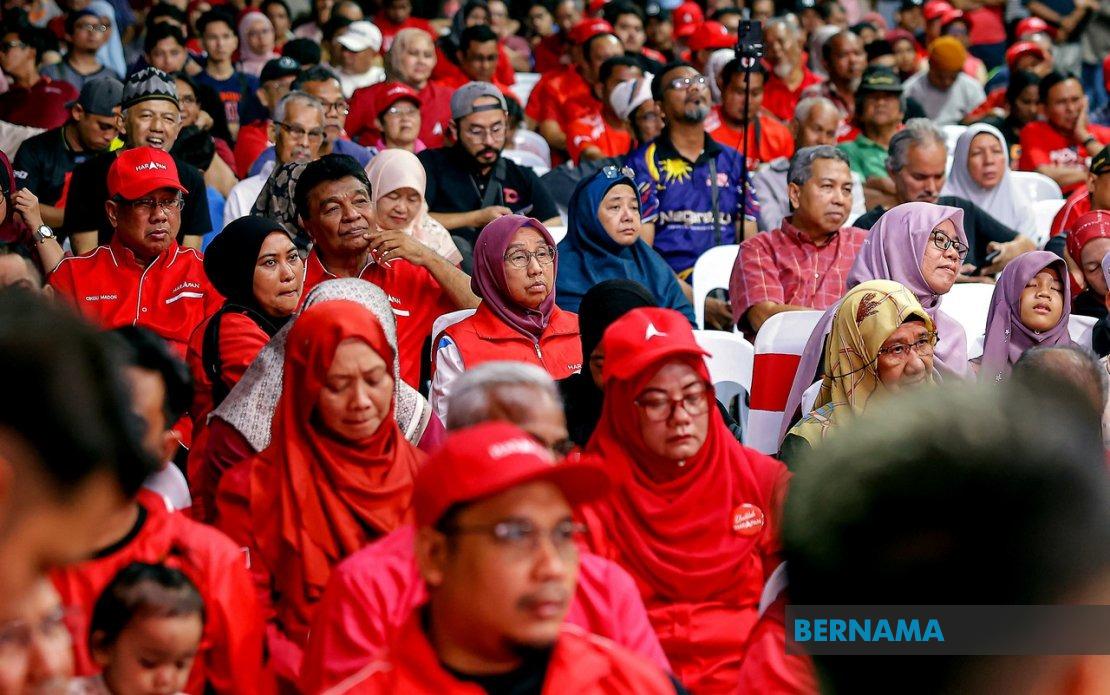
With the campaign for the 16th Negeri Sembilan state election now in full swing, a distinct pattern of voter priorities has emerged that speaks to broader concerns facing Malaysian communities. Rather than gravitating toward familiar names or established party machinery, local residents are articulating a more fundamental demand: they want representatives who are genuinely accessible and, crucially, can translate that accessibility into meaningful action.
A survey conducted during the campaign period reveals that Negeri Sembilan's electorate has grown increasingly discerning about what they expect from their elected representatives. The focus has shifted away from traditional considerations of lineage or long-standing community roots toward a more pragmatic assessment of whether candidates possess both the interpersonal skills to engage with constituents and the demonstrated capacity to solve problems. For many voters, being born and raised in a constituency no longer automatically confers advantage if the candidate proves distant or unavailable once elected.
This sentiment resonates particularly strongly with residents like Kamarulzaman Ab Aziz, a 64-year-old retired educator, who emphasizes that approachability and genuine community engagement trump geographical origin. His perspective reflects a generational shift in how voters evaluate leaders—the traditional weight given to local credentials has diminished in importance compared to the intangible but crucial quality of being relatable and genuinely present in one's constituency. Kamarulzaman's assessment underscores a critical realization among voters that an outsider who demonstrates authentic commitment to community needs may serve constituents far better than a hometown candidate who remains aloof from ordinary people's concerns.
The economic pressures facing small business owners have crystallized into perhaps the most pressing voting consideration in this election cycle. Nurulainee Hamidon, a 37-year-old food trader operating in the Linggi area of Port Dickson, articulates the daily squeeze that business owners endure—a vicious cycle where rising input costs force price increases that alienate customers. For traders and small-scale merchants across Negeri Sembilan, the cost of living crisis represents an existential challenge that transcends partisan politics. The incoming state government, regardless of which coalition forms it, will face immediate pressure to address inflationary pressures that are simultaneously eroding consumer purchasing power and compressing business margins. This issue has become sufficiently acute that it appears likely to determine voting patterns across multiple constituencies.
Rural development represents another critical area where the electorate has made clear its expectations. M. Manisha, a 38-year-old housewife, voices concerns that resonate in estate communities and peripheral areas that have historically received less attention in state development planning. Her concern reflects a deeper anxiety that rapid urbanization and infrastructure investment concentrate benefits in major towns while leaving agricultural and estate workers with inadequate facilities and limited economic opportunities. For the winning coalition, this represents a mandate to ensure that development blueprints explicitly prioritize equitable resource distribution rather than perpetuating a pattern where prosperity clusters in urban centers.
Employment quality and wage adequacy have emerged as distinct concerns among younger voters entering the workforce. Mohammad Najmi Aiman, a 22-year-old college student casting his ballot for the first time in the Paroi constituency, highlights employer expectations that workers possess advanced qualifications while compensation fails to reflect those skill requirements. This intergenerational grievance—where young people feel their educational investments are not being fairly rewarded in the job market—presents a political vulnerability for any coalition that fails to address structural wage issues or fails to champion workplace standards that reward skill and experience appropriately.
Beyond specific policy demands, the electorate has simultaneously issued a broader call for campaign conduct that reflects democratic maturity. Lim Kian, a 43-year-old private sector employee from Port Dickson, encapsulates this sentiment by appealing for campaigns marked by constructive competition rather than personal attacks or divisive rhetoric. His observation that whichever party ultimately governs must still coexist with opposition supporters suggests voters are fatigued by adversarial politics that fracture community cohesion. This appetite for respectful political discourse may influence how effectively campaigns resonate with undecided voters in marginal constituencies.
The electoral framework itself underscores the significance of these voter sentiments. With 889,490 registered voters across Negeri Sembilan, comprising 867,151 regular voters supplemented by 16,884 military personnel and their spouses and 5,455 police officers and their spouses, the state election encompasses a diverse cross-section of Malaysian society. The inclusion of military and police voters, each representing distinct interests and concerns, adds complexity to campaign messaging—candidates must craft positions that address both civilian economic grievances and the specific interests of uniformed personnel without appearing to favor one group over another.
The 36 state seats contested by 103 candidates create a substantially competitive environment where margins of victory could prove tight in multiple constituencies. This distributes power more evenly across the state than in elections where one coalition achieves overwhelming dominance, meaning individual campaigns and local candidate performance will carry magnified significance. The Paroi constituency, where first-time voter Mohammad Najmi Aiman will cast his ballot, represents the type of marginal seat where accessibility and demonstrable commitment to employment issues could determine outcomes.
The election calendar itself—with early voting scheduled for July 28 and polling day on August 1—compresses the campaign period and intensifies the already high-pressure environment. In this compressed timeframe, candidates lacking strong community presence or failing to effectively communicate their policy positions face particular disadvantage. Conversely, those who have invested time in constituent engagement and can point to concrete achievements face considerable advantage, reinforcing voter preference for demonstrable competence over mere partisan identity.
Regionally, the Negeri Sembilan election outcomes carry implications extending beyond the state itself. As a moderately urbanized and economically diverse state encompassing both Kuala Lumpur's satellite communities and rural agricultural areas, Negeri Sembilan often reflects broader Malaysian electoral trends. The specific issues animating voter behavior here—cost of living, rural development, employment quality, and healthy democratic conduct—mirror concerns evident in polling data from Selangor, Perak, and other states where elections loom. Any coalition that effectively addresses these concerns while maintaining campaign dignity and inclusivity will establish a template that resonates across the region.
The underlying message from Negeri Sembilan voters transcends campaign rhetoric and tactical maneuvering. It reflects a fundamental reorientation of electoral expectations toward substance over symbolism, accessibility over appearance, and community-focused governance over factional positioning. For the coalition that successfully translates these voter demands into governing priorities, the pathway to sustained political support becomes considerably clearer.

