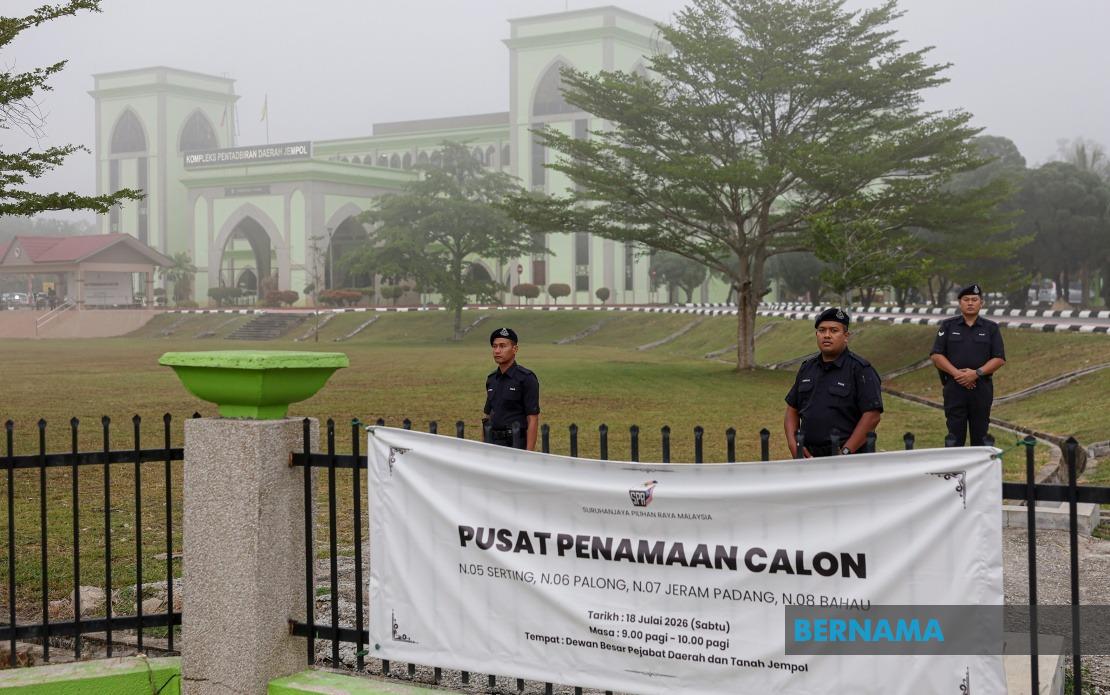
The 16th Negeri Sembilan state election entered its critical opening phase today as all eight nomination centres commenced operations simultaneously at 9am, marking the formal launch of the state's electoral process. The single-hour registration window, closing at 10am, represents a concentrated period during which prospective candidates must lodge their nominations and meet all statutory requirements to secure their place on the ballot. Returning officers stationed at each centre will subsequently publish the definitive roster of approved candidates, a step that traditionally generates significant political attention as the true contours of the race become apparent.
Following the announcement of eligible candidates, political parties will have precisely 14 days to conduct their campaigns, a period commencing immediately and concluding at 11.59pm on July 31. This compressed timeframe compresses the typically intense politicking that characterises state-level contests in Malaysia, forcing campaign teams to deploy resources strategically and maximise messaging impact within the constrained window. Early voting has been scheduled for July 28, allowing military personnel, their spouses, and police officers to cast ballots before the general polling day, while the main election will occur on August 1, meaning voters will ultimately have consumed campaign material for roughly two weeks before reaching polling stations.
The Negeri Sembilan State Legislative Assembly was officially dissolved on June 5 following the Yang Dipertuan Besar's consent, with Tuanku Muhriz Tuanku Munawir providing the necessary approval to trigger the electoral process. This formal dissolution initiated the constitutional countdown to today's nomination proceedings and subsequent electoral cycles, with the timing designed to accommodate necessary administrative preparations and party machinery mobilisation across the state's seven districts.
Weather observations indicate favourable conditions across Negeri Sembilan today, a factor that facilitated smooth operations at nomination centres and allowed the public and media to move freely between locations. Such meteorological conditions, while seemingly minor, carry genuine significance for election management, as adverse weather can complicate voter movement and create logistical challenges for returning officers managing the nomination process.
Security preparations dominated the election commission's preparations, with Negeri Sembilan police chief Datuk Alzafny Ahmad confirming that 2,393 police personnel have been strategically positioned throughout the eight nomination centres. This substantial deployment reflects standard security protocols designed to prevent disruptions, manage crowd control, and ensure the integrity of the registration process. The police presence aims to create an environment enabling candidates from competing political coalitions to register their nominations without confrontation or interference, maintaining the electoral process's legitimacy across the state's communities.
The political landscape entering this election remains shaped by the 2023 results, when Pakatan Harapan secured 17 of the 36 available state seats, substantially outpacing Barisan Nasional's 14 seats and Perikatan Nasional's five seats. These outcomes established Pakatan Harapan's dominance in state politics, though the composition of competing candidates this cycle may produce different dynamics. Several factors—including boundary considerations, candidate turnover, and shifting voter sentiment in specific constituencies—could influence outcomes relative to the previous election.
The registered voter population totalling 889,490 represents the electoral foundation upon which the 16th state election will unfold. This cohort comprises 867,151 ordinary voters, the primary voting bloc that determines electoral outcomes, alongside 16,884 military personnel and their spouses eligible for early voting, and 5,455 police personnel similarly entitled to vote before August 1. The aggregate size of the electorate, combined with its composition across seven districts, means campaign strategies must carefully target geographical concentrations of voters and identify constituencies where competitive margins might prove decisive.
Negeri Sembilan's state election carries significance beyond the state itself, as outcomes frequently signal broader patterns affecting national politics and coalitional dynamics. The performance of Pakatan Harapan relative to its competitors will offer insights into the coalition's capacity to retain its 2023 momentum, whilst results may also illuminate shifting voter preferences across peninsula Malaysia's central corridor. For the Election Commission, successfully administering this election while maintaining security and operational integrity represents a critical demonstration of the institution's competence ahead of potential future national electoral cycles.
The nomination process unfolding today represents merely the formal commencement of an election campaign that will intensify significantly over the following fortnight. Parties have already begun strategic positioning, with candidate selections reflecting calculations about demographic shifts, local issues, and the evolving relationship between federal-level politics and state-level contests. The registered candidates' identities and party affiliations, to be announced following the 10am nomination deadline, will crystallise the actual competition that voters will evaluate during the campaign period, transforming abstract electoral preparations into concrete choices about representation and governance.

