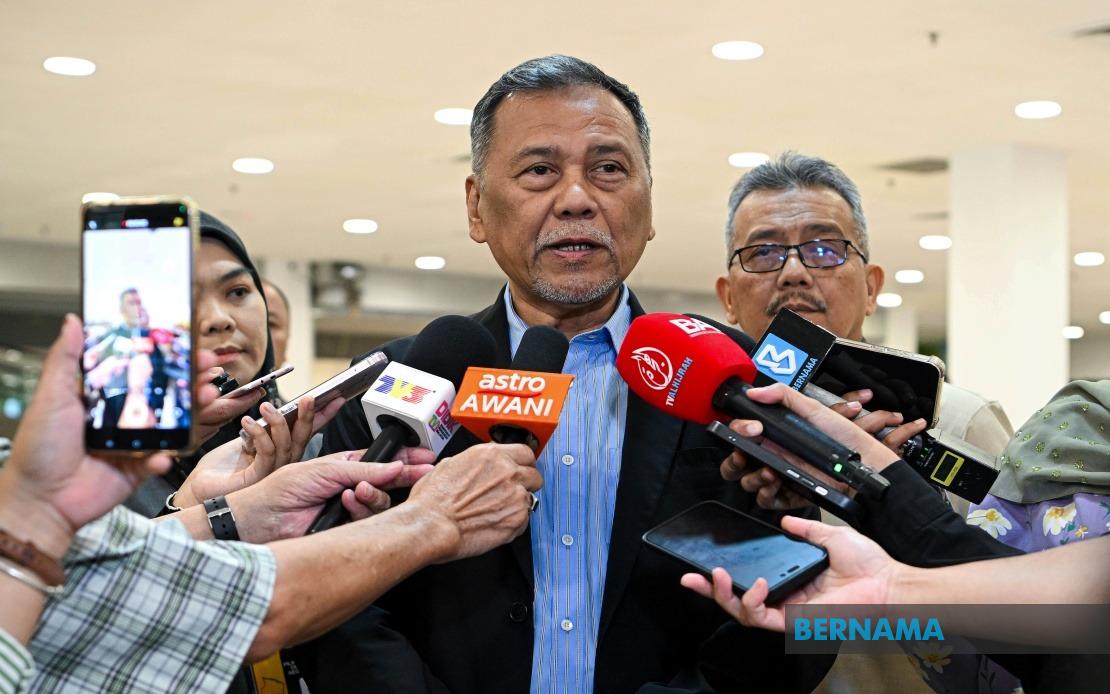
The race for Negeri Sembilan's 36 state seats is taking shape as the Election Commission reported that exactly 464 nomination forms have been distributed to potential candidates, with only 70 having sealed their commitment by submitting required deposits. Election Commission chairman Datuk Seri Ramlan Harun made the disclosure in Seremban on July 17, drawing attention to what appears to be a significant gap between registered interest and confirmed participation just hours before the nomination window closes.
Ramlan's remarks underscore a recurring pattern in Malaysian state elections where the actual field of candidates narrows considerably from the theoretical pool of interested parties. The disparity between forms sold and deposits paid suggests that roughly 15 percent of those who obtained nomination papers have committed fully to contesting, raising questions about the depth of competition voters might expect across constituencies. For a state with 36 legislative seats, 70 confirmed candidates would translate to an average of fewer than two candidates per constituency, a density that varies significantly depending on whether seats are considered safe or competitive.
The Election Commission chairman urged all prospective candidates to complete their deposit payments well before the nomination deadline, emphasizing the administrative burden of processing submissions at the last moment. Candidates who delay payments risk creating bottlenecks at nomination centres, potentially complicating the validation process and the subsequent announcement of eligible contenders. This practical concern reflects lessons learned from previous Malaysian state elections, where rushed administration near deadlines has occasionally led to procedural hiccups.
Preparations for the nomination process have been thoroughly completed across Negeri Sembilan, according to Ramlan. Full-scale rehearsal sessions were conducted at all nomination centres throughout the state to iron out potential operational issues before the actual voting takes place. The Election Commission has deployed 761 officers across eight nomination centres, each serving one parliamentary constituency, representing a significant logistical deployment to oversee the registration and vetting of candidates.
This election marks a departure from the decentralized approach adopted during the recent Johor state election, which established nomination centres organized by state constituencies. Instead, Negeri Sembilan will employ a centralized model organized around the eight parliamentary constituencies within the state, a decision the Election Commission justified on grounds of local suitability and improved coordination. The shift reflects administrative adaptation based on operational experience, though some observers have questioned whether centralization might inconvenience candidates and supporters traveling from outlying areas.
Security and orderliness remain paramount concerns as election activity intensifies. Ramlan reminded all political parties, candidates, and their supporters to avoid provocative actions that could disrupt the nomination process or incite tension. He specifically urged prospective candidates to arrive early tomorrow to alleviate congestion at nomination centres, a straightforward plea that reflects experience from previous elections where late arrivals have created unnecessary pressure on the system. Political parties have also been reminded of their obligations to comply with election regulations and steer clear of common offences throughout the campaign period.
The electoral landscape in Negeri Sembilan carries significance for the broader Malaysian political picture. In the 2023 state election, Pakatan Harapan secured 17 of 36 seats, Barisan Nasional captured 14, and Perikatan Nasional won five, establishing a government dependent on coalition management and potential alliances. The composition of tomorrow's candidate field will provide early signals about strategic positioning by national parties and whether any new political movements might challenge the established players in this state.
The state's registered electorate stands at 889,490 voters according to the Election Commission's roll updated as of June 4, 2026. This includes 867,151 ordinary voters, 16,884 military personnel and their spouses, and 5,455 police officers eligible for early voting. The inclusion of these early voter categories has become standard practice in Malaysian elections, reflecting acknowledgment of the scheduling difficulties faced by uniformed personnel who work irregular hours and are often stationed away from home constituencies.
Nominations will begin at 9 am tomorrow and close precisely one hour later, after which returning officers will announce the list of candidates deemed eligible to contest. This compressed timeline compresses the administrative work into a single morning, requiring precise coordination and clear communication. The Election Commission has established August 1 as polling day, with early voting scheduled for July 28, creating a narrower campaign window than some previous state elections.
The dissolution of the Negeri Sembilan State Legislative Assembly on June 5 initiated this electoral cycle, following formal consent from the Yang Dipertuan Besar of Negeri Sembilan, Tuanku Muhriz Tuanku Munawir. State assemblies in Malaysia can be dissolved either by normal expiry of the five-year term or by the Menteri Besar's request to the Sultan, which creates occasional uncertainty about timing. The timing of this dissolution fell within normal parameters, though political observers have noted the strategic calendar implications for national politics.
The nomination process represents only the opening salvo in a campaign that will test the organizational capacity and grassroots appeal of competing parties across the state's diverse constituencies. How many of those 70 confirmed candidates ultimately prove successful, and how their composition reflects demographic and regional voting patterns, will shape political discourse not just in Negeri Sembilan but across Malaysia's broader federal framework. The 2026 Negeri Sembilan election comes at a time when Malaysian politics remains fluid and coalition dynamics continue evolving at both state and national levels.

