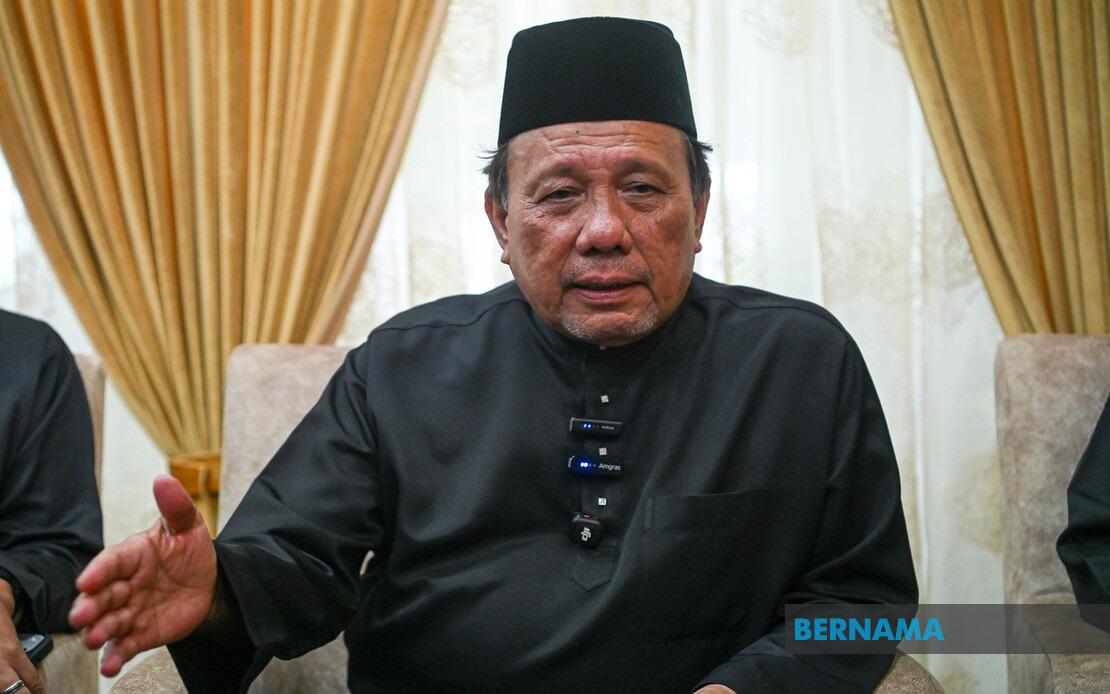
Datuk Ismail Lasim, the Menteri Besar of Negeri Sembilan, has taken over as chairman of Negeri Sembilan Football Club (NSFC) in a move that brings seasoned administrative experience to the state's leading sporting institution. The appointment, which became effective on August 14, comes after the departure of his predecessor Datuk Seri Aminuddin Harun and marks a significant transition in the club's governance structure during a critical period of development.
According to Tunku Besar Tampin Tunku Syed Razman Tunku Syed Idrus Al-Qadri, president of the Negeri Sembilan Football Association (PBNS), Ismail's appointment reflects confidence in his deep familiarity with the state's football ecosystem and his proven commitment to elevating standards at the professional level. The PBNS leadership views the decision as a strategic move to inject renewed direction and stability into an organisation that requires both visionary leadership and robust administrative capacity.
Ismail brings formidable credentials to the position, having served as the state team manager during the 1990s and early 2000s—a period that shaped the developmental trajectory of Negeri Sembilan football. His immersion in the sport during those formative decades provided intimate knowledge of the challenges facing state-level clubs and the structural requirements for sustained competitive performance. Furthermore, his tenure as PBNS vice-president in 2010 demonstrated his continued engagement with football governance and his understanding of the interconnected relationships between club operations, state associations, and broader footballing objectives.
The transition of Ismail's role from team manager to club chairman represents a natural evolution of his involvement in Negeri Sembilan football rather than a departure from established networks. His long-standing relationships within the local footballing fraternity provide crucial social capital, particularly in navigating the complex negotiations required between the club, state government resources, and community stakeholders. This continuity is essential given that football development demands sustained institutional memory and trust earned over decades of engagement.
Tunku Syed Razman emphasised that Ismail's appointment positions NSFC to pursue a comprehensive strategic agenda aimed at transforming the club into a professionally managed, financially sustainable, and competitively viable entity. The chairman's remit extends beyond match performance to encompassing structural reorganisation, commercial development, and community engagement—domains where political and administrative experience proves invaluable. The PBNS president expressed confidence that Ismail's demonstrated leadership capacity will facilitate the difficult work of professionalising club operations while preserving the institution's identity and cultural connection to Negeri Sembilan.
The appointment signals the state government's deeper commitment to football development at the club level, a recognition that sporting advancement requires integration between political leadership, association governance, and professional management. By positioning the Menteri Besar as NSFC chairman, the state effectively channels government support and political capital toward achieving stated sporting objectives. This alignment of political will and football administration often proves decisive in resolving resource allocation disputes and securing stakeholder cooperation across fragmented interests.
NSFC's stated development priorities—encompassing player development pathways, organisational structure, commercial viability, community relations, and supporter engagement—constitute an ambitious agenda requiring sustained leadership attention and resource mobilisation. These domains remain chronically underfunded and underdeveloped across Malaysian football, particularly at state club level, where institutions struggle between maintaining competitive standards and achieving financial sustainability. Ismail's administrative background and access to state government networks position him to address these systemic constraints more effectively than predecessors lacking comparable political standing.
The appointment also reflects broader trends in Malaysian football governance, where political figures increasingly assume prominent roles in club leadership. This development carries both advantages and risks: while political backing can accelerate institutional transformation and secure crucial funding, it also exposes clubs to political volatility and reduces insulation from factional disputes. For Negeri Sembilan football, the appointment of its state leader suggests deepened institutional commitment to competitive excellence at the club level and recognition that sustained development requires integration between sporting ambitions and governmental capacity.
Looking forward, NSFC operates within a competitive landscape where rival state clubs increasingly professionalise operations and secure substantial resources from state governments and commercial partners. The appointment of Ismail reflects acknowledgment that competing effectively in Malaysia's club football ecosystem demands leadership capable of mobilising diverse institutional resources and navigating complex stakeholder relationships. Whether his chairmanship produces the transformative outcomes anticipated depends substantially on the resource commitments forthcoming from state government, the club's ability to generate commercial revenue, and the responsiveness of football associations to NSFC's strategic initiatives.
The transition also occurs amid broader discussions regarding football development trajectories in Malaysia, where critics argue that state clubs require fundamental structural reform, enhanced transparency, and professionalised management practices. Ismail's appointment represents an implicit acknowledgment of these critiques and a commitment to implementing governance improvements beyond the playing field. Success will depend on translating administrative experience into concrete improvements in player development systems, financial management, and operational transparency—areas where Malaysian football historically confronts significant challenges.
For Malaysian football observers, the appointment warrants attention as a case study in how political leadership intersects with sporting development at the state level. The coming months will reveal whether Ismail can effectively bridge the demands of state administration with the technical and commercial requirements of modern football club management, and whether his appointment catalyses meaningful improvements in NSFC's competitiveness, financial stability, and developmental infrastructure.

