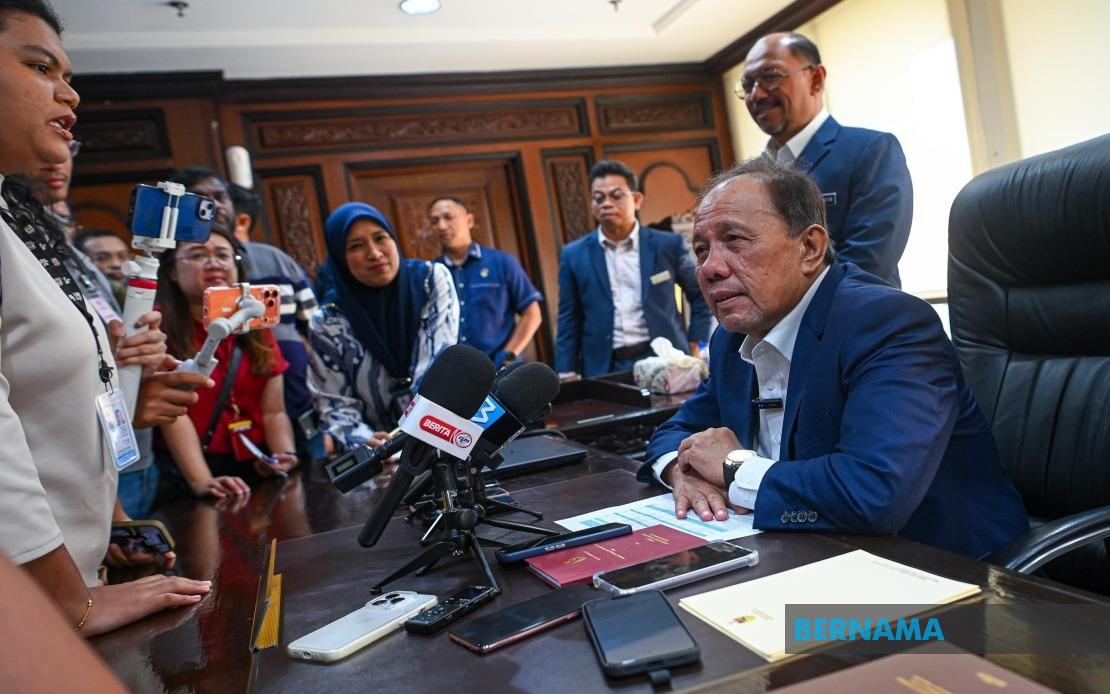
Negeri Sembilan's freshly installed leadership is weighing an administrative restructure that could reshape how the state government operates. Menteri Besar Datuk Ismail Lasim, who commenced his tenure on Monday morning at Wisma Negeri, indicated that the state cabinet is considering the introduction of Deputy Executive Council positions across several critical portfolios. This initiative aims to bolster the machinery of state administration and distribute responsibilities more effectively across the ruling coalition's representatives.
The proposal carries particular significance for a state government that brings together multiple political partners. The composition includes representatives from Barisan Nasional component parties alongside two smaller coalitions: PAS and Parti Wawasan Negara. In this context, creating additional Deputy Exco positions provides a pragmatic solution to accommodate capable legislators from various coalition members without expanding the core cabinet structure beyond sustainable proportions.
Ismail acknowledged that the driving rationale behind this structural innovation stems from portfolio constraints. With a finite number of full Executive Council positions available and a broader pool of competent state assemblymen awaiting appointments, the Deputy Exco framework offers intermediate roles that allow greater inclusivity within the administration. However, he stopped short of confirming the exact number of Deputy positions that would ultimately materialise, indicating that discussions remain fluid and subject to further deliberation.
The decision to explore Deputy Exco appointments represents a departure from conventional state governance practice in Malaysia. While Senior Exco positions have occasionally been appointed in certain states, the systematic creation of a Deputy tier across multiple portfolios reflects contemporary thinking about power-sharing arrangements in coalition governments. This structural innovation could serve as a template for other state administrations grappling with similar coalition arithmetic challenges.
Ismail's first day as Menteri Besar unfolded with traditional ceremonial formality. Sworn before Tuanku Muhriz Tuanku Munawir at Istana Besar Seri Menanti on Sunday, the 67-year-old Juasseh assemblyman arrived at his new office at 9 am, where State Secretary Datuk Mohd Zafir Ibrahim and departmental heads extended formal welcomes. The measured pace of these opening-day activities underscores the deliberation characterising the transition period.
The electoral context lending authority to Lasim's government deserves examination. The recently concluded Negeri Sembilan state election delivered substantial backing for the BN-Perikatan coalition partnership, which collectively secured 25 of 36 state seats. Barisan Nasional commanded 18 seats while Perikatan Nasional won seven, together forming a commanding two-thirds majority. Pakatan Harapan, the opposition, retained 11 seats. This decisive electoral outcome has conferred both mandate and flexibility upon the new administration.
For Malaysian state governments, the mechanics of cabinet formation carry outsized importance. Unlike the federal level where constitutional provisions strictly circumscribe executive council composition, state governments often enjoy greater discretionary space in designing their administrative machinery. Negeri Sembilan's contemplated reform capitalises on this flexibility, potentially establishing precedent for how states manage coalition governance in contemporary Malaysian politics.
The timeline for announcements reflects measured administrative transition. Lasim indicated that the full Exco line-up would be unveiled within days, with Friday as the target date or Monday as the absolute latest. This compressed window suggests that coalition partners have substantially concluded their internal negotiations regarding portfolio allocations and structural arrangements. The specificity of this timeline signals that the administration possesses clarity on its intended configuration.
Senior Exco positions similarly remained unconfirmed, though Lasim noted that constitutional provisions accommodating such appointments exist. The decision to introduce Senior positions alongside potential Deputy positions creates a multi-tiered executive structure that could enhance coordination and specialisation across government functions. Whether all available constitutional provisions will be utilised remains contingent upon the cabinet's final configuration.
For Malaysian political observers and regional analysts, Negeri Sembilan's administrative experimentation warrants attention. Coalition governments increasingly characterise Malaysian state politics, and mechanisms for accommodating multiple partners without compromising administrative efficiency remain contested territory. The Deputy Exco proposal demonstrates practical problem-solving, though questions persist regarding whether additional tiers genuinely enhance governance or primarily serve political accommodation purposes.
The coming weeks will reveal whether this structural innovation successfully bridges coalition partners' interests or merely defers underlying tensions. Successful implementation could influence how other BN-led states manage their own coalition arrangements, particularly in Johor, Pahang, and Perak where similar partnership dynamics exist. Conversely, implementation challenges could prompt reconsideration of whether traditional cabinet structures, despite their limitations, ultimately prove more administratively coherent.

