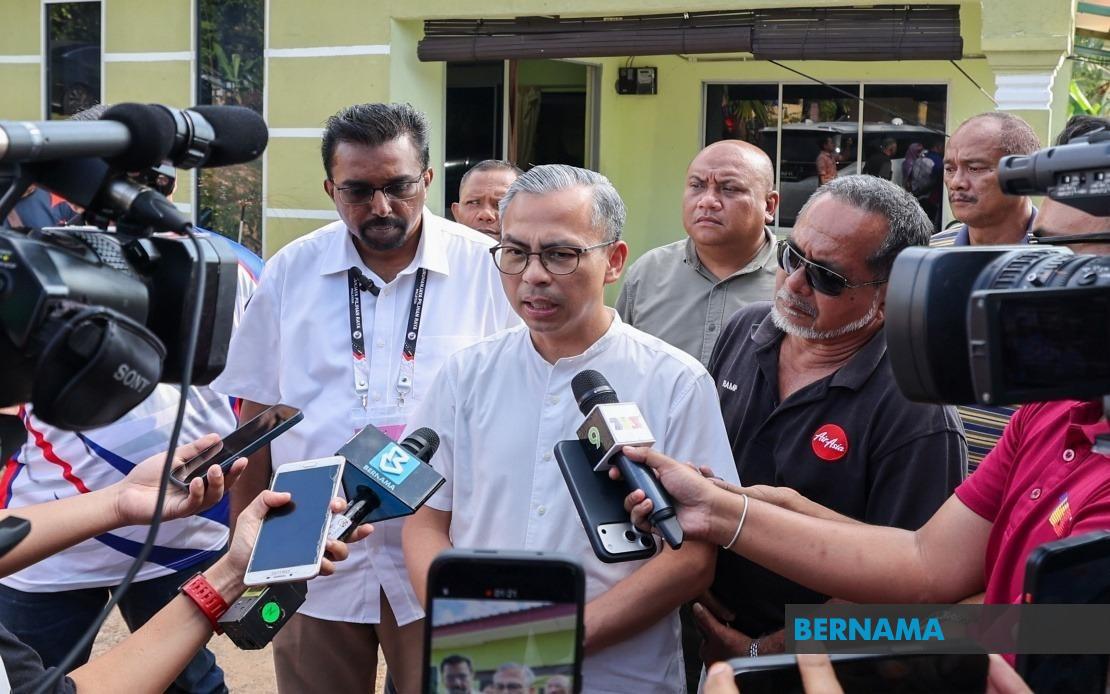
Communications Minister Datuk Seri Fahmi Fadzil has declared that social media activity during the Negeri Sembilan state election campaign remains largely under control, with the Malaysian Communications and Multimedia Commission receiving just 16 complaints since the campaign officially began. Speaking at the Ziarah Kasih MADANI programme in Felda Palong 1, Fahmi outlined efforts to monitor and manage online content as the election enters its second week, with voting scheduled for August 1.
Of the 16 complaints received by MCMC, the vast majority—14 in total—relate to telecommunications network connectivity rather than violations of election or platform guidelines. Only two complaints involved fraudulent social media accounts, suggesting that attempts at organised digital misinformation have so far remained minimal. Fahmi's assessment indicates that political actors and the public have largely adhered to electoral conduct standards during the initial phase of campaigning, though he cautioned that complacency would be premature.
The minister urged Malaysians to remain vigilant and report any suspicious content directly to social media platforms themselves before escalating matters to MCMC if platforms fail to respond appropriately. This tiered approach seeks to distribute responsibility among stakeholders: platform operators bear primary responsibility for enforcing their own community standards, while government agencies provide oversight for breaches of electoral law. Fahmi's guidance reflects international best practice in election administration, where coordinated but decentralised monitoring prevents single institutions from becoming bottlenecks.
With approximately seven to eight days remaining in the campaign at the time of his statement, Fahmi identified the final 72 to 96 hours before polling day as a critical period requiring heightened vigilance. Historical patterns in Malaysian elections suggest that the countdown phase typically witnesses dramatic increases in online activity as candidates make final appeals and political machines mobilise supporters. The minister specifically expressed concern about potential disinformation campaigns concentrated during this compressed timeframe, when fact-checking and regulatory responses face severe time constraints.
Beyond electoral conduct, Fahmi addressed a separate but pressing infrastructure challenge: digital connectivity in rural settlements. A visit to Felda Palong 1 revealed that internet coverage gaps exist primarily along main access roads leading to the scheme rather than within residential areas themselves—a finding with significant policy implications. Poor road-side connectivity undermines emergency services communication and isolates residents from essential services, making the issue a matter of public safety rather than mere commercial inconvenience. Fahmi characterised the situation as unacceptable and mandated immediate corrective action from MCMC.
The underlying cause of coverage deficiencies reflects structural challenges in Malaysia's telecommunications infrastructure. Although major telecommunications companies signed a memorandum of understanding focused on network sharing during the previous year, implementation has progressed slowly in addressing gaps across populated regions. This gap between policy commitment and operational delivery suggests that voluntary cooperation frameworks, while valuable, may require reinforcement through regulatory mandates or alternative mechanisms to accelerate rollout.
Fahmi identified three complementary solutions: construction of new telecommunications towers to expand physical coverage, optimisation of existing infrastructure to enhance performance from current installations, and deployment of satellite services such as Starlink as an interim bridging technology. This multi-pronged strategy acknowledges that no single approach suffices for Malaysia's diverse geography and varying demand patterns. Satellite services, in particular, represent an interim solution capable of providing coverage before terrestrial infrastructure reaches remote areas, though such services typically involve higher costs and latency challenges unsuitable for latency-sensitive applications.
A less-publicised but operationally significant initiative involves enhancing how telecommunications companies manage customer complaints. Fahmi indicated that operators have been directed to modernise feedback systems, including through artificial intelligence applications that allow users to track complaint status in real time. This transparency mechanism addresses long-standing frustrations with opaque complaint resolution processes and enables better data collection regarding service failures, supporting evidence-based infrastructure investment planning.
The Negeri Sembilan state election serves as a testing ground for Malaysia's election administration ecosystem during a period when digital platforms play increasingly central roles in political communication. The relatively low complaint volume to MCMC during the first week might reflect either genuine restraint among candidates and supporters or alternatively insufficient monitoring and reporting mechanisms to capture violations comprehensively. Regional observers elsewhere in Southeast Asia have documented cases where electoral misconduct proceeded undetected due to limited reporting infrastructure or language barriers preventing affected communities from accessing complaint channels.
For Malaysian political stakeholders and international observers alike, the election will indicate whether existing regulatory frameworks and platform governance structures prove sufficient for managing digital-era campaigns. Early voting commences July 28, with main polling on August 1. The coming weeks will reveal whether the measured tone of the campaign's early phase persists through the final stretch or whether anticipated increases in online activity materialise alongside elevated risks of disinformation and platform manipulation.

