Negeri Sembilan's 16th State Election on August 1 will showcase a striking transformation in the state's political landscape, with the number of straight fights collapsing while multi-cornered contests proliferate across the 36 legislative assembly seats at stake. The shift reflects deeper fragmentation within Malaysia's political coalitions and signals intensifying competition that will test the resilience of traditional voting blocs in the state. The Electoral Commission has designated July 28 for early voting, with some 889,490 eligible voters—comprising 867,151 ordinary voters plus military and police personnel—set to cast ballots across constituencies ranging from predictable two-way contests to chaotic five-candidate free-for-alls.
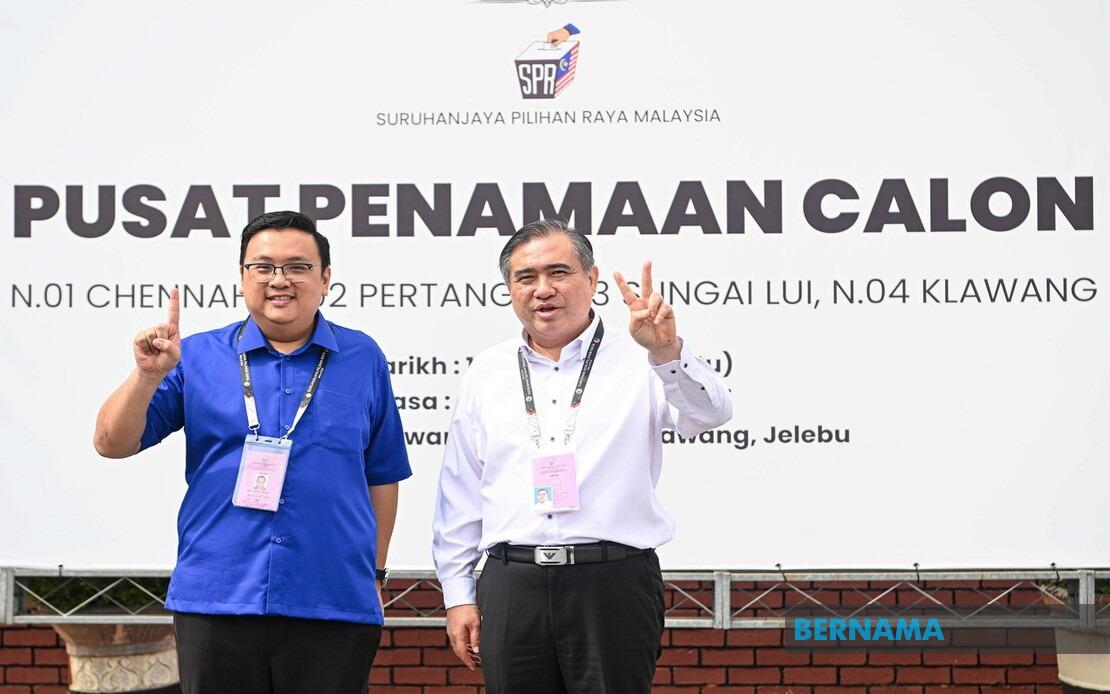
The pendulum has swung decisively away from decisive head-to-head matchups that characterised recent elections. Only 11 of the 36 seats will feature straight fights, a dramatic decline from the 27 recorded during the 2023 state election. This contraction reflects coalition realignments and the strategic decision by multiple parties to contest simultaneously rather than cede ground through electoral pacts. Transport Minister and DAP secretary-general Anthony Loke will defend Chennah in one such straight fight against Barisan Nasional's Siow Kong Choon, while UMNO deputy president and Foreign Minister Datuk Seri Mohamad Hasan will similarly face a one-on-one contest in Rantau against Pakatan Harapan's Dr Azizul Hakim Mahdi.
Three-cornered contests have become the election's dominant format, with 21 of 36 constituencies now featuring three-way battles—a threefold increase from the seven recorded in 2023. This expansion carries significant implications for Malaysian electoral mathematics, as votes become diffused across three camps rather than concentrated between two, potentially allowing candidates with smaller vote shares to prevail. In Linggi, Menteri Besar Datuk Seri Aminuddin Harun of Pakatan Harapan faces challenges from Barisan Nasional's Datuk Mohd Faizal Ramli and Parti Pribumi Bersatu Malaysia's Zamri Md Said, a configuration that fundamentally alters the calculus of who might claim victory. The Pertang constituency presents a similar dynamic, with UMNO's Datuk Seri Jalaluddin Alias competing against PH's Mohd Umry Abdul Khois and Bersatu's Mohd Faizal Fadli Mohd Idrus.
The emergence of genuinely competitive three-way races extends to seats held by sitting incumbents, several of whom now face diluted support bases. Pakatan Harapan's incumbent in Klawang, Datuk Bakri Sawir, confronts not only Barisan Nasional but also Bersatu and, notably, Perikatan Nasional's Danni Rais, son of veteran politician Tan Sri Rais Yatim. This proliferation of candidates reflects the breakdown of the electoral coordination mechanisms that previously contained the number of contestants. Without clear agreements between coalition partners to focus resources on targeted seats, multiple parties compete simultaneously, fragmenting votes and heightening unpredictability.
Two constituencies have escalated competition to four-way contests. Jeram Padang will see Barisan Nasional incumbent Datuk Mohd Zaidy Abdul Kadir face challenges from Pakatan Harapan's G. Manivannan, Bersatu's R. Sri Sanjeevan, and Parti Orang Asli Malaysia's Dayana Dal. Rahang presents an equally complex battle, with incumbent Siaw Meow Keong of Pakatan Harapan contending against BN's Yap Siok Moy, Parti Sosialis Malaysia's S. Thinagaran, and Bersatu's Tang Jay San. These four-way contests demonstrate the challenge posed by splinter candidacies and the refusal of smaller parties to accept electoral subordination to larger coalitions.
Most remarkably, Nilai and Sri Tanjung will witness five-cornered contests—a phenomenon entirely absent from the 2023 state election. This unprecedented proliferation of candidates signals either a fundamental breakdown in party discipline or an aggressive strategy by multiple political forces to maximize their presence across all battlegrounds regardless of realistic victory prospects. In Nilai, incumbent Pakatan Harapan member J. Arul Kumar will defend against Barisan Nasional's Lai Chien Kong, Bersatu's Datuk V. Saravana Kumar, Berjasa's Zamani Ibrahim, and independent candidate Omar Mohd Isa. The Sri Tanjung seat presents similarly fragmented competition, with incumbent Datuk Dr G. Rajasekaran of PH facing BN's A. Achuthan, Bersatu's M. Leevineshwaraan, and independent candidates Datuk A. Saravanan and Islah Wahyudi Zainudin.
The rise of independent candidates and parties outside the traditional Pakatan Harapan-Barisan Nasional-Perikatan Nasional triumvirate suggests voters may be signalling fatigue with conventional coalition politics or that local grievances have created openings for non-establishment candidates. The appearance of Parti Sosialis Malaysia, Parti Orang Asli Malaysia, and Berjasa across multiple constituencies indicates either renewed political entrepreneurship or fragmentation that could undermine electoral legitimacy if voters perceive the ballot as offering meaningless choice among too many similar candidates.
The demographic profile of eligible voters reveals a state electorate of approximately 889,490 people, with military and police personnel collectively comprising over 22,000 voters. These constituencies often exhibit voting patterns distinct from ordinary civilian voters, potentially influenced by institutional hierarchies and collective interests. The inclusion of 16,884 military voters and 5,455 police voters represents a significant bloc that could prove decisive in closely contested constituencies.
The transformation in Negeri Sembilan's electoral dynamics reflects broader instability within Malaysian coalition politics. The collapse of straight fights and proliferation of three-way and multi-way contests suggests that parties no longer believe they can negotiate exclusive territorial claims with coalition partners or that they perceive sufficient political advantage in contesting simultaneously. Whether this fragmentation serves voter interests by expanding choice or undermines democratic clarity by diffusing representation remains an open question that August 1's results may begin to illuminate.

