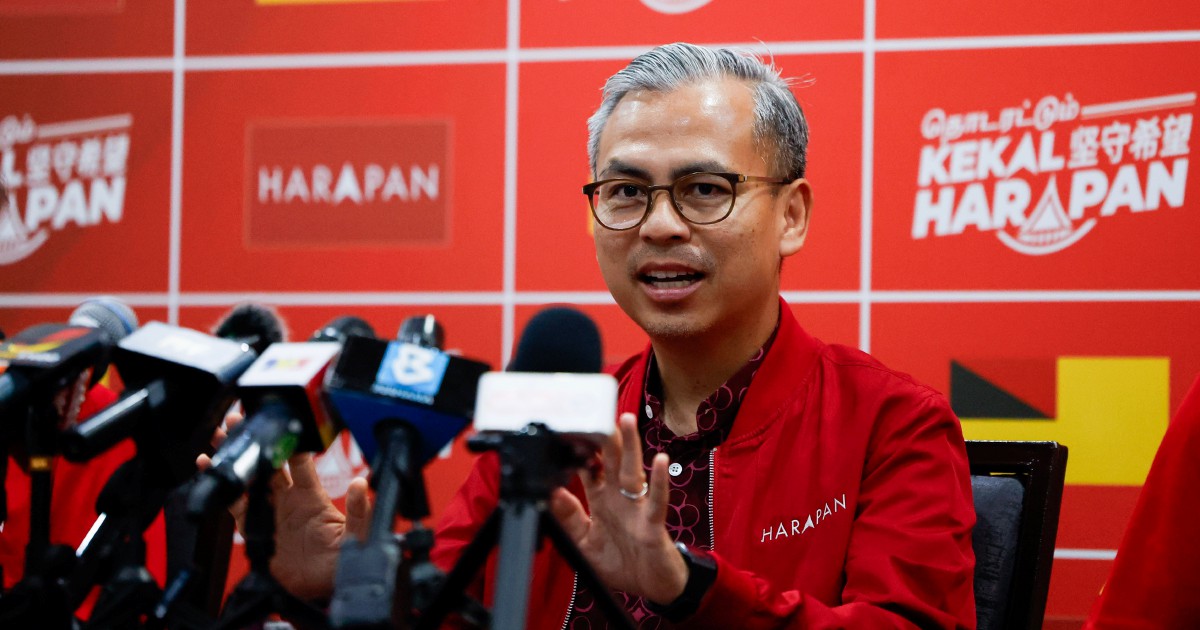
Pakatan Harapan has issued a forthright appeal to all political contestants in the forthcoming Negeri Sembilan state election, urging a shift towards substantive campaign discourse centred on concrete policies, implementation records, and future economic blueprints rather than exploiting sensitive communal divisions. The coalition's call for electoral maturity represents an attempt to set the tone for what promises to be a closely watched contest in one of Malaysia's pivotal swing states, where the balance of power between established and emerging political forces remains uncertain.
The emphasis on moving away from race, religion, and royalty (3R) messaging signals PH's concern that such divisive tactics could undermine democratic dialogue and polarise communities ahead of the polls. In the Malaysian political context, where these three dimensions have historically served as potent electoral mobilisers, the coalition's explicit rejection of such framing deserves scrutiny. By consciously attempting to reframe the election around performance metrics and policy proposals, PH appears to be banking on the premise that voters increasingly value competence and delivery over identity-based appeals—a calculation that may reflect broader demographic shifts and voter fatigue with traditional polarisation.
Negeri Sembilan holds particular strategic importance within Malaysia's electoral architecture. As a state where no single coalition has achieved dominant long-term control in recent cycles, it functions as a bellwether of broader national sentiment. The state's mixed demographics—encompassing urban professionals in areas like Seremban, substantial Malay-Muslim populations in rural constituencies, and significant Indian and Chinese communities—means that appeals to narrow communal interests risk backfiring against parties seen as exclusionary. PH's call for policy-centred campaigns may thus reflect genuine strategic advantage in appealing to this heterogeneous electorate.
The warning against slander and unsubstantiated claims takes on added significance in an era of digital misinformation. Malaysian voters have witnessed repeated cycles of rumour-mongering, doctored images, and false attribution of statements during previous election cycles. By explicitly flagging this concern early, PH signals awareness that the information environment during the campaign will likely remain fractious. The coalition's implicit argument is that substantive policy differences can be debated and contested without resorting to personal defamation or fabrication—a threshold that sets standards for campaign conduct beyond what electoral law technically mandates.
The call also implicitly acknowledges the risk to PH's own electoral prospects if campaigns devolve into identity-based competition. As a multiethnic coalition that has struggled to maintain cohesion in states where traditional Malay-Muslim political narratives dominate, PH may benefit from narrowing the contest to measurable outcomes: employment creation, infrastructure delivery, education quality, healthcare access, and economic development initiatives. These domains offer terrain where the coalition can differentiate itself through past performance in states it governs or has governed, rather than engaging in bidding wars over communal patronage.
Negeri Sembilan's economic profile adds another dimension to PH's policy pitch. The state hosts significant automotive manufacturing clusters, palm oil processing facilities, and growing technology sectors. These industries require stable governance, predictable regulatory frameworks, and investments in human capital—precisely the kinds of issues that policy-focused campaigns can meaningfully address. Voters employed in these sectors may indeed prioritise questions about long-term industrial strategy, skills development, and regional competitiveness over communal positioning, making PH's framing strategically rational.
The coalition's intervention also reflects broader trends within Malaysian political discourse. Youth movements, professional associations, and civil society organisations have increasingly demanded that parties articulate detailed positions on taxation, environmental protection, urban planning, and social safety nets. By endorsing a policy-centred campaign, PH positions itself alongside these constituencies and potentially attracts voters—particularly younger, more educated segments—who view identity-based politics as anachronistic or destructive.
However, the effectiveness of PH's appeal depends heavily on whether other contesting parties embrace the same framework. If opposition forces, whether Perikatan Nasional, Barisan Nasional, or independent candidates, choose to deploy 3R messaging or personal attacks, PH's moral high ground may prove insufficient to prevent such tactics from influencing voter perception. The coalition cannot unilaterally enforce the campaign standards it advocates, meaning the actual tenor of the election will reflect choices made across the entire political spectrum.
The timing of this call is strategically significant. By articulating campaign principles early, before campaign machinery fully mobilises and emotions intensify, PH attempts to establish normative expectations that all parties contest. This approach draws on principles of democratic maturity and mutual restraint, appealing to a sense of shared civic responsibility. Whether such appeals succeed depends on whether parties view adhering to these standards as advantageous or disadvantageous to their electoral prospects.
For Malaysian voters in Negeri Sembilan, PH's intervention represents an invitation to evaluate parties on their substantive records and future commitments. This represents a meaningful shift from elections where personality cults, rumour mills, and communal grievances dominated discourse. The coalition's call therefore extends beyond electoral strategy to touch on fundamental questions about what kind of political competition Malaysian democracy can sustain and what standards citizens should demand from their political leaders.

