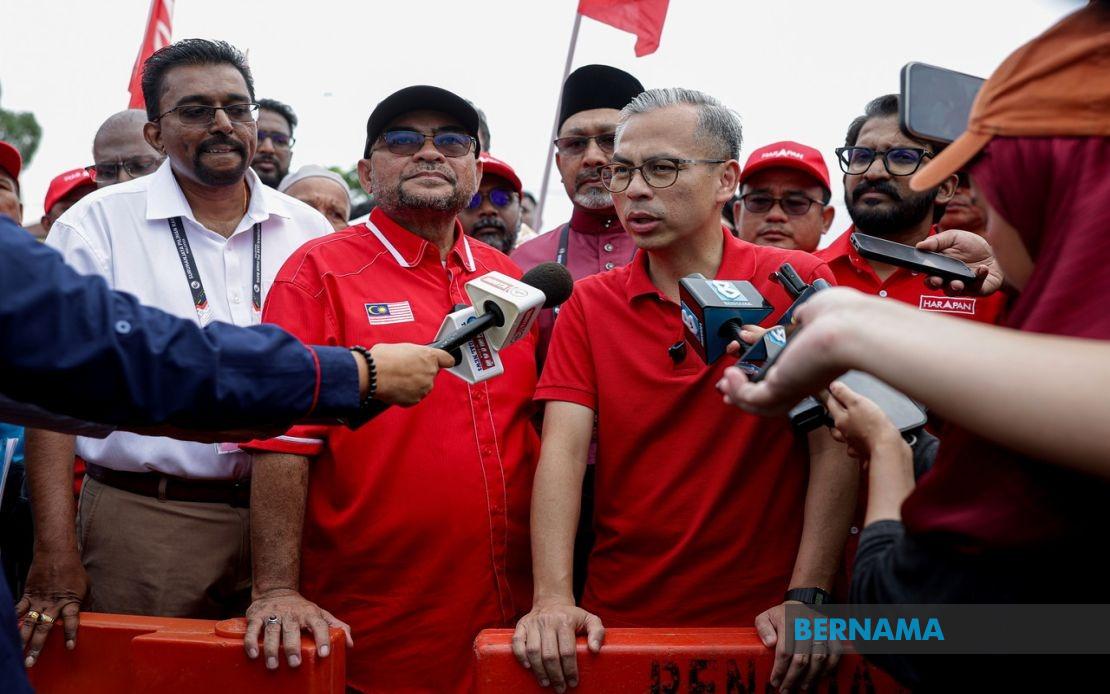
Pakatan Harapan will anchor its campaign for the Negeri Sembilan state election squarely on the administration's economic achievements and the leadership of Menteri Besar Datuk Seri Aminuddin Harun. Speaking in Jempol after the nomination of candidates for four state seats, PH Communications Director Datuk Seri Fahmi Fadzil laid out a strategy centred on persuading voters that continuity under the current administration offers the surest path to sustained prosperity. The coalition is framing the contest as a choice between proven performance and uncertainty, with Aminuddin's tenure since 2018 positioned as evidence of capable governance.
The administration's economic credentials form the cornerstone of PH's messaging. Revenue collections for the state government have grown, foreign investment has flowed into Negeri Sembilan including a new port development, and zakat revenues have climbed steadily. These gains, Fahmi argued, represent tangible benefits that ordinary citizens have experienced through job creation, infrastructure development, and improved state finances. In a region where economic anxiety often dominates voter concerns, particularly among younger demographics, PH is betting that pointing to concrete results will resonate more powerfully than opposition promises of change.
The strategy reveals how incumbent administrations in Malaysia increasingly fight elections on administrative records rather than ideological platforms. By emphasising continuity, PH avoids reopening divisive debates about the coalition's founding principles or internal coalition dynamics. Instead, the narrative reduces the election to a simple proposition: the current government delivers results, therefore vote to maintain it. This approach has proven effective in several Malaysian state contests, where voters often prioritise local service delivery over national political positioning.
Negeri Sembilan itself presents a particular electoral landscape. The state has historically been competitive, with different coalitions holding power at various points. What distinguishes the current environment is the apparent stability under Aminuddin, whose administration has avoided the factional crises that plagued earlier administrations. The focus on institutional continuity thus carries implicit reassurance about political stability, a concern for investors and ordinary residents alike concerned about disruption.
The party's campaign will also pivot on demographic targets. In the Jeram Padang seat, PH candidate G. Manivannan, a lawyer and political secretary to Prime Minister Datuk Seri Anwar Ibrahim, will emphasise employment opportunities and economic openings for young people. This represents a deliberate choice to contest the opposition's potential narrative that the current government has not done enough for youth. By having Manivannan engage directly on job creation, PH signals that it recognises youth concerns whilst promoting the administration's purported track record of economic expansion.
The electoral landscape across the four Jempol parliamentary seats reflects broader Malaysian political fragmentation. Serting and Palong are three-cornered contests involving PH, Barisan Nasional, and Perikatan Nasional or Bersatu, while Bahau features a direct PH-BN battle and Jeram Padang is a four-way competition including the independent Orang Asli candidate Dayana Dal. This fracturing of opposition votes potentially benefits the incumbent PH-aligned candidates if they can consolidate their base, though it also creates opportunities for spoiler effects.
Fahmi's emphasis on responsible campaigning and a call to avoid divisive rhetoric around the three Rs—Religion, Race, and Rulers—reflects sensitivities within Malaysia's plural society and the Electoral Commission's broader regulatory framework. The two-week campaign period will be intensely monitored for any breaches of election conduct rules. As Communications Minister, Fahmi's dual role underscores how elections in Malaysia intersect with government communications apparatus, a dynamic that generates both organisational advantages and periodic accusations of abuse of state resources.
The timing of the election, with early voting on July 28 and polling day on August 1, compresses the campaign into a fortnight. This timeline may advantage the incumbent, which already possesses name recognition and administrative machinery, whilst constraining challengers' ability to build momentum. The compressed schedule also limits time for opposition coalitions to coordinate messaging or resolve internal tactical disagreements, particularly relevant given the fragmented opposition landscape in several seats.
For Malaysian observers of state-level politics, the Negeri Sembilan contest offers a microcosm of larger electoral trends. The emphasis on performance and continuity rather than ideological contestation reflects a maturing Malaysian electorate increasingly focused on bread-and-butter issues. Simultaneously, the persistence of multi-cornered fights and the continued relevance of communal politics suggests that fundamental cleavages remain. How voters ultimately weigh PH's economic narrative against opposition critiques or appeals to change will provide insight into the durability of the current political dispensation beyond the 2023 federal election.
The campaign also occurs within a broader context of economic challenges facing Malaysia, from inflation to labour market pressures. PH's narrative of continuity and stability implicitly offers reassurance that the government understands these pressures and is managing them competently. Whether that narrative survives contact with voter concerns on the ground remains to be seen, particularly if employment opportunities remain scarce or inflation erodes wage gains across Negeri Sembilan's diverse communities and districts.

