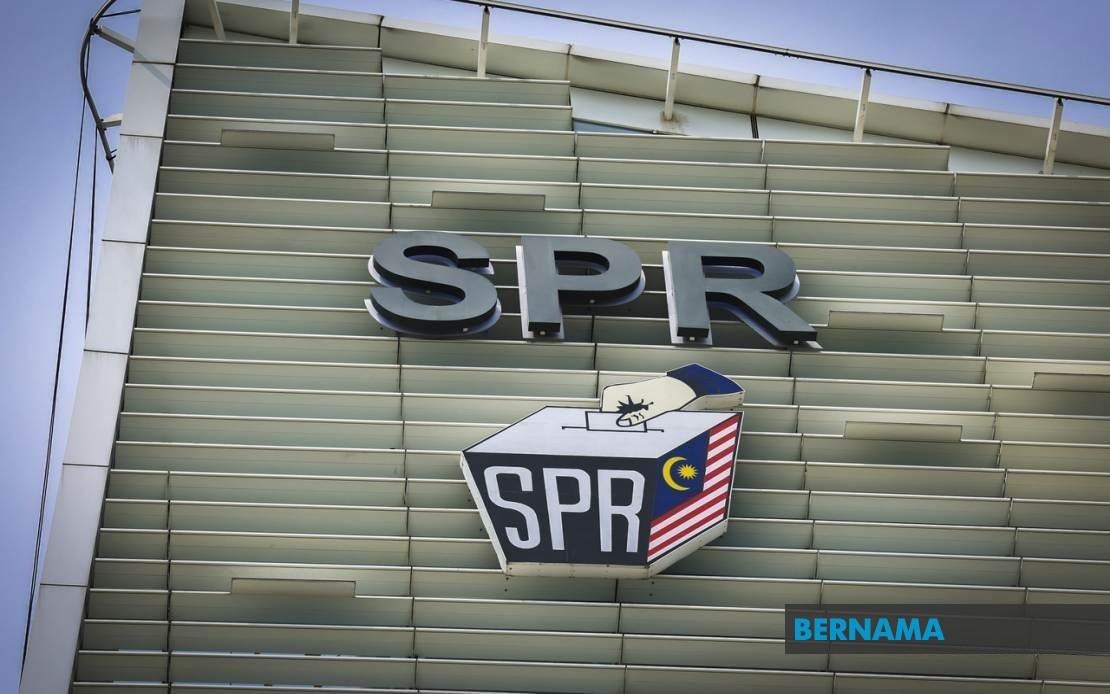
The race to control Negeri Sembilan's legislature enters its decisive phase tomorrow when candidates formally register their nominations across eight centres statewide, officially launching a fortnight of campaigning that will culminate in polling day on August 1. The ceremony marks the formal opening of the state's 16th electoral contest, a three-way battle shaping up to reshape political representation in one of Malaysia's key states.
The electoral calendar is now firmly set. Early voting takes place on July 28, giving military and police personnel assigned outside their constituencies a chance to participate before the main poll. The Election Commission has registered 889,490 eligible voters in Negeri Sembilan—a base comprising 867,151 ordinary voters supplemented by 16,884 military and police families. This electorate will choose representatives across 36 constituencies, making this a comprehensive state-wide contest with no incumbent advantage carried forward from previous administrations.
Pakatan Harapan remains the most ambitious coalition, committing all its resources to contest every single seat available. The alliance has constructed a balanced ticket that spreads representation across its three components: PKR provides 16 candidates, DAP contributes 11, and Amanah rounds out the coalition with nine hopefuls. This comprehensive approach signals PH's determination to regain ground after the 2023 state election, when it captured 17 of 36 seats and held government briefly before political shifts reshaped the landscape.
Barisan Nasional has opted for a more selective strategy, fielding 25 candidates instead of contesting universally. UMNO forms the backbone of BN's challenge with 16 nominations, while MCA fields seven and MIC two. This calibrated approach suggests BN's pragmatic assessment that winning every seat remains unlikely, choosing instead to concentrate firepower where organisational strength and local support run deepest. The 2023 result granted BN 14 seats, positioning it as a significant player but not the dominant force.
Perikatan Nasional presents a fragmented picture that complicates its electoral prospects. The coalition officially contests 11 seats through PAS, which contributed five candidates, but PN's broader composition reveals internal tensions. Gerakan fields one candidate, MIPP contributes one, and Wawasan—making its electoral debut as PN's newest component—deploys four nominees. Notably, Bersatu, another PN member, has decided to contest independently under its own banner, suggesting disagreement over seat allocation or electoral strategy within the broader alliance framework. This split potentially dissipates PN's combined voter appeal.
Outside the major coalitions, a collection of smaller parties and independents seeks to make their mark. ASLI and PSM each plan fielding a single candidate, while Berjasa is expected to field seven nominees. These fringe parties rarely capture seats but sometimes influence results through vote-splitting dynamics. Notably, MUDA, Pejuang, and Bersama have all decided against contesting the Negeri Sembilan election, choosing instead to concentrate resources elsewhere or pause their political activities. Their absence simplifies the ballot to some extent but also indicates that newer political movements have not yet established strong organisational footing in the state.
The 2023 results provide crucial context for understanding tomorrow's contest. PH's 17-seat victory initially granted it government-forming capacity, but the coalition's subsequent struggles led to the assembly's dissolution by the Sultan on June 5. BN's 14 seats represented a strong showing for an opposition coalition, while PN's five seats indicated gathering momentum for Mahathir-linked politics in certain constituencies. This three-way split means that no coalition possesses an overwhelming advantage, and strategic voting or post-election negotiations could prove decisive.
Logistical preparations are proceeding methodically. The Election Commission has reminded prospective candidates to verify their nomination papers in advance at either the Returning Officer's Office or the State Election Office, a precaution aimed at preventing technical rejections during tomorrow's submission window. Candidates must also settle their election deposits early and present proof of payment alongside their nomination documents. These administrative requirements, while routine, carry significance because procedural compliance determines which candidates appear on the final ballot that voters will see.
Weather conditions may influence turnout patterns, particularly during the main polling day. The Malaysian Meteorological Department has issued a special forecast predicting fair skies across most of Negeri Sembilan on Saturday morning, though Port Dickson and Seremban specifically face rain predictions. Afternoon thunderstorms are anticipated across the entire state, a pattern that could depress voter participation if conditions deteriorate significantly. Historical data suggests that inclement weather disproportionately affects rural constituencies where voter travel distances extend farther.
For Malaysian observers and the broader Southeast Asian political context, Negeri Sembilan's election assumes particular relevance. The state occupies demographic and political middle ground within Peninsular Malaysia, with neither overwhelming urban nor rural characteristics. Its results often telegraph broader electoral trends visible in larger states, making the outcome significant for predicting the next general election landscape. A decisive victory for any coalition here would signal momentum carrying into federal politics, whereas a fragmented result would suggest continued voter volatility and multi-cornered competition in Malaysian politics.
The campaign period stretching across the next two weeks will test each coalition's organisational machinery and message resonance with voters fatigued by frequent elections and political realignment. PH will emphasise governance performance and reform credentials, BN will stress stability and development continuity, while PN will attempt to consolidate Malay-Muslim voter consolidation despite its internal fracturing. Ground-level responses to these competing narratives, more than polling predictions or historical precedent, will ultimately determine which coalition commands Negeri Sembilan's political future.

